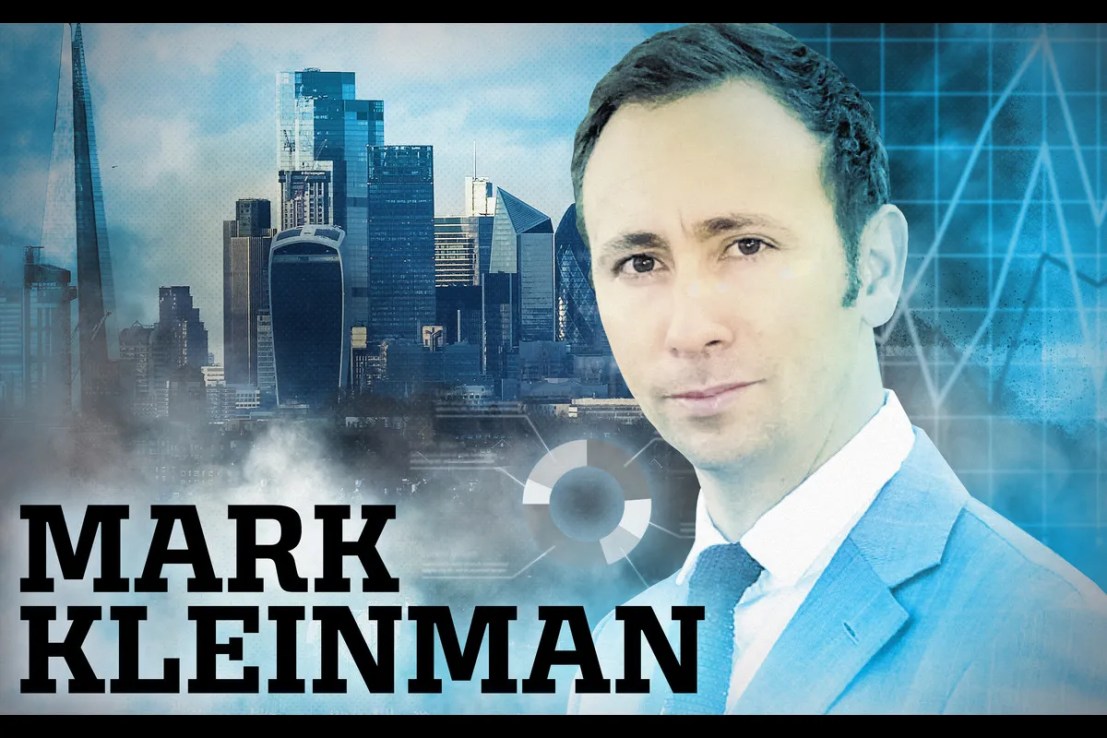
Mark Kleinman is Sky News’ City Editor and the man who gets the Square Mile talking in his weekly City AM column
Thames Water’s fate now sounds like a dripping timebomb
There are few more irritating sounds than that of a dripping tap you cannot fix. That, writ large, is the headache facing the Labour government as it nears the endgame in the race to save Thames Water as a solvent, standalone company.
On one reading, my scoop this week that Steve Reed, the environment secretary, has signed off the appointment of restructuring experts at FTI Consulting to advise on contingency planning for a special administration of Britain’s biggest water company merely looks like prudent preparatory work.
Another interpretation is that Reed and his Cabinet colleagues are using those preparations to hold Thames Water’s creditors’ feet to the fire as they attempt to take control.
The company’s biggest group of lenders is proposing a £17bn recapitalisation plan which would involve injecting £5bn of new debt and equity, and writing off £12bn of value across its capital structure.
Talks between the creditor group, the company and Ofwat, the industry regulator, are said to have become more constructive and fruitful in recent weeks.
The creditors’ plans, though, appear to be predicated on some degree of forbearance on the roughly £1bn of fines and reparations Thames Water faces having to pay for, among other misdemeanours, its appalling record of sewage spills and pollution.
Reed has already been clear, rightly, that Thames Water’s parlours financial state cannot be used to abdicate its responsibility for paying those penalties. Yet he has also said publicly that nationalisation would be an undesirable outcome.
The decision by Thames Water’s bankers to grant exclusivity to KKR during the formal auction process always looked odd, but it now seems particularly ham-fisted given the absence of obvious alternatives to the creditors’ plan.
The exception to this continues to be interest from CKI Holdings, the Hong Kong-based owner of Northumbrian Water and swathes of major British infrastructure.
CKI’s appeals to Thames Water and to Ofwat to be readmitted to the sale process fell on deaf ears, but if the creditors’ bid fails and the company crashes into a SAR process, ministers will surely be beating down the door to revive its appetite for a deal.
By then, part of the financial damage to taxpayers will already have been done – which might have been avoided in a more effectively run process.
Reeves’ Brookfield backing Just looks odd for London
Here’s a circle that looks hard to square: the Chancellor, Rachel Reeves, uses her annual set-piece speech to the City to unveil a taskforce whose sole aim is to boost the ranks of London’s listed companies; then just days later she publicly lauds a private equity-backed takeover bid for a quoted financial services business that will result in the target disappearing from the UK market.
No, me neither. The target in question is Just Group, and the bidder Brookfield, the Canadian asset management giant. Last month’s £2.4bn offer looks strategically compelling, and probably rich enough price to deter any would-be rivals.
Reeves’s response, though, looked kneejerk and bizarre in the context of the debate gripping the City about the ease with which London-listed companies are being picked off by predators.
“I welcome Brookfield’s investment in Just Group,” she said in a statement on the day of the deal’s announcement. “Brookfield are a major investor, and this commitment demonstrates strong faith in the UK economy as we deliver on the Plan for Change, reinforcing the fact that the UK remains one of the best places in the world for business.”
City conspiracy theorists posited that Reeves’ supportive quote might have been an olive branch to Brookfield after the Canadian investor found itself snubbed in the contest to provide financing to the Sizewell C nuclear power plant.
That may be far-fetched, but there are few logical explanations for the schizophrenia evident in the Chancellor’s public utterances. After all, a listings taskforce is surely something of a misnomer: the object of the exercise isn’t to persuade companies simply to float in London, but to remain listed here. Reeves might need to redefine its mandate.
Chelsea celebration an own goal for UKGI
Roll up. Applications have been open for several weeks for the role of chief executive of UK Government Investments, one of Whitehall’s most important, yet unheralded, agencies.
Overseeing taxpayers’ interests in businesses as diverse as Channel 4, Network Rail and Sheffield Forgemasters.
With a base salary of £240,000, the remuneration package is generous by Whitehall standards – exceeding that of the prime minister – but puny in the context of comparable private sector jobs.
Charles Donald, the former Credit Suisse banker who has led UKGI for more than five years, can point to taxpayers’ full exit from its shareholding in NatWest Group as the biggest achievement of his tenure.
His successor, though, has a full in-tray, with the financing of new nuclear power stations, the BBC charter renewal process and the fate of British Steel and Thames Water all likely to feature prominently.
There’s a curiosity in the document promoting the job, though. In it, UKGI trumpets the role it played securing the sale of Chelsea Football Club in 2022.
“UKGI worked closely with a wide range of officials and the Club to ensure the sale could complete ahead of the tight deadlines required,” it says.
Three years on, though, and the £2.5bn of sale proceeds remain locked away and unavailable for the victims of Russia’s invasion of Ukraine. Like celebrating a Premier League title halfway through the season, the self-congratulation should wait.