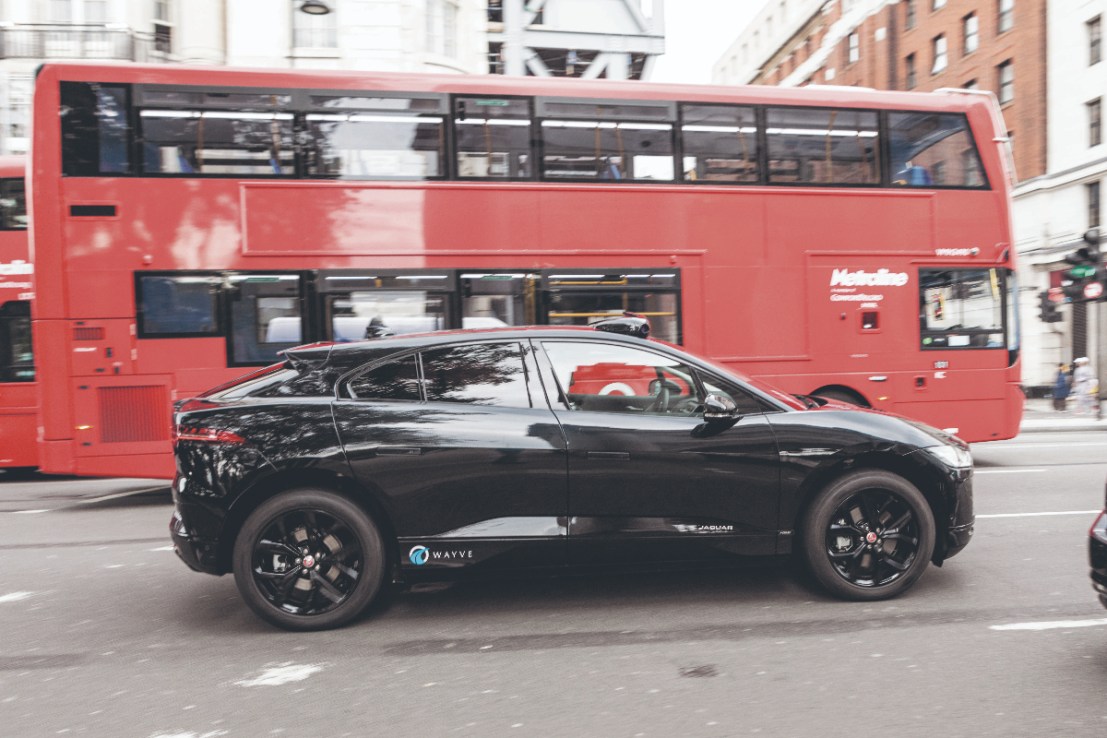
Microsoft announced its strengthened partnership with British born autonomous driving startup Wayve on Thursday, in a move set to bring the tech into commercial use.
This collaboration, based largely on Microsoft Azure, provides its infrastructure to both train and operate the AV firm’s AI into complex urban environments such as London.
Founded in 2017 in Cambridge, Wayve has taken a slightly different approach to self-driving than its rivals, using deep learning and camera perception rather than hand-coded rules.
This is facilitated by Azure, which connects thousands of GPUs into a supercomputer, allowing for deployment across vehicles.
The firm has achieved several milestones in the past year, including its first deal with Nissan and planned robotaxi trials with Uber in the capital, as its operation shifts from experimentation to deployment.
Innovation vs real world challenges
But the deployment doesn’t come without it challenges, and urban streets found in London present unpredictable hurdles in the form of cyclists, pedestrians and chaotic congestion.
San Francisco, the undisputed leader of the AV market, has already pointed to potential failures since their robotaxi rollout, from stalled vehicles to outage repercussions.
While these point to technology alone not guaranteeing smooth operations, the firm’s deployment across the pond has been globally successful.
Its British counterpart’s boss, Alex Kendall, said: “We’re really approaching autonomous driving as an AI problem and building a data-driven stack with end-to-end deep learning.”
“Our goal is to create a system that can operate safely in multiple countries and cities, with just a few weeks of fine-tuning.”
Microsoft’s cloud involvement is a vital aspect of its operations, but regulatory compliance and public acceptance, as well as integration within an existing, legacy transport system, will be key to its success.
Wayve has also began expanding globally, tapping into the German auto market, testing vehicles across the pond and planning further footings in Japan.
Along Microsoft, its other heavyweight tech backers, the likes of Uber, Softbank and Nvidia, show signs of investor confidence as competitors like GM’s Cruise division scale back.
From test to market
2026 will see Wayve’s first robotaxi trials in partnership with Uber, marking a step toward commercial autonomy for British customers.
While early deployment is set to be limited, the AI-driven software will increasingly govern pricing and access, rather than human drivers.
With that in mind, early fleets may worsen congestion, require new gig roles for remote monitoring, or test legacy regulation.
Elsewhere, public tolerance for AI-driven mobility is yet to be seen in dense urban areas.
Still, Wayve’s camera based, generated model, in partnership with Microsoft’s cloud functions, should offer a scalable alternative to other, sensor-heavy alternatives.
This could give the UK a competitive edge in the global race.