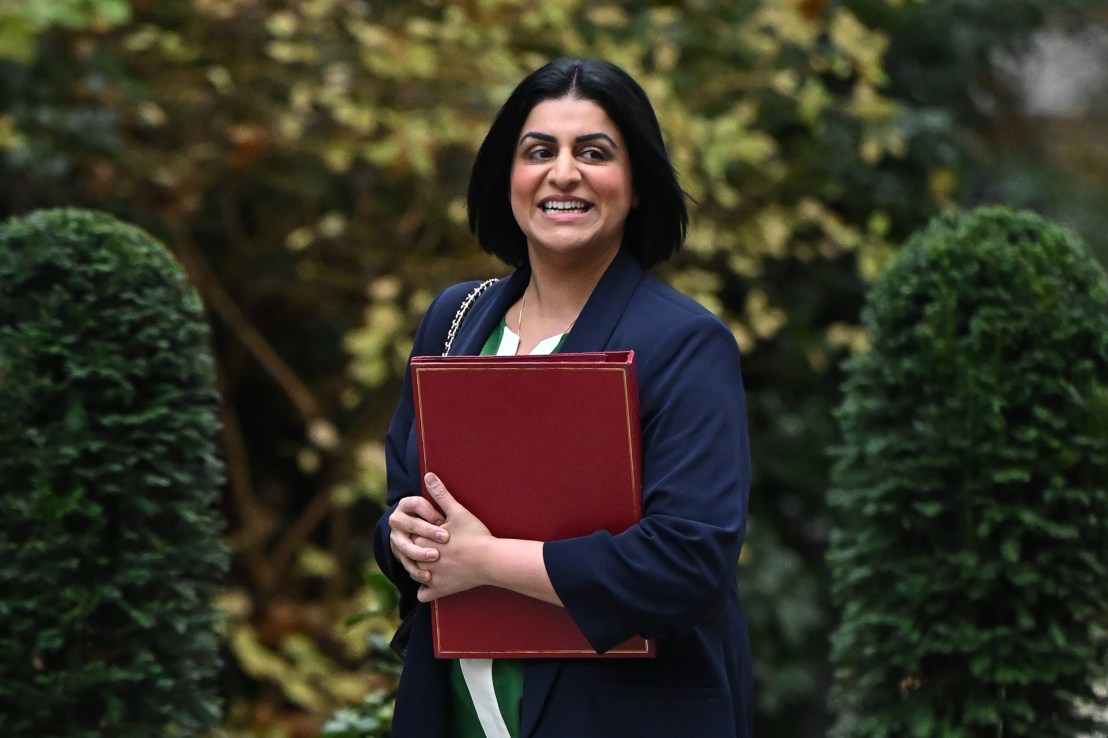
The Metropolitan Police’s inability to effectively fight crime is down to dysfunctional accountability system under the Mayor of London. The Home Secretary should step in to get the force back to fighting crime and keeping Londoners safe, says David Spencer
“In London, the Met rules the streets”. That’s what I was told over 20 years ago by one of the very experienced police officers who was tasked with keeping an eye on me in my first few months as a uniformed constable working in Camden Town.
The reality today is that many Londoners no longer believe that the Metropolitan Police is any good at keeping order on our streets or suppressing the crime and criminals that immiserate the lives of the law-abiding majority of people. Certainly, the days of anyone thinking that the Met “rules the streets” feel long gone.
A decade ago 68 per cent of Londoners said they believed that the police did a good job in their local area – for the 12 months to June 2025 that figure plummeted to 45 per cent. Rates of knife crime in the capital, despite some reductions this year compared to last, are still far higher than other English cities. The Met is abysmal when it comes to catching thieves and robbers – with only around one in 19 robbers, one in 76 bicycle thieves and one in 179 thieves such as pickpockets caught last year.
The head of the Metropolitan Police, Commissioner Sir Mark Rowley, is three years into a five-year term. It would be unfair to say that his term has been a complete failure. This year some types of crime – including knife crime – appear to be on a downward trend. Homicides in the capital have fallen significantly compared to last year; and the force remains amongst the best in the world at solving them. The Commissioner has personally pushed the force to use more modern crime-fighting technology such as facial recognition systems; data analytics to target the most dangerous offenders; and drones to safely respond to incidents.
But as Policy Exchange makes clear in a report published this week, core to the problems the Met faces is the issue of who is accountable to whom.
Democratic oversight of the force is principally provided by the Mayor of London – who delegates many of those functions to a deputy mayor for policing and crime. Last year Sir Sadiq Khan appointed the former leader of Islington Council, Kaya Comer-Schwartz, to the role.
Comer-Schwartz is on record as being a sceptic of facial recognition systems, which are increasingly being shown to be a highly effective crime-fighting tool. In 2024 she voted for an Islington Council motion calling for an “immediate stop to the use of LFR [Live Facial Recognition] surveillance in Islington”. Given her antipathy here it is not unreasonable to ask which of the Met’s other crime-fighting tools their own deputy mayor for policing and crime would like to see put on hold?
In response to the 2023 review of the force by Baroness Casey, the Mayor also established the “London Policing Board” – a panel apparently designed to “support the Mayor in providing strong oversight of the Metropolitan Police”. In reality, this exercise seems to entail the Met’s senior officers being brought before the panel – at least some of whom appear to be “ultra-progressivists” – for an occasional inquisition on whether the Met is “institutionally racist” or not. For some at least, keeping the Commissioner on track when it comes to the fight against crime would appear to be a secondary concern.
Civilian oversight of the police is a fundamental requirement in any democracy, but the current arrangements for London are not set up in a way to best enable the Metropolitan Police to succeed. In particular, far too much time and energy is spent on niche issues which matter principally to “stakeholder” groups and their own narrow interests.
Rather than continuing to leave Londoners to suffer because of an oversight regime gone awry, the home secretary – as the minister ultimately responsible for crime and policing – should step in.
For a time-limited period the government should remove powers of police oversight from the London Mayoralty, with the home secretary becoming the “police authority” for the capital, as was the case pre-2000. This would enable central government and Parliament to keep the Met’s focus on what really matters to Londoners – the fight against crime and criminals.
In the new year the government will be publishing a white paper on police reform. That is the ideal opportunity for Shabana Mahmood to demonstrate that she means business when it comes to sorting out crime and policing in the capital.
David Spencer is head of crime and justice at Policy Exchange and a former Metropolitan Police detective chief inspector