US officials will vet the social media activity of Brits travelling into the US as President Trump increasingly turns his fire on a “decaying” and “weak” Europe.
Those planning to visit on short term Esta visas would have to give personal details of family members, including dates and places of birth, and phone numbers used covering five years prior to travel.
The Trump administration proposals also mean that Brits – alongside citizens of 42 other countries – will be forced to hand over ten years’ worth of business email addresses.
Plans have been outlined by Customs and Border Protection (CBP) in the US government’s Federal Register, an official document put out each day.
The extra restrictions bring the US administration’s attacks against Europe to a new level after a national security strategy warned of “civilisational erasure” across the continent.
The strategy paper also said countries in Europe “will not be viable countries any longer”, referring to the US government’s concerns over mass migration.
Other countries to be affected by the changes include Japan and Australia.
US takes tougher approach on Europe
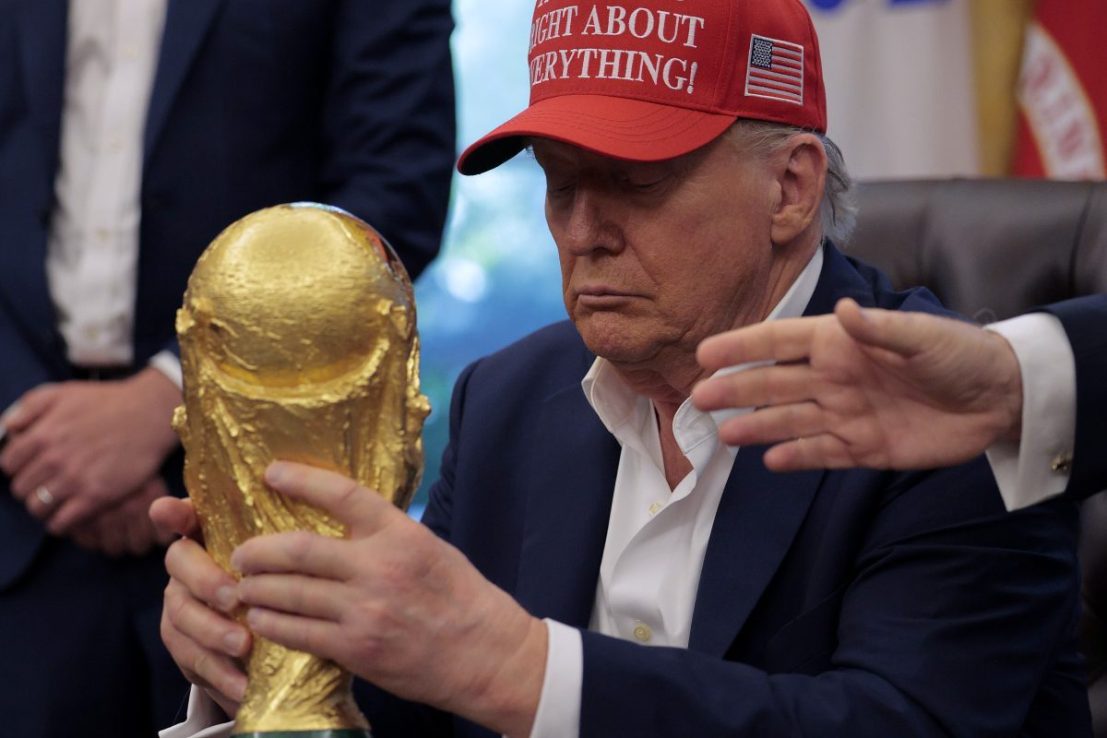
The extensive new collection of “high value data” on tourists comes ahead of the US hosting the World Cup alongside Mexico and Canada in 2026.
As many as six million international visitors are set to descend on the tournament while a joint Fifa and World Trade Organisation (WTO) report projects that tourists are likely to spend $416 (£312) each day and spend on average 12 days.
Will Bain, head of trade policy at the British Chambers of Commerce, said the proposed travel restriction changes lacked some clarity on the “precise definition” of what is meant by social media content or which family members would be covered.
Bain added: “It is up to the US administration to determine whether these proposals strike the right balance between national security concerns and raising the complexity of applying for an Esta. Making it more complicated to enter to the US risks losing tourist demand in a globally competitive market.”
Increasing divergence from Europe
The Trump administration’s security strategy and proposed travel rule changes has coincided with fears that the US is becoming exasperated by Europe’s approach to the war in Ukraine.
In a wide-ranging interview with Politico, Trump said Europe’s leaders were “weak”, adding that most of its countries were “decaying”.
Trump said: “I’m friendly with all of them. I like all of them. I have no real enemy. I’ve had a couple that I didn’t like over the years. I actually like the current crew.
“I know the good leaders. I know the bad leaders. I know the smart ones. I know the stupid ones. You get some real stupid ones, too. But they’re not doing a good job. Europe is not doing a good job in many ways.”
“They’re not producing. We’re talking about Ukraine. They talk but they don’t produce. And the war just keeps going on and on.”
European leaders including Keir Starmer, France’s Emmanuel Macron, Germany’s Friedrich Merz and Ukraine’s Volodymyr Zelensky have held regular conversations on Ukraine peace talks amid fears they may be getting sidelined by the US and Russia.
President Trump has reportedly told Zelensky that he has two weeks to accept a deal to end the war with Russia which would see Ukraine hand over territory to the Kremlin.
European leaders are considering using billions of pounds of interest gains on frozen Russian assets to fund Ukraine’s armed forces should negotiations collapse.