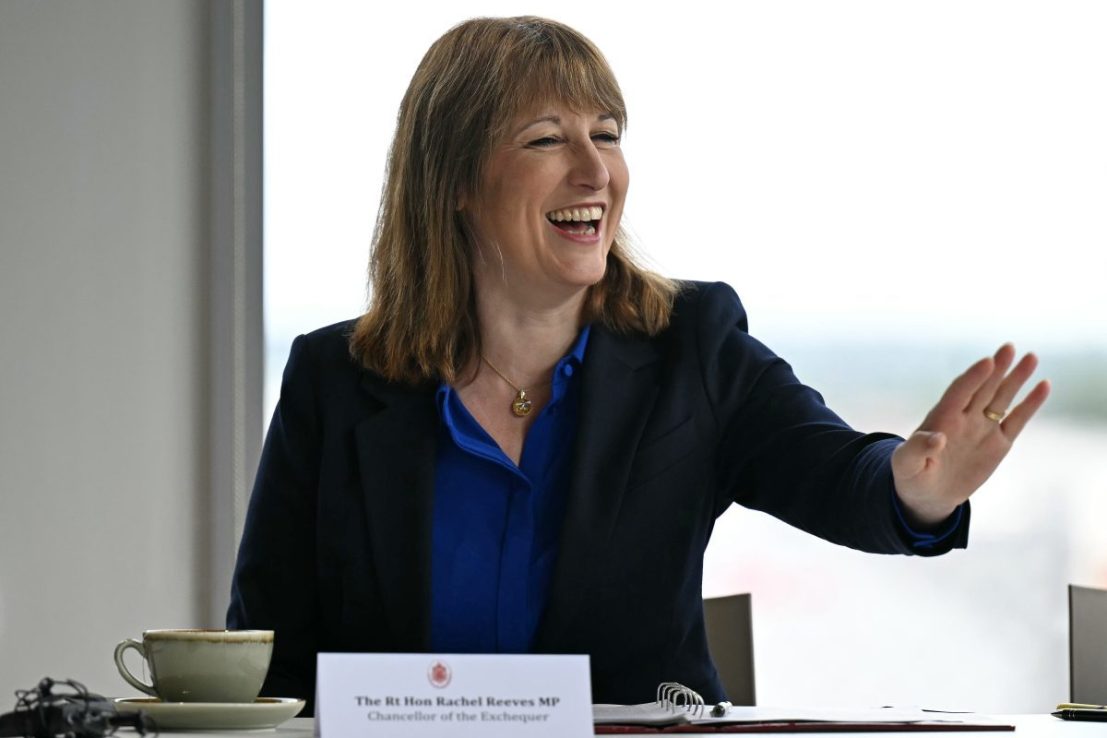
An unprecedented row has broken out between the Chancellor and the OBR about short-term productivity forecasts, but what should really worry Reeves is the long-term projections for debt, says Paul Ormerod
The row – no, the furore – between the Chancellor, Rachel Reeves, and the Office for Budget Responsibility (OBR) is unprecedented.
The resignation of the OBR’s Chairman, Richard Hughes, is unlikely to draw a line under the matter.
Who could have predicted in the late summer of 2024 that within 18 months the Chancellor and the OBR would be at daggers drawn and the Chairman of the OBR defenestrated?
On coming to power in July 2024, Rachel Reeves eulogised the OBR and brought in legislation to strengthen its position.
The continued drama centres around the timeline of when the Chancellor became aware of a particular set of short-term forecasts made by the OBR in the run up to the recent Budget.
But since Labour came to power, the OBR has published a number of studies quite separate from the hurly-burly of short-term economic forecasting and its inherent uncertainties.
These have focused on the overall context in which an economy finds itself and the long-term implications.
For the first five years into the future, the OBR has to work with many of the assumptions which the government of the day makes about its policies. Beyond that, it is free to say what it really thinks.
The reports have attracted much less attention than their very detailed projections for the course of the current Parliament.
Troubling
But they are in many ways much more troubling than the breakdown of relations between the government and the OBR. And for all their gloom, they reflect a broad consensus amongst economists.
In July this year, for example, Richard Hughes, authored a document entitled Fiscal Risks and Sustainability.
Hughes looked at the data in 36 advanced economies. He pointed out that the UK has the 6th highest level of public sector debt relative to the size of its economy, the 5th highest public sector deficit and the 3rd highest level of interest rates on government debt.
We can add another simple fact, highlighted by the OBR. They point out that public sector debt is currently around 100 per cent of GDP.
This figure is a significant one. There is no hard and fast rule which connects both the overall market confidence in a country and the rates on its government debt with the amount of debt relative to GDP. But once this latter ratio is above 100 per cent, the risks of a loss of confidence and a sharp rise in interest rates start to lift off.
Putting all these numbers together reveals an environment fraught with danger for the UK economy. High public debt, a government spending much more than it receives in taxes and high interest rates are a potent mix which could easily lead to a crisis of confidence.
The OBR’s September 2024 report on risks is perhaps even more worrying. It looked at the factors driving the public finances as we move into the 2030s and beyond.
Across the West, there is an inexorable rise in the demand for healthcare. Spending on health as a percentage of GDP goes up and up. The problem is made worse in the UK by the overall poor level of health of the population.
Demographic changes mean that not only are there more pensioners to support, but that there are fewer workers able to generate the income to pay the taxes required. And higher taxes themselves could easily deter effort and innovation
The trends will take decades for their full effect to be felt. And the OBR does emphasise the uncertainties around such projections. In many ways these are super tanker trends, difficult to turn round. But the message of the OBR is clear. Unless they are turned, the UK is heading for financial bankruptcy.
Paul Ormerod is an Honorary Professor at the Alliance Business School at the University of Manchester. You can follow him on Instagram @profpaulormerod