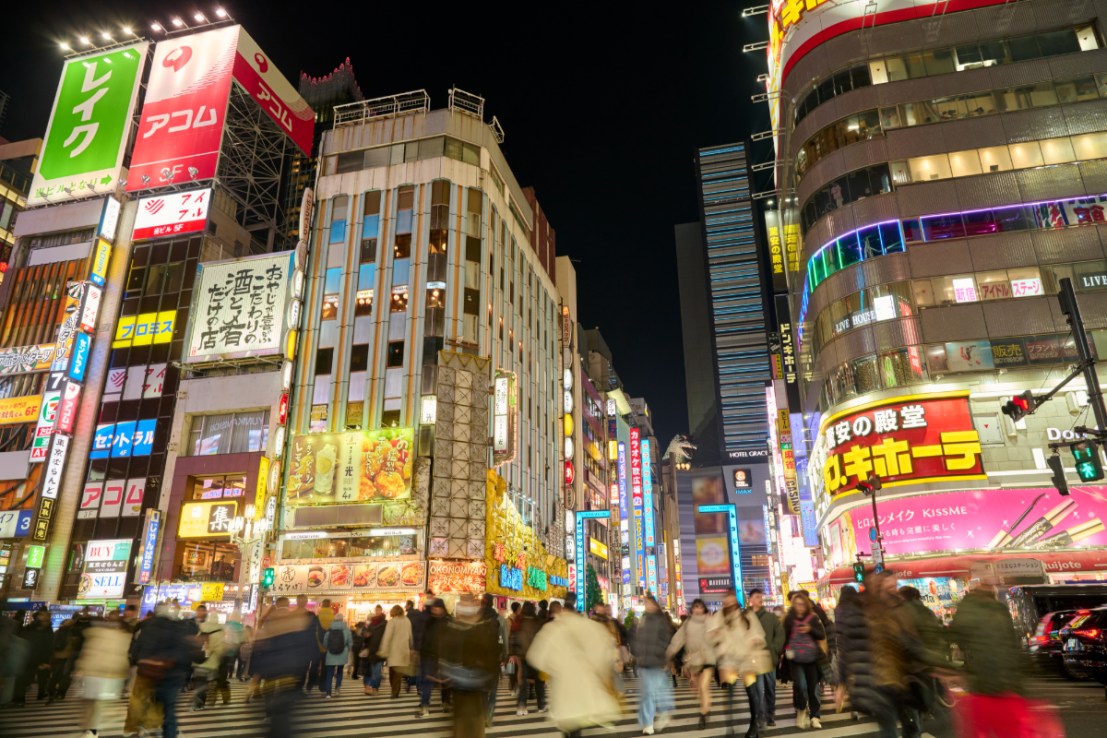
Tokyo’s iconic neon glow © TCVB
Japanese culture has always had a strong influence. Whether food, anime or Pokémon, Japan has captured attention from childhood and stayed with people for years whether they’ve visited the country or not. . Art such as “The Great Wave” and traditional themes like samurai are globally recognised, reflecting the country’s craft and pursuit of perfection.
Tokyo is easily recognisable from imagery alone, with its neon presence and reputation for cutting-edge design and futuristic feel. It remains synonymous with pushing boundaries in art, design and technology.
However, none of this would be present without the rich culture and local crafts that have shaped the country over generations. When you walk through the city, you naturally come across the crafts and hands-on traditions that keep its culture alive. This living history is one of Tokyo’s quiet but enduring charms. Tokyo’s traditions offer a more rounded way to understand the city beyond its modern image.
Traditional crafts demonstrate Japan’s love for design, detail, and intricacy. In Asakusa and Nihonbashi, two of Tokyo’s historic downtown districts, there is a treasure trove of ancient crafts thriving under the hands of a new generation.
Asakusa, one of Tokyo’s most atmospheric old neighbourhoods, is known for its small workshops, long-standing artisan culture and the lively streets surrounding Sensō-ji Temple. The area has long been associated with skilled makers, with traditional techniques and small trades still woven into its daily life.
In this area, you can discover Edo Kiriko, a traditional cut-glass craft dating back to 1834 in the Edo period (1603-1868). This is when coloured glassware, finely cut in patterns by artisans, really made a presence in the region.
Hand-cut brilliance of Edo Kiriko © TCVB
This traditional practice is open to visitors through workshops where you are tutored and guided in creating your own piece of Edo Kiriko, offered at places such as Sumida Edo Kirikokan.
In Nihonbashi, you can explore another of Tokyo’s long-standing craft traditions through washi making at Ozu Washi.
Nihonbashi has been a centre of commerce since the Edo period, known for its merchants, long-established shops and deep connections to paper, stationery and book culture. The mix of historic storefronts and modern buildings gives the area a unique atmosphere where traditional crafts still feel very much alive.
Washi literally means “Japanese paper”, but it’s much more than ordinary paper, used for everything from calligraphy to bank notes. Unlike regular woodbase paper, washi is flexible, strong and translucent. Centuries of refinement have ensured the technique suits Japan’s natural fibres and climate, producing paper of unmatched durability and beauty. Renewable raw materials such as Kozo, a type of mulberry traditionally used in Japanese papermaking, regrow after cutting as they are pruned rather than felled.
Traditional craftsmanship of washi paper
Shiba, just south of central Tokyo, is an area where the pace of the city softens: tree-lined streets, views of Tokyo Tower, and the calm of Shiba Park and Zōjō-ji Temple give the neighbourhood a quieter atmosphere despite its central location. It is also home to several long-established hotels, making it an easy place for visitors to enjoy cultural experiences without needing to travel far.
Kintsugi (the repair of broken pottery with gold) is a detailed and beautiful art form popular in Tokyo. Beginner-friendly workshops, for example at Shiba Park Hotel, offer an accessible way for you to try this delicate craft even if you have limited time in the city. Instead of bringing your own fragile items, participants repair prepared ceramic fragments, precious in the first place. This practice has a deep cultural and philosophical nature; by highlighting the imperfect, it reveals the beauty of renewal and repair.
Travelling around an hour and a half west from central Tokyo into the Tama area, the scenery shifts to the wooded hills and slower pace of Ōme. The town has long been known for its textile industry, and the combination of fresh air, natural surroundings and local craftsmanship gives the area a character very different from the city centre.
Kosoen is a beautiful and sustainable studio weaving culture,blending tradition and industry. The Murata family business began in 1919, originally dyeing threads in this textile town. In 1989, the studio was formally established to revive a natural fermentation method of indigo dyeing, using fermented plant leaves (sukumo), ash lye and wheat bran with zero chemical dyes. The result is a living dye vat that responds to temperature, humidity and the seasons, requiring daily care.
Under professional guidance, you can take part in an indigo-dyeing workshop — dyeing a handkerchief, scarf or other lightweight items, and see the process up close. The leftover dye liquid is returned to the soil as fertiliser, showing how the craft exists in harmony with the environment.
The deep indigo known as “Japan Blue” has historical significance and appears in many important artworks. Experiencing indigo dyeing in Ōme — where the air, the light and the workshop environment all shape the final colour — offers a sense of connection that stays with you long after the dye has dried.
Exploring these neighbourhoods reveals how deeply Tokyo’s craft traditions are woven into everyday life, and how each area offers its own way to connect with the city’s quieter, more enduring stories amid the thrill of contemporary Tokyo.
To discover more about Ōme’s indigo heritage, the chief artisan of Kosoen will give a talk at Japan House London, accompanied by a short virtual tour of the workshop.
Date: Saturday, 17 January 2026
Venue: Japan House London
Admission: Free of charge
For more information and to register, please visit the Japan House London events page