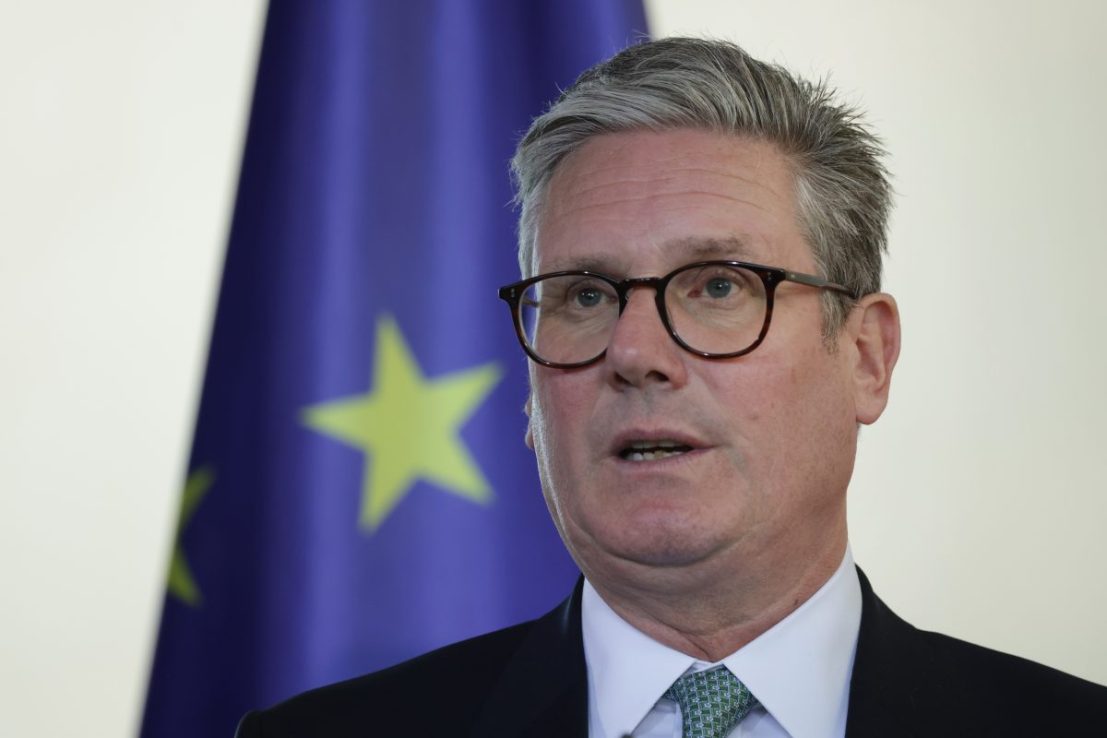
Prime Minister Keir Starmer will set out plans later today on how the Budget will enable the government root “out excessive costs” and reform the welfare system, as pressure over Treasury decision grow.
Starmer will discuss how choices made in the Budget will advance the government’s goals of boosting economic growth and bringing down the cost of living, after opposition figures have raised concerns that the Budget will ultimately leave Brits worse off.
Some economists and politicians have argued that Reeves’ broke her manifesto promise not to raise taxes on working people by freezing income tax thresholds until 2031.
The £8.3bn “stealth tax” is set to drag 920,000 more Brits into paying tax on their income.
But, Starmer will argue the Budget decision will create a “fairer economy” by reducing energy bills, lowering inflation and producing high levels of investment to fund public services and drive future growth.
Growth measures
As part of the Labour’s growth plans, Starmer will ask business secretary, Peter Kyle, to provide monthly updates on the implementation of the of the government’s industrial strategy.
The strategy focuses on driving investment into key growth sectors, such as defence, life sciences and clean energy, with £250bn secured for the plans.
In his speech, Starmer will say: “Rooting out excessive costs in every corner of the economy is an essential step to lower the cost of living for good, as well as promoting more dynamic markets for business”.
Reforming the welfare system
The Prime Minister will also address the government’s decisions regarding the welfare system, after the Conservative’s disagreed with the abolishment of the two child benefit cap.
Leader Kemi Badenoch argued the removal of the cap was “immoral” and ultimately saddled younger generations with debt, declaring that Conservative’s would reverse the decision if they returned to government.
The lifting of the cap, which will take place from April 2026, will cost £2.3bn in the 2027 financial year and £3bn in 2030, according the Office for Budget Responsibility.
However, both Starmer and Chancellor Rachel Reeves’ have both stated the system they inherited from the Conservative’s last summer left too many children unable to eat as well as large numbers of young people out of employment due to sickness.
Following the scrapping of the cap, the government will now turn its attention towards confronting “the reality that our welfare system is trapping people” both in poverty and unemployment, through investing in apprenticeships and ensuring young people are either guaranteed training or work.
Starmer will say: “We must also reform the welfare state itself, that is what renewal demands. Now, this is not about propping up a broken status quo.
“No, this is about potential, because if you are ignored that early in your career, if you’re not given the support you need to overcome your mental health issues, or if you are simply written off because you’re neurodivergent or disabled, then it can trap you in a cycle of worklessness and dependency for decades.”
“We need to remove the incentives which hold back the potential of our young people.”