If, on Wednesday morning, you’d asked me how this entire Budget process could ever get more chaotic and absurd I might have said “I suppose the entire thing could leak, before the Chancellor delivers it.” Then again, I probably wouldn’t have suggested such an implausible scenario.
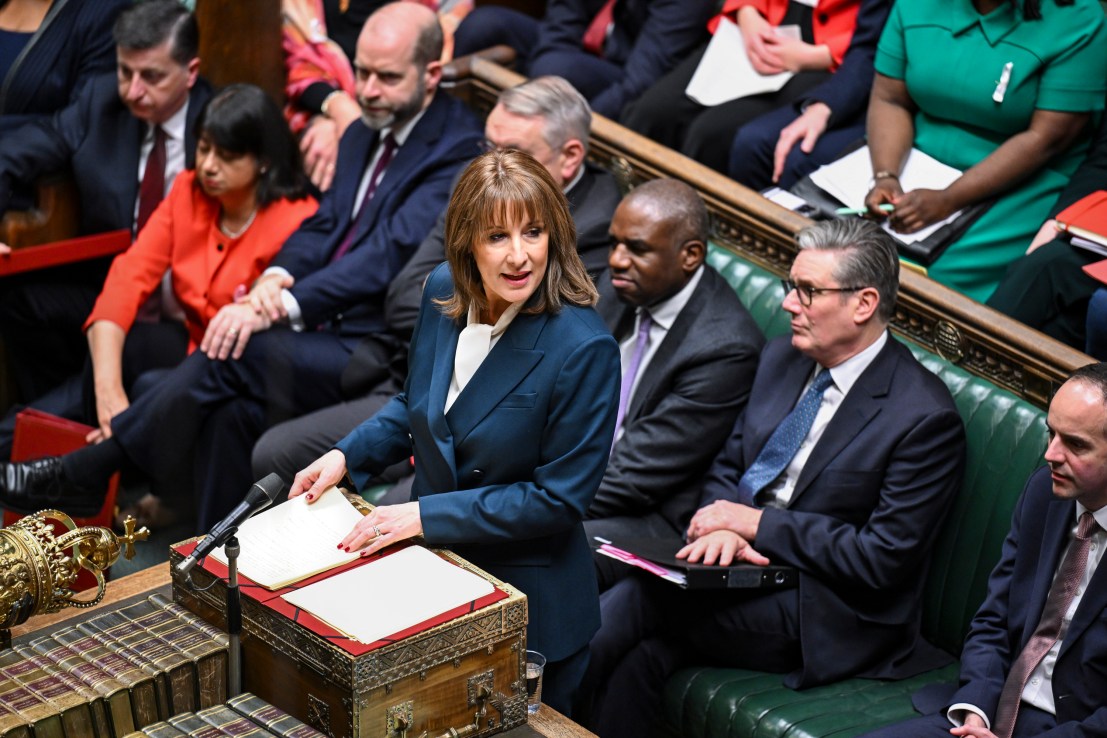
But at 11.44am yesterday morning, just ten minutes before PMQs and 45 minutes before Rachel Reeves was due to stand up in the Commons, the unthinkable happened.
The OBR’s full assessment of the entire Budget, including its costings, forecasts and analysis, was accidentally published.
Newsrooms and trading floors rushed to download and print it, leading to the spectacle of the Prime Minister telling MPs shortly after midday that “the Budget will be published in half an hour” as those very MPs were busy reading it on their phones.
So, whether courtesy of the leak or via the Chancellor’s subsequent – and superfluous – delivery of it, what did we learn? In a nutshell: taxes will rise to fund a welfare splurge. That’s the 8-word summary. The 17-word summary is that taxes will rise to fund a welfare splurge and we’re all going to feel poorer for longer.
Over £25bn of fresh tax hikes will take the tax burden to a new record high. It will hit an eye-watering 38.3 per cent of GDP by 2030/31. The OBR notes, with some understatement, that this could “distort or constrain economic activity by more than expected.”
The pernicious freeze in income tax thresholds will lead to nearly 800,000 more basic rate taxpayers and more than 900,000 higher rate taxpayers. Pensions are raided, as are dividend payments.
Welcome to life in the slow lane
In exchange for this plundering, spending on welfare will spike by more than £70bn to hit an unimaginable £406bn a year by 2031. Meanwhile, living standards – the measure by which Keir Starmer has asked to be judged – will basically flatline. This is what the OBR means by ‘constraining economic activity.’
As Daniel Casali, Chief Investment Strategist at wealth manager Evelyn Partners, puts it: “Higher taxes risk dampening consumer spending, discouraging investment, and ultimately slowing the economy.”
This is the road on which our government has embarked, full of false confidence and arrogant assumptions that people won’t notice what’s being done to them. As a country we’ve been flirting with the slow lane for too many years but, with this Budget, it’s now unmistakably the lane that we’ve picked.
Our economy is now destined to remain a 20 mile per hour zone.