The banking industry has given Rachel Reeves some much-needed ammunition as she attempts to defend her tax-heavy Autumn Budget.
After being spared from a highly-anticipated cash grab, a fleet of banks announced a fresh pump of capital in the UK economy.
Britain’s largest retail bank Lloyds Banking Group unveiled £35bn of new finance for 2026 to companies operating and investing in the UK in the hours following the Budget.
FTSE 100 giant Barclays also promised on Wednesday to “boost support to UK businesses and consumers” with further £45bn lending.
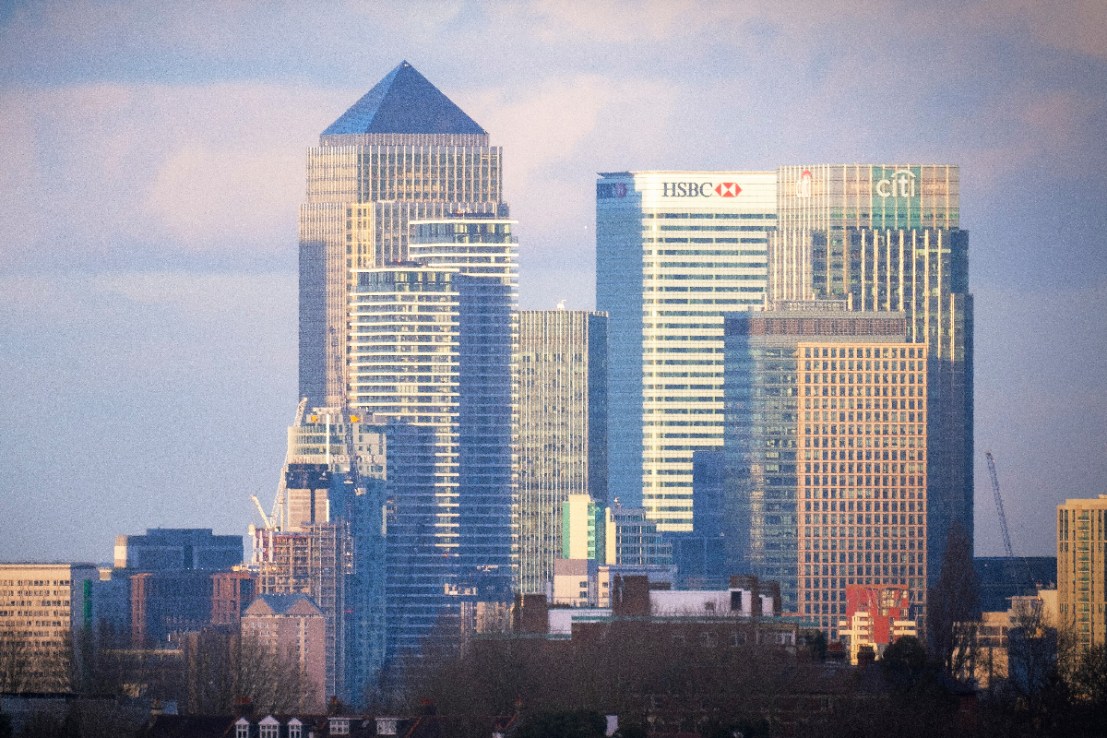
On Thursday, JP Morgan said it would build a £10bn Canary Wharf tower marking its largest European presence whilst US banking juggernaut Goldman Sachs said it would commit “several billion pounds” into UK infrastructure and add 500 jobs to its Birmingham site.
The news landed well for the embattled Chancellor, who was at the forefront of the media round Thursday morning defending her £26bn tax raid.
When questioned about criticism surrounding her plans for growth after the fiscal watchdog downgraded the economic forecasts for 2026 through to 2030, Reeves touted the banks new investments.
“Why don’t you believe Jamie Dimon, the head of JP Morgan who today has announced a multi-million pound investment with a new building with capacity for 12,000 staff in London?” she told BBC News.
“Or why don’t you believe Goldman Sachs, which has just announced today, after the Budget, that they would double the size of their workforce in Birmingham with 1,000 jobs?”
The news also follows reports Reeves had urged banking chiefs to praise her Budget as she dismissed calls for extra taxes on the sector.
Willaim Howlett, financials analyst at Quilter Cheviot, told City AM: “It had been reported that the UK Treasury had asked banks to make public declarations of support for the Budget, but this was always unlikely.
“What instead has happened is banks, both UK and US ones, making announcements of investment in this country, which the government can then point to as evidence of its plan working.”
Howlett added the investment surge could suggest a “quid pro quo” element at play with UK banks making highly public commitments to increase lending to “reassure” the government that they are prioritising economic support through loan growth while still generating strong returns for shareholders in the current high-interest rate environment.
Banks not given a ‘free pass’
Gary Greenwood, banking analyst at Shore Capital, said: “Although the exemption of the banks from any further taxation was hardly a surprise… it will nonetheless have come as a relief to management teams and investors alike.
“That said, we do not necessarily see this as a free pass, as the Chancellor will likely want to see the banks pursuing more aggressive lending policies in order to support economic growth. Failure to do so could see this reprieve revisited.”
The Chancellor faced rallying calls to tax the sector from think tanks, opposition politicians and even former Deputy Prime Minister Angela Rayner.
In August Natwest shed five per cent in a single trading session after the left-leaning Institute for Public Policy and Research (IPPR) called for an annual £8bn tax on the sector.
The report, which the Chancellor was understood to be seething at the think tank for, targeted profit “windfalls” from quantitative easing.
The stock losses wiped nearly £2.5bn off Natwest’s market value, with a total £8bn loss in the FTSE 100’s Big Five banks, including Lloyds, Barclays, HSBC and Standard Chartered.
Banking stocks rose after the Chancellor delivered her Budget on Wednesday.
Natwest rose as much as three per cent and Lloyds four per cent ending the session at 619.60p and 93.68 respectively.
But the lenders did suffer a sharp dip at midday as the early leak of the OBR’s economic forecasts spooked markets.
The yield on 10-year gilts – an indication of medium-term borrowing costs – also spiked to a high of 4.54 per cent as jitters raced across the market.