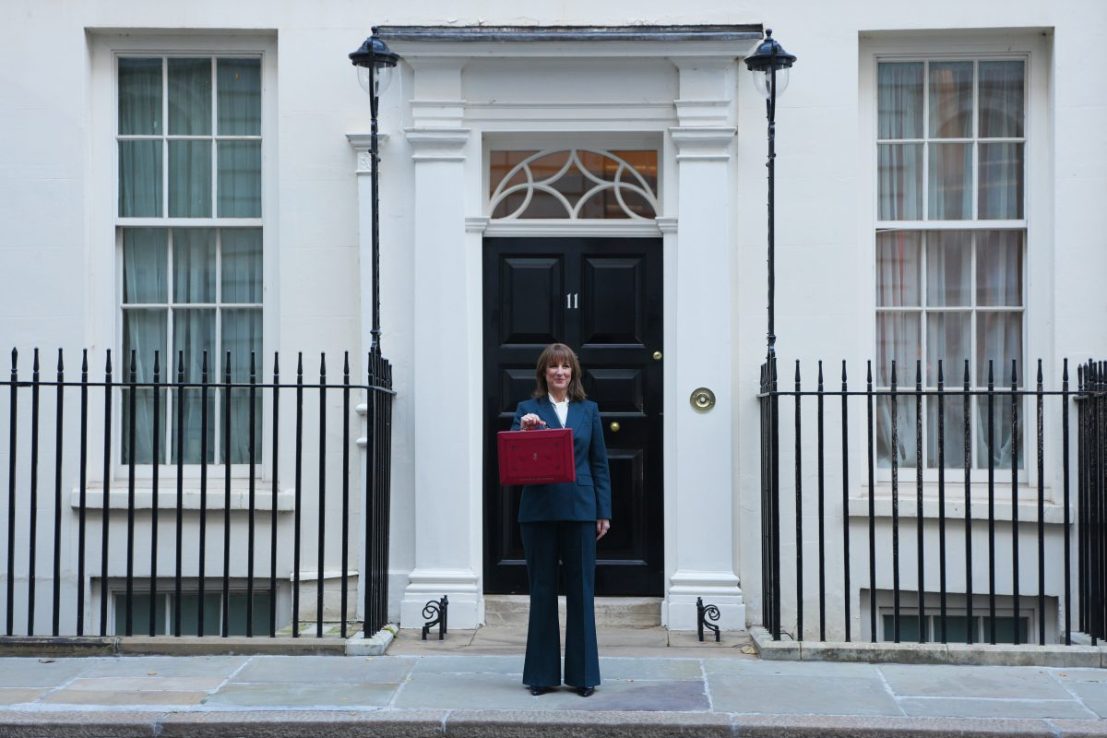
Cheered by backbenchers, Reeves’ headline pledge to scrap the two child benefit cap made for a party-appeasing Budget, writes Douglas Beattie
Rachel Reeves has sought to draw a line in the sand with her second Budget as Chancellor – unveiling a package of measures which are designed to move the country on from one era and belatedly kickstart another.
The extraordinary spectacle of the Budget leaking out by mistake via the OBR shortly before Reeves was due to speak simply added to the already heightened sense of Labour having a bumpy ride in office, amid talk of challenges to Keir Starmer’s leadership, resignations, briefings and rows.
Against this difficult backdrop, and poor poll ratings, the Budget was undoubtedly a golden opportunity for Labour to reconnect with the electorate ahead of crucial elections next May across local and devolved governments.
It’s not always the case but Budgets can come to define eras – both economically and politically. Think here of Geoffery Howe in 1979 and his desire to “squeeze inflation out of the system”, or Gordon Brown’s move in 2002 which effectively resurrected the NHS with a £40bn investment.
Reeves’ task was unenviable given she is not only a Chancellor under considerable political pressure but also lacking the favourable economic conditions in which to operate. Within this framework the aim of her speech was to keep to the fiscal rules, reassure business and the markets that her approach is sound, while also taking immediate action to help with the cost of living.
Framed by Reeves as “fair choices” and “asking everyone to make a contribution”, plans were unveiled to raise revenue by continuing to freeze income tax and National Insurance thresholds. At the same time MPs were informed of a rise in the minimum wage, an increase in the value of the state pension and a freeze in fuel duty.
Two child benefit cap scrapped
Most notable of all was confirmation that the two child policy, limiting access to means-tested benefits, is to be scrapped from April next year.
This was Labour to the core – very much in line with the party’s history of combatting poverty. The Conservatives and Reform UK will try to frame this as the government taxing hard-working people to subsidise the workshy. Yet moving on from a policy which has cast a million children into poverty over almost a decade will largely be paid for by raising taxes on online gambling to levels similar to those in other countries.
Reeves, sounding both emotional and combative, made a strong case for scrapping the two child rule. Partly this was a moral argument – the idea that every child is entitled to have the same chance in life regardless of circumstances – but it is also economic.
As the Chancellor outlined, child poverty is not only damaging to the individual but bears huge costs to society, leading to poorer health, lower educational attainment and reduced productivity, all of which in turn hit public spending on health, education and social care.
Here then was Reeves confidently making the point that Britain cannot build its future prospects with 4.5m children blighted by poverty. After all, rising living standards are a key priority for any government, and success depends on it.
Overall, we can certainly say this was a Budget designed to turn the page on 14 years of Conservatism – but also demonstrate that Labour is perhaps beginning to deliver the much-vaunted ‘change’ so often heard at the general election.
In the Commons, Labour MPs seemed to love it. Whether any of this will be enough in the longer term to unite a fractious party around the Chancellor and Prime Minister will become clear soon enough.
Douglas Beattie is a journalist and the author of Victory at the Ballot Box: The History of How Labour Built Britain