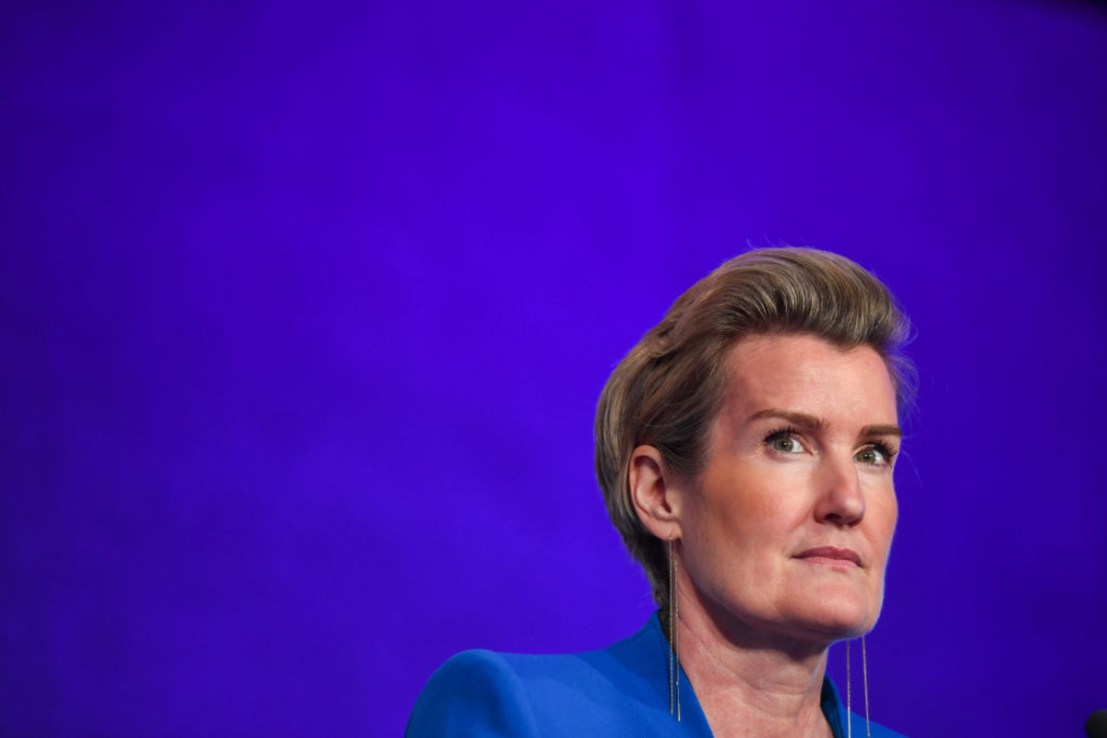
Last autumn, the British Chambers of Commerce and its members were left shell-shocked when a party that promised to be the most ‘pro-business in history’ used its maiden Budget to deliver a succession of hammer blows to the private sector. Having shouldered the burden last year, boss Shevaun Haviland wants this year’s instalment to paint a more positive picture.
Pay a visit to Shevaun Haviland’s British Chambers of Commerce in Westminster – the pro-trade industry body that can trace its roots as far back as the 16th century – and one of the first things you will see is a framed letter from Keir Starmer.
In a polite, prosaic note dated 1 July, the Prime Minister wanted to thank Haviland and her team for hosting him at the lobby group’s annual jamboree. Attended by much of the organisation’s vast chamber network, the gathering was, he wrote, “a powerful reminder of the vital role the BCC plays in championing British business”.
But the work put in by the lobby group’s dutiful staff was not the only thing that Starmer felt grateful for that week. In his keynote address six days earlier, he offered delegates a far more symbolic and significant thank you; one which few would feel moved to give pride of place in their office.
“We’ve asked a lot of you,” he had told BCC members. “I understand that and I want to acknowledge that it has made a huge difference. Because of it, the money has gone into the NHS and waiting lists are coming down. We’ve put investment into skills… new homes [and] new roads.
“I want to say thank you.”
The words were the clearest admission from any senior minister of the extent to which the government had relied on business to bear the brunt of the £70bn splurge announced by the Chancellor at her maiden Budget.
That same day, Haviland, who has now been at the helm of the BCC for nearly half a decade, delivered a speech of her own. And despite it boasting a wordcount of over 2,000, its central demand was unambiguous: come the Chancellor’s next set-piece speech in the Autumn, “there must be no further tax increases on business”.
The four months since those addresses have been awash with speculation over how the government will tackle its fiscal pickle: will the Chancellor opt for a so-called smorgasbord of different tax hikes to make up the shortfall? And if it did, which industries and interest groups will find themselves asked to pay more – in many instances a lot more – in order for the Treasury’s sums to add up?
Even as leaks continue to emerge – and the answer to those questions takes shape – as she sits down with City AM just days before Reeves’ second milestone speech, Haviland’s core demand is unchanged and her vim undimmed.
“It’s been hard,” she says, reflecting on the year her members have faced. “Really hard. But, having taken the hit last year, this time it’s about backing business: what are you doing to help generate opportunities, to drive revenue, to open up markets.”
Chancellor Rachel Reeves has signed off on a slew of big infrastructure projects (Photo by Darren Staples – WPA Pool/Getty Images)
Last year’s NICs and living wage Budget blow
Much of the BCC’s 80,000-strong membership were left in a state of shock last year when confronted by a triple combination that – with a stroke of a pen – piled unprecedented additional costs onto their bottom line. First, there was the 1.3 per cent rise in employer National Insurance contributions, the UK’s main payroll tax which was rumoured to be in Labour’s sights despite the party’s manifesto vowing not to change it. Then came a near-seven per cent rise to the national living wage. Both of which were combined with the ultimate – in Haviland’s words – “bad rabbit” out of the hat: the decision to more than halve the threshold at which NICs kicks in from £9,100 to £5,000.
And after years of Brexit-borne uncertainty, immediately followed by the pandemic, after which came double-digit inflation and the energy price shock, and then last autumn’s killer blow – businesses, Haviland says, feel “battered and punch drunk”.
But we don’t just have to take her word for the strength of feeling endemic among the BCC’s member base. The network itself – which spans from niche boutiques to corporate juggernauts like Heathrow Airport Ltd and Tesco – delivered an excoriating judgement in the group’s first quarterly poll after the fiscal blow. Over two-thirds branded tax a going concern to their operations – the highest score since 2017. Meanwhile business confidence, which thereunto had been soaring on the not irrational expectation the government would see out four years of relative stability, was found to have plunged to a post-mini-Budget low.
The morning the results were published, Haviland resorted to a rhetorical change of tack.
“We realised we needed to be a bit more direct and vocal,” she remembers. “On 6 January, [when the research came out], I opened that morning with a 5 30am appearance on Wake Up to Money. I then did five interviews before 10 o’clock, but by 9 15, I had a minister from the Treasury on the phone saying, ‘Could you not?’ And I said listen, I hear you, but this is what the data says – it’s what our members are telling us.”
While her new, firmer approach may have earned her a panicked call from a minister, it also got results. Just two days later, the industry grandee found herself in Number 11 Downing St, with the Chancellor asking her how much she liked airport development. “A lot,” came the answer. A few days after that, Reeves travelled to Oxford to give a speech confirming government support for the expansions of Heathrow, Gatwick and Luton.
Haviland at the BCC’s 2025 annual conference
‘Ministers are clear what our demands are’
Despite her organisation’s firmer tone – and the potentially trust-busting measures unveiled last year – the industry chief maintains that lines of communication ahead of the Budget have been “excellent”; a fact she says is unchanged since the party’s time in opposition.
Is dialogue so good, I follow up, that she is confident her ‘no new taxes’ mantra has got through to ministers and, crucially, that they have listened?
With a knowing look she counters judiciously: “We’re confident we’ve got our message through…” leaving a pregnant pause to hang where the answer’s second part should have followed.
But even if she declines outwardly to emit confidence, the industry chief must be hopeful of avoiding a similar fate to last year; from which she says her members are “still regrouping”. Among the wearisome levels of kite flying and speculation since the BCC’s summer conference, few leaks and briefings have pertained to business. Some have been sector-specific – on gambling duties and bank windfall tax – but a cross-sector squeeze of the private sector looks off the cards.
In Haviland’s eyes, the danger is that, in their attempt to slice and dice their way to a fit bill of health from the Office for Budget Responsibility, unsavoury knock-on effects emerge out of the woodwork.
“We rarely speak to them directly on speculation with ministers, even if there are things in it that we’re worried about,” she says in response to a question coaxing her into pulling the curtain back on the weeks running up to the Budget. “But there was one question – over the salary sacrifice on pensions – that might have unintended consequences that the Treasury might not have thought of.”
In that instance, the BCC has been making the case any cap would – by logical extension – leave businesses as well as staff facing higher National Insurance bills.
“That is absolutely not what they want to happen, obviously,” she says.
The other concern is business rates, the commercial equivalent to council tax. The levy, which is due a major overhaul in April to make it more progressive, is a “broken system” that perturbs pro-growth investment, according to Haviland.
“Even if I’m one of the smaller businesses that might have benefited from it on the lower end, I’m still totally disincentivised from investing in my property,” she points out. “If I put solar panels on my roof, for example, I’m paying more business rates.”
Major projects like Sizewell C will help crowd in billiions of pounds worth of private sector activity
Trade and infrastructure: the BCC’s Budget wishlist
What she really wants to see on Wednesday, though, are some morsels of positivity, be that through doubling down on infrastructure – “road, rail, and green energy – let’s keep signing that off” – and the BCC’s specialist subject trade.
In a world of tariffmaking and escalating geopolitical tensions elsewhere, this – in her eyes – is among the lowest hanging fruit for which the Chancellor and PM could reach. According to the industry group’s data, a mere two per cent jump in trade levels would provide a 0.6 per cent fillip to the UK’s gross domestic product. In an economy stuttering along at around one per cent growth: “0.6 on top of 1.3 per cent is a lot.”
Meanwhile a glut of state-backed megaprojects will, she predicts, crowd in other investment from her members, helping turn the prevailing declinist narrative into a virtuous cycle.
“You back business, and the opportunities are there, right?” she says. “If you sign off more infrastructure, we will come in behind that. Look at Hinkley Point C [the major nuclear power plant in Somerset]. They estimate they have put £5bn into the local economy through the supply chain in the last five years.”
“That means more jobs, more tax into the Treasury’s coffers, to pay for our NHS,” she adds. “It’s an obvious equation.”
It is only, Haviland says, through confident, proactive moves like these that the Chancellor will fulfil the defining goal on which she asked voters to judge her: having the fastest sustained growth in the G7 that is felt throughout the country.
Will those aspirations come to pass at Wednesday’s Budget?
This year, a thank you letter will be of little consolation if they don’t.