Bangkok is rarely quiet. The Thai capital barrels forward at full volume: Woks hiss and clang in open-air kitchens, tuk tuks chase traffic like motorised dragonflies, and scaffolding sprouts where centuries-old ruins once stood. The streets pulse with unfiltered life. Anthony Bourdain once likened it to “being inside an electronic rice cooker with the lid on.”
And yet, standing on my balcony at Capella, the city seems to hold its breath. The air is heavy, hinting at the day’s heat. The Chao Phraya River stirs below, shimmering gold and pewter. It’s a scene that makes you forget that just behind me, beyond the grand gates, lies the electronic thrum of the city.
Voted the World’s Best Hotel in 2024 World’s 50 Best Hotels list and third best for 2025, Capella has cultivated a cult following across Asia with properties from Ubud to Kyoto. Opened in late 2020, Bangkok marked the brand’s first venture into a mega-city, occupying a prized stretch along the city’s most storied waterway. The river is Bangkok’s backbone, alive with commuter ferries, cargo barges, barefoot skippers, and disco dinner cruises.
Read more: The very best hotel in the UK has been revealed
Across the property, art mimics and honours the river: A sequined frieze, River of Gold by Ploenchan ‘Mook’ Vinyaratn, sweeps across the lobby, strands of upcycled yarn and brass strings shimmering like fish scales.
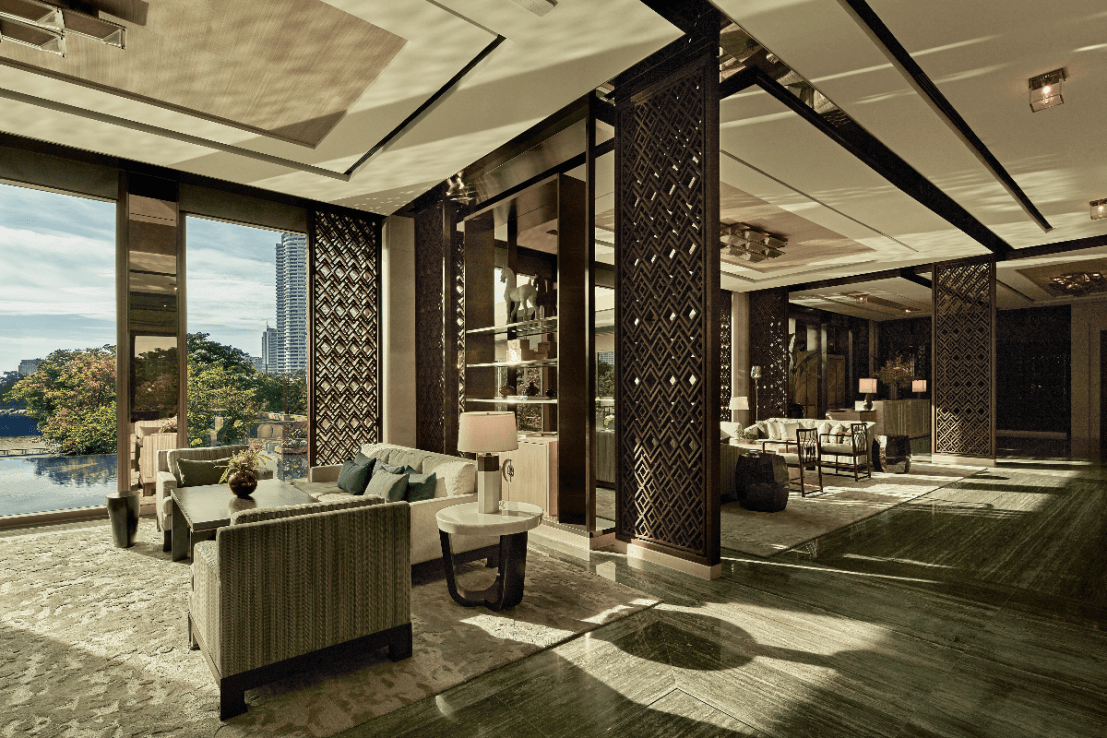
With its expansive glass façades, carved lattice screens, and candlelit pools strewn with floating flowers, Capella feels like a cloistered palace sealed off from the city. Yet this ‘urban resort’ is intimately connected to the river: every one of its 101 rooms and suites looks out onto the water, with pocket balconies that feel like opera boxes from which to observe. The Verandah suites offer pavilion daybeds with private plunge pools, while the ultra-luxe villas open onto private tropical gardens on the edge of the Chao Phraya.
Interiors are demure with buttery woods, plush slate rugs, bronze touches, and a big bed so crispy and white it could have been made up by Marie Kondo herself. Rooms are high-tech in a conspiratorial way: they anticipate your needs and movements, lowering the blinds when you leave and raising them with a tap of your keycard upon your return, which gives the faint thrill as if walking onstage. A butler’s hatch discreetly swallows laundry, parcels, and the leftovers of a midnight Tom Yum Goong, and of course, there’s the obligatory iPad to answer life’s pressing question: “when does the breakfast buffet close?” It’s 11:00, by the way.
Downstairs, the sultry Art Deco bar, Stella, must be one of the best date night spots in the city. Under a sprawling, diamond-leaf chandelier is a taxidermy peacock, and a Cuban singer smoldering her way through Bolero classics. The air smells of ylang ylang, with mirrored ceilings multiplying the well-heeled patrons sitting in velvet booths below. The cocktails read like a treasure map through Thailand’s pantry: lychee spritz, umami martinis with miso butter and makrut lime, and punchy rum slushies with amaretto.
The bar menu is simple but satisfying, stuffed chicken wings, crispy rice and soft-shell crab rolls worth cancelling dinner plans for. Just when I’m starting to think this is a proper grown-up establishment, my lovely waiter hands me a napkin with a hand-drawn Powerpuff Girl.
The fun doesn’t stop there. Stella is also an acclaimed patisserie offering culinary workshops, including sweet making, and rolling your own padan crepes under the guidance of local chefs, who speak in quiet, exacting tones, their hands moving like calligraphy over sugar and dough. The hotel is also home to Côte by Mauro Colagreco, a two-Michelin-starred dining experience, and Phra Nakhon, where Thai classics shine: crisp-skinned river prawns, smoky lemongrass broths, and fragrant creamy green curries.
Later that evening, I’m cradling a cup of butterfly pea tea on my balcony. Another karaoke party boat floats by glowing watermelon pink and green, like a river bound sweet shop.
If, like me, the little details matter – the click of a light switch, the way an armchair cradles your frame, or how fast a waiter appears when you look vaguely thirsty, then Capella not only makes you feel pampered, but validates your particular brand of fussiness. Nowhere more so than Auriga Spa, with seven treatment suites, including two couples’ sanctuaries featuring side-by-side jacuzzi baths for a post-treatment soak. Thai healing traditions inform every treatment; my herbal compress massage was oddly musical, as though my fascia was being played as a string instrument. I left feeling several inches taller.
It would be easy to remain within Capella’s glossy cocoon, but that would be missing the point. The hotel’s ‘Capella Culturists’ steer guests towards the surrounding Charoenkrung District, Bangkok’s oldest paved road and newest creative artery. The area is in the midst of a quiet renaissance: weathered colonial-era façades host minimalist galleries; noodle stalls sit beside concept cafes. Grandmothers dry shrimp on windowsills as tattooed baristas pull espresso shots next door.
Bangkok Design Week has made Charoenkrung its headquarters, drawing more than 300,000 visitors and injecting half a billion baht into the local economy. Capella builds on this energy and encourages you to treat the river as a launchpad for discovery, with complimentary boats to Sathorn Pier and beyond. Perfect for someone like me, easily seduced by a cheap Grab taxi, only to sit in traffic, regretful and running late.
Up the river at Talad Noi, I discover Chinese shrines hidden behind Sino-Portuguese shophouses, and vibrant murals blooming on crumbling walls. I wander into a tiny massage parlour, bubble tea in hand, adding my sandals to the pile heaped at the door. A post-shopping foot rub is a Bangkok rite of passage says the woman behind the reception desk. I couldn’t agree more. Here, I meet an Aussie expat who tells me that I “haven’t really seen the city until you’ve seen it from the river, the boats show you how everything connects.” The temples, the markets, and the people all stitched together by the water.
Read more: The fabulously old school Bangkok hotel with proper Thai hospitality
Later that evening, I’m cradling a cup of butterfly pea tea on my balcony. Another karaoke party boat floats by glowing watermelon pink and green, like a river bound sweet shop. From the upper deck comes screams of “Livin’ la Vida Loca!” and behind tinted glass, shapes of partygoers twist and shuffle like Sims come to life. Fanta bottles rest at mini shrines on the riverbank, offerings to spirits that must watch the city with patient amusement.
This is Thailand in a microcosm, barefoot monks and Blackpink mania, fortune tellers and fintech start-ups, lotus ponds and late-night lineups. It is all these combustible contrasts that make it so addictive. Bangkok in the twenty first century is a paradox: ancient and digital, spiritual and transactional, lavish and raw. Some luxury hotels try to buffer it; others overwhelm with theatrics.
What elevates Capella above the city’s older icons is not flashier marble or larger suites, it doesn’t try to compete with the noise, it dials the city in and out like a radio frequency, letting guests choose their bandwidth. One moment silence, the next a full symphony.
Visit the Capella in Bangkok yourself
Rooms at the Capella Bangkok start from around £460 per night; go to capellahotels.com/en/capella-bangkok. British Airways and Thai Airways fly London to Bangkok return from £350