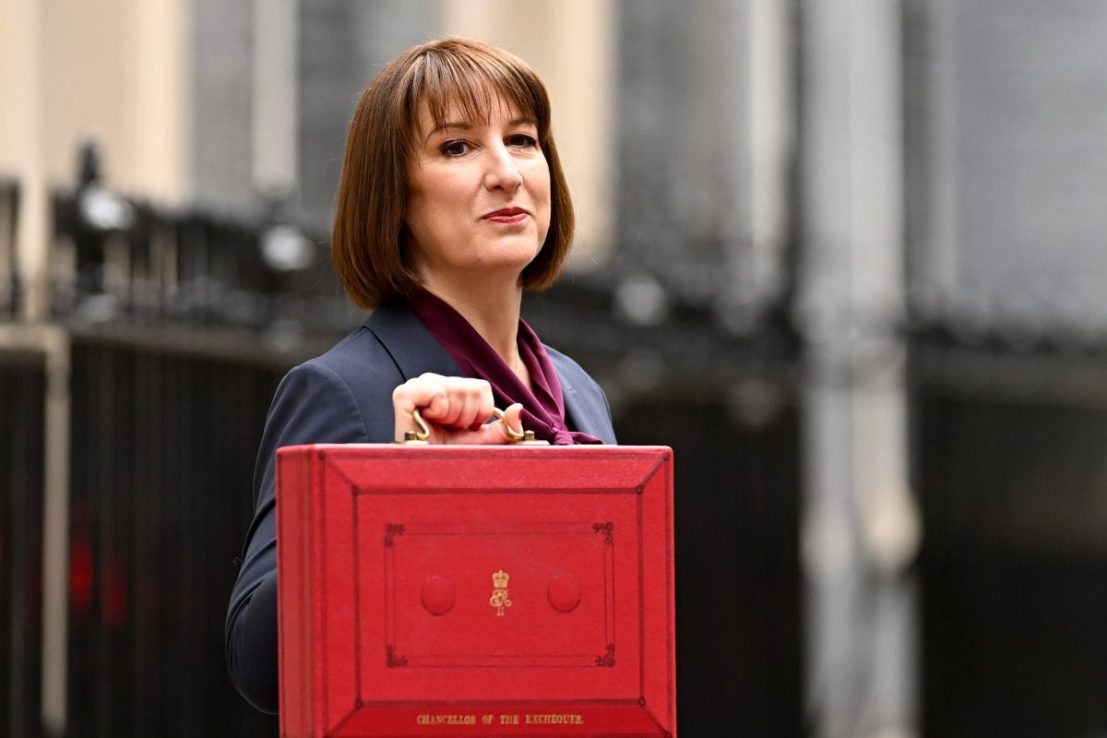
Britain is stuck in a debt doom loop. Rachel Reeves must break a manifesto pledge to get us out of it, writes Ticiana Alencar
There is one week to go until the Budget, at which point the Chancellor will lay out how she has decided to fill what she has called a ‘black hole’ in the nation’s finances.
Policy Exchange’s recent report Beyond Our Means sets out the state of Britain’s fiscal crisis. Public debt is close to 100 per cent of GDP, and interest payments are forecast to be £111bn in 2025-26. Three quarters of the government’s budget deficit is made up of debt interest alone: we are stuck in a debt doom loop. Borrowing more is off the table, leaving the Chancellor the choice of either raising taxes or cutting spending.
Reports suggest that Rachel Reeves intends to continue the freeze on income tax thresholds accompanied by a host of other tax rises, including a stealth raid on salary sacrifice schemes. This would be the wrong decision. It means working people will pay more tax. It goes against the spirit of Labour’s manifesto and is a disincentive for people going out to work. Last year’s increase in employers’ National Insurance is already hammering business and employment; the economy cannot take much more.
Meanwhile, our public spending is close to 45 per cent of GDP – not far off a post-war high. Here is where the Chancellor should set her sights. Lower spending and lower taxes are associated with better economic growth, one of Labour’s main aims and better for the country as a whole.
One of the biggest potential sources of savings is the state pension. The triple lock means that the state pension is increased each year in line with CPI inflation, average earnings, or by 2.5 per cent – whichever is highest. The OBR has calculated that the triple lock will cost three times more over its first two decades than originally predicted – £15bn a year more by 2029-2030. Unlike anyone else, pensioners over time receive a boost higher than wages or inflation. Working people and businesses pay the price.
Savings from scrapping the triple lock
Policy Exchange has calculated that if Reeves froze the state pension for three years, increased it by CPI inflation thereafter, and means-tested pensioner benefits, she would save £26bn a year by 2030.
The reforms would raise more than freezing income tax thresholds and also more than the income tax rate increases she was reportedly considering last week: enough to fill her black hole without having to embark on growth-damaging and politically explosive tax increases. Working people will be paying Britain’s debt for years already. Why should they pay even more of this through income tax increases?
This Budget will be a political nightmare for Labour no matter what. A freeze on income tax thresholds is an increase on taxes on working people – something Labour promised not to do during the general election.
Instead, the government should do the economically sensible thing and cut spending. On the surface, this may seem unpalatable, but a recent YouGov poll showed the public preferring spending cuts to tax rises, by 43 per cent to 31 per cent. In any case, governments with large majorities should be able to make the case, to both country and party, that they are making tough but necessary decisions for the long-term good.
Here is a choice for Rachel Reeves: growth-damaging tax rises that hits working people and businesses, or putting an end to unsustainably high pension increases. The economically sensible option is the latter – to end the triple lock.
Ticiana Alencar is a researcher at Policy Exchange