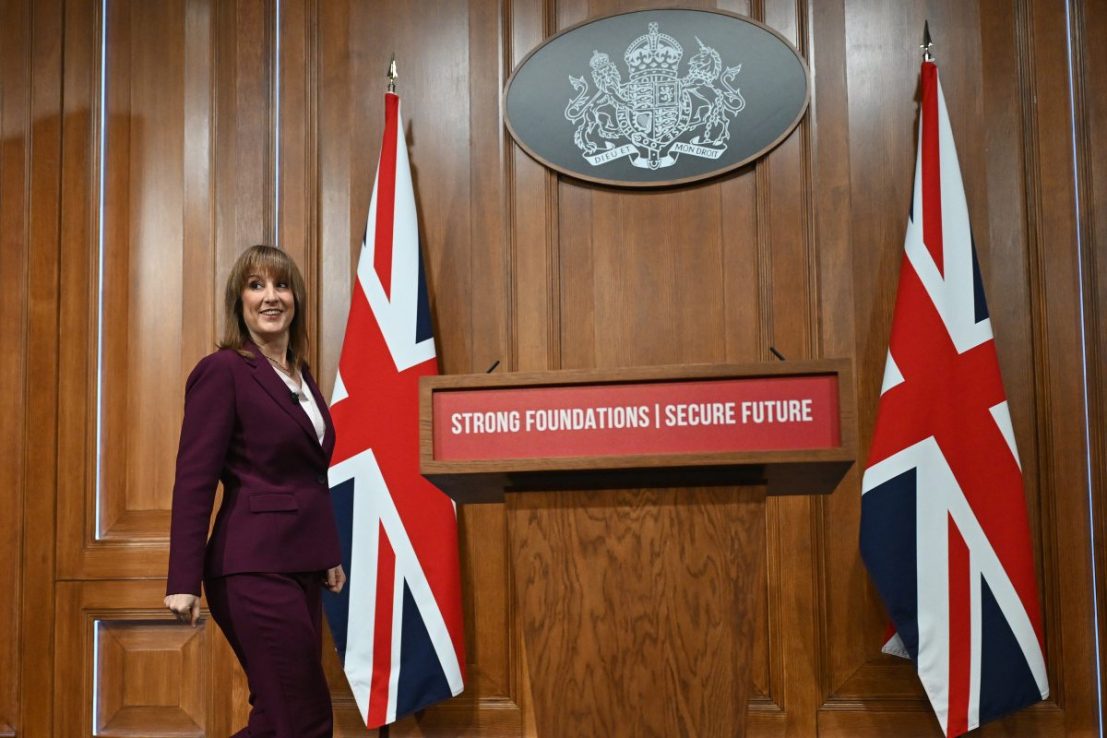
Rachel Reeves is trying her best to avoid any comparisons to Liz Truss’s infamous mini-budget, but her excessive caution could prove just as damaging, writes Michael Martins in today’s Notebook
Reeves’s caution is hurting the real economy
At a certain point, excessive caution can become as damaging as recklessness because there is rarely reward without risk. If we are constantly hedging bets, then chances are, we’re not moving forward.
Against that backdrop, most people understand what risk the Chancellor is trying to avoid at this month’s Budget: anything that could even faintly resemble Liz Truss’s 2022 mini-Budget. But her approach of soft-launching the Budget over several weeks so that every tax rise, big and small, can be pre-absorbed by markets has brought its own costs.
I say this because much of my work involves convincing CEOs and investors of the UK’s merits as an investment destination. And while I have not yet met a single investor whose decision hinges on the withdrawal of the cycle-to-work scheme, the cumulative effect of the steady drumbeat of closures, trims or reviews of business-facing incentives is having an impact, even if gilt yields remain steady. It is increasingly clear that the Treasury’s constantly updated “menu of pain”, as one prospect put it, is hurting growth.
What makes this more striking is that I think the Chancellor actually has scope to take more risk and make bold reforms. The government has a 157-seat majority, with many new MPs still finding their footing and not yet overly-aligned with any internal faction, regardless of anonymous leadership briefings last week. Parliament is nowhere near as fractious as it was under Truss and the macroeconomic environment and trading relations with the EU are both stable. The Chancellor even survived the recent reshuffle, so has more job security than most.
Yet the Chancellor’s keen risk aversion, and recent flip-flopping because of it, are at odds to these fundamentals and carry consequences. The Christmas slowdown has begun early because Q4 decisions are being pushed into Q1 or Q2 and many younger people I know face a horrific labour market. And, more sadly for me, an increasing share of my calls with other founders now feature Dubai sunshine in their backgrounds rather than the winter grey of London in mine.
Are we crowdfunding ChatGPT?
My personal Microsoft Office subscription’s price increased by more than 60 per cent this month. This prompted me to both cancel it (I had been doubling up with our business account, so it was going to happen anyway) and reflect on how Microsoft’s other established products will be the main way it funds the continued growth and expansion of ChatGPT and the data centres that underpin it. In effect, we all pay for ChatGPT now, some of us just have a subscription.
Job ads need to cap applicants
A hiring manager at LSE recently boasted on Linkedin that a single vacancy had attracted nearly 1,000 applicants, while New York Mayor Zohran Mamdani released that his team had received 50,000 applications for an undisclosed number of roles. Giving candidates less than a 0.1 per cent chance of success should be treated as irresponsible hiring practice, and I believe is a part of why younger generations increasingly view the labour market as structurally rigged. Maybe capping the number of applicants per role is a more realistic approach?
Why is the Laffer curve taboo but ‘plugging fiscal holes’ isn’t?
The idea of “plugging fiscal holes” to justify tax rises should face the same level of scrutiny as the Laffer curve does for tax cuts. Last year’s Budget saw our taxes rise and growth stall, but that’s not going to stop the Chancellor from doing a reenactment in a few weeks. If I continued to make the same choices but expected different results, I would struggle to defend these to my clients, so I don’t see why the government’s approach should be treated any differently.
The best pain au chocolat in London
I recently took a weekend cooking class at Le Cordon Bleu. I had no idea this cooking school existed before I was gifted this class (and with an 8am start on a Saturday, I didn’t treat it as an unalloyed gift), but the real surprise for me was that the school’s café had, and I do not say this lightly, the best pain au chocolat I’ve ever had.
I know most people will focus on a restaurant’s ambience, Instagram presence, chef, and/or menu when making a recommendation or a review, but this was a cultural experience for me akin to when I first tried a madeleine at St. John 15 years ago. I returned several times over the following weeks and had only pain au chocolat. 10 out of 10, no notes – my compliments to the (pastry) chef.
Michael Martins is the founder of Overton Advisory