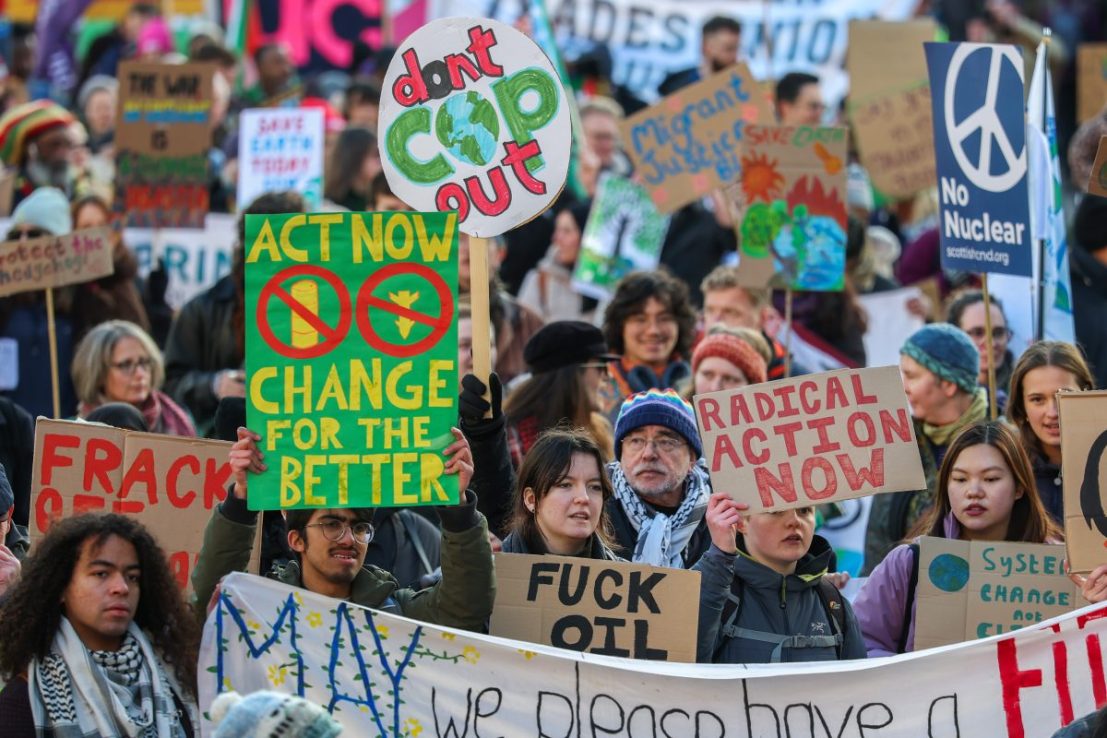
Headlines have decried the end of green finance, yet the vast majority of institutions remain committed to climate action, writes UK Finance chair Bob Wigley on return from COP30
I have just returned from São Paulo and Belém in Brazil, where COP30 brought together governments, businesses and civil society to chart the next stage of the global climate journey.
Alongside other senior business leaders on the ground in Belem, I saw first hand the strong commitments UK businesses retain to climate action, confounding the headlines suggesting banks are no longer interested in their climate commitments.
Much of this perception stems from institutions retreating from the Net Zero Banking Alliance. Yet what we see on the ground is different: the vast majority of institutions remain committed, continuing to set targets, publish transition plans and mobilise capital. This is a point David Bailey, executive director of prudential policy at the Prudential Regulation Authority, echoed in a recent media interview.
Banks are still putting billions into green projects
The financial services sector has a critical role to play in the transition to net zero. This includes investing in and lending to crucial sectors such as low-carbon energy, greening the housing stock and supporting clients as they decide to transition to low-carbon practices.
In the run up to COP30, we surveyed our members to understand what the state of green financing is in 2025. We asked firms – from small UK-based building societies through to multinational investment banks – to tell us what their green finance initiatives look like.
What we found were projects and activities amounting to hundreds of billions. It is remarkable to see the range and depth of financing from firms – from enabling carbon capture projects, through supporting regenerative agriculture, to working with social housing providers to improve household energy efficiency. This is evidence of a sector delivering substantial real-world impact.
They do this because it makes good business sense – shoring up resilience, while taking advantage of the enormous commercial opportunities in the transition. But as FCA chair Ashley Alder recently noted, markets in Asia will overtake us if we do not take full advantage of this opportunity.
UK could become green finance capital
There is even more that can be done as the UK has set out its ambition to be the world’s sustainable finance capital. As with all aspects of finance, we’ll face stiff competition from around the world.
To achieve our ambition, we need to work hand-in-glove with the public sector as private sector commitments alone cannot achieve net zero. Collaboration will be the key to success.
Clear, consistent, long-term government policies, maintaining cross-party support and spanning parliaments will be essential to scale investment. Putting in place supportive frameworks will reduce risk, stimulate demand for green finance and give businesses the confidence to invest in decarbonisation.
Without an approach that lasts beyond the short-term time horizons of political cycles, capital will unfortunately hesitate.
The narrative of a retreat isn’t right, but nor can we be complacent. At COP30, the message I delivered is that the financial services industry remains committed to supporting clients, communities and economies in the shift to net zero. But to accelerate progress, we need clarity and consistency in public policy that will unlock even more investment. With the right policy frameworks in place, finance can continue to power the transition, creating jobs, driving growth and delivering a sustainable future.
Bob Wigley is chair of UK Finance