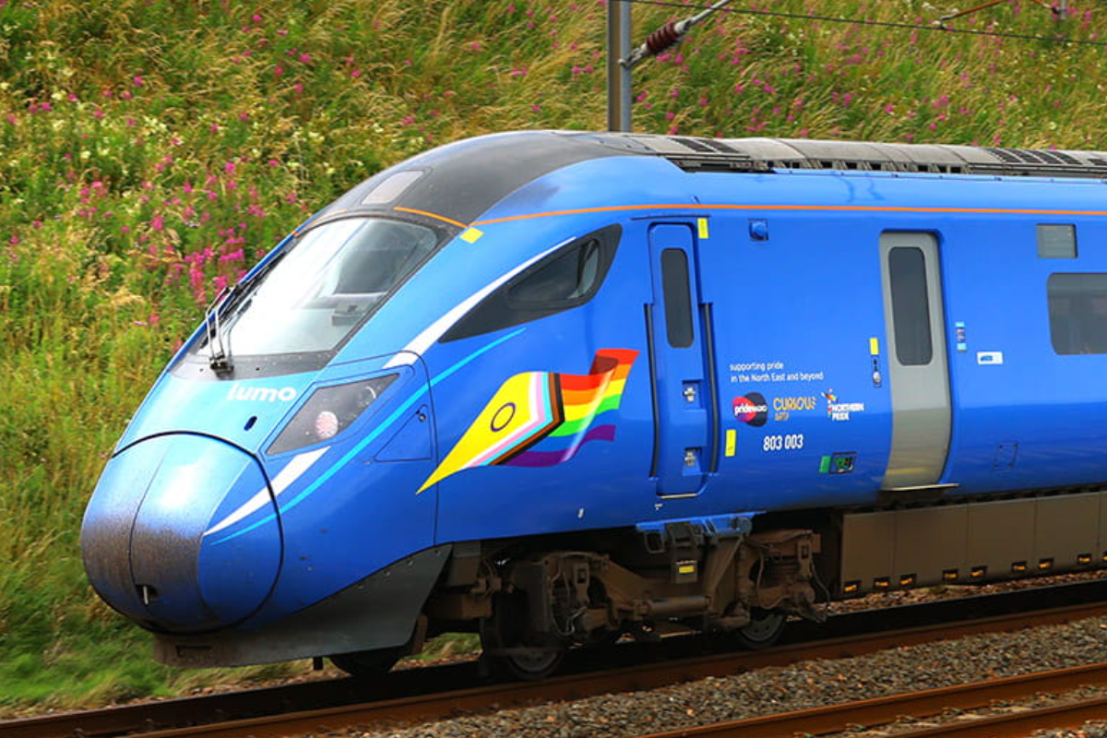
Firstgroup has doubled down on its open access expansion plans as the transport business defied government concerns over the scheme.
The FTSE 250 firm said it was “focused on growing” its operations in open access, an arrangement under which private rail operators will continue to run services after the nationalisation of all major routes as part of the government’s plans for public rail ownership.
“Open access operators bring significant private investment to both the rail sector and UK manufacturing,” Firstgroup said.
“Despite accounting for less than 1 per cent of the railway, open access has accounted for over a quarter of all new rolling stock investment during the last five years, creating jobs and supporting local supply chains.
“Open access operators operate without government subsidy and are highly productive for the wider UK economy.”
Firstgroup already operates a number of open access rail routes including Hull Trains and Lumo, which run on the East Coast main line.
The company has submitted two further applications to the rail regulator, the Office for Road and Rail (ORR), for new services from London to Paignton and Hereford, with another three applications for other routes including a new service between Cardiff and York.
But the firm’s plans could yet be thwarted by the Department for Transport, which has poured cold water on the prospect of further expansion to open access services after full rail nationalisation after seeing “an influx in applications to run new or extended services.”
“We remain particularly concerned about the detrimental performance impacts that would be felt across the network if these applications are approved,” DfT said in a letter to the ORR in June.
“Capacity is already severely constrained in a number of locations…and additional Open Access services would both prevent development of revenue-generative contracted services and increase performance risks to existing services due to perturbation.
The DfT said the ORR should consider the “cumulative impact” of the costs of open access services when taken together, rather than on an individual basis, adding that the combined impact “represents significant additional cost to taxpayers and would materially affect the funds available to the secretary of state.”
Firstgroup has already had one of its open access applications – a London to Sheffield service – turned down by the ORR. “We were disappointed,” the company said, adding: “The proposed route would have provided Sheffield with the first regular service from London King’s Cross since 1968 and an estimated 350,000 people in the Worksop and Woodhouse catchment areas would have had direct rail access to London, with all of the economic benefit this would have brought.”
Firstgroup is due to hand over the operation of Great Western Railway services to the government in October 2027 under its nationalisation plans.
In May, the firm handed over control of South Western Railway services – which have seen a poorer performance post-nationalisation.
FirstGroup shares tumble as debt surges
Firstgroup’s ORR expansion plans come as the firm’s shares tumbled after the transport operator saw a surge in debt.
The FTSE 250 business posted adjusted net debt of £207.6m at the end of September, compared to virtually no debt the previous year.
The Aberdeen-based business said £83.4m of the increased debt related to investment in decarbonisation, such as new bus fleets, while £76m was returned to shareholders via dividends and buybacks.
Firstgroup shares fell 13 per cent to 174p in early trade – but the stock is still up more than seven per cent year to date.
The company posted pre-tax profit of £76.3m, up 8.5 per cent on last year.