Business leaders across the country feel the Labour government “certainly does not appear to be doing enough” to support them, the chief executive of investment giant BGF has said.
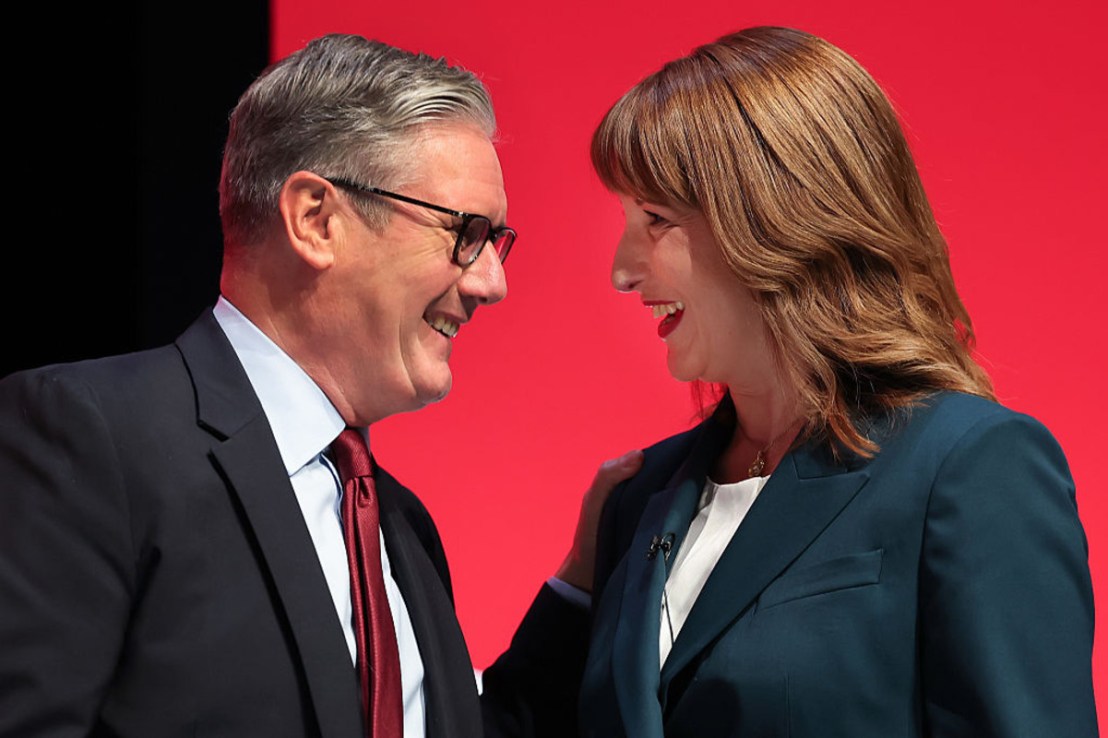
Speaking on an up-coming episode of City AM’s Boardroom Uncovered podcast, Andy Gregory said a recent survey of BGF’s portfolio has revealed views from business leaders that Prime Minister Sir Keir Starmer and Chancellor Rachel Reeves are “not empathetic enough to the challenges” companies are facing.
The survey, the results of which are currently being kept in-house, also showed business leaders feel their long-term investment plans are being held back by further possible tax rises in the Budget next week.
BGF was set up in 2011 and has since invested in the region of £5bn in around 600 businesses.
It currently has 360 firms in its portfolio, 70 per cent of which are based outside of London and the South East.
Speaking on the up-coming Boardroom Uncovered episode, Gregory added that “the UK economy desperately needs the private business sector to be growing”.
He said: “What the survey came back with quite clearly is a sentiment from entrepreneurs that the government certainly does not appear to be doing enough.
“And also, and very importantly, a sentiment in and perhaps recognising the importance of entrepreneurial businesses: small scale ups in the UK, they’re not empathetic enough to the challenges.”
Gregory added that “business is clearly not some amorphous mass that can just be gone after for tax” and that it’s “just so important that we are working together to help support the entrepreneurs”.
The CEO, who has led BGF since 2022, also said the survey picked up on business leaders’ concerns over the Labour government’s tax raising policies.
He added: “It’s difficult for any business to make long-term decisions in an unstable backdrop.
“But for a small business making a big bet on another factory or an overseas [investment] – it could be a sort of existential decision.”
BGF was set up in 2011.
Has BGF actually contributed to UK growth?
Founded by Barclays, HSBC, Lloyds Bank, Royal Bank of Scotland and Standard Chartered, BGF was originally known as the Business Growth Fund.
Asked whether he thought the organisation had lived up to the ‘growth’ element of its original name, Gregory said: “We do and we’re very, very focused on that.
“When we were first set up there was speculation, probably inevitably, that we would gradually do what everyone else has done and move away from that bit of the market and move more to buyouts.
“We have absolutely not done that. That has been really important for us.
“By backing good businesses that grow and do well, the positive impacts coming from that are very material.
“So even in [this current] cohort of our portfolio we’d have seen about £7bn of revenue growth, £1bn of additional exports. It’s about 27,000 additional jobs being created.
“So, just inevitably, backing these exciting entrepreneurial businesses, they do well. The economy benefits hugely from that.”
‘Our biggest competition is businesses choosing to do nothing’
With so many different ways for business leaders to raise additional capital to fuel their growth ambitions, BGF faces a tough task to convince them to become partners
Gregory said BGF mostly targets what it calls ‘established businesses’, firms which are “profitable or very, very possibly profitable” and typically led by a first-time founder or a family business.
He said: “Typically they will have choices. They are good businesses.
“They don’t really need to do anything and part of what’s been created is to try and stimulate demand in the marketplace.
“So they might do nothing. Quite often our biggest competition is they actually choose to do nothing and just carry on, growing at a much more modest pace.
“Maybe it’s a small debt raise or private equity or a trade sale.
“So the opportunity for us with that balance sheet and the scale that we have and the resources that we have is to make entrepreneurs aware there’s a different path they can go down. And by that I mean they can retain control.
“So that’s really, really important and there’s still lots of nervousness among entrepreneurs about losing control of their business, understandably – it’s their baby.”
What BGF has learnt from bad investments
Investment companies of all stripes are very quick to crow about their successful investments and how much they have returned to investors once an exit deal is agreed.
However, not every deal can be a success but those agreements are often swept under the carpet and not talked about openly.
With around 600 businesses backed by BGF since its inception, it’s only logical that a number of those will not have turned out as the organisation would have liked.
When asked what he and BGF have learnt from their mistakes, Gregory said: “Over the last 14 years we’ve evolved a lot. We’ve learned an awful lot along the way.
He added: “Frankly, an awful lot of it is the people – we are backing people. And that’s an obvious thing to say for any investor.
“Obviously, they are backing a management team to execute. But for us as a minority investor, we’re not in control.
“We are backing the incumbent management team, the entrepreneurs, to keep on going.
“So we need to make sure we’re backing the right entrepreneurs.
“I think when that doesn’t go so well and we’ve perhaps not quite judged that correctly that would be one of the more obvious themes I can imagine.”
‘Sometimes things don’t go so well’
Gregory added: “We are probably exceeding the returns that we were originally expected to be able to generate.
“But inevitably it is a mixed bag in there because you could have a really good team and a really good business and things just go the wrong way.
“The market, the market dynamics – they are small businesses. Things can go wrong. A major customer issue, major supplier issue, an IP issue. Something just disrupts the marketplace.
“So sometimes things don’t go so well. And that’s just an acceptable risk that we have to take.
“We also have to manage the risk and assess the risk so that doesn’t happen too often.”
‘Entrepreneurs are not celebrated enough in the UK’
A staple of a Boardroom Uncovered episode is asking the guest CEO what they would do if they were Prime Minister for the day.
Acknowledging that you could only achieve so much in just 24 hours, previous interviewees have put forward a variety of policies they would try to implement.
For the CEO of BGF, a day celebrating the contribution of entrepreneurs would be central to his sole day as PM.
Gregory said: “I would have a day of real celebration of entrepreneurship. I think they’re not celebrated enough in the UK.
“I think maybe it’s partly a British thing. I think success is viewed not as positively as it certainly might be.
“I think the importance of what scale up businesses…have in terms of the disproportionate positive impact they have on employment, growth and everything really in terms of tax and innovation and exports is just huge.
“And it is hard. It is so hard. And I often speak about what we’ve seen in our portfolio. But if you were to go back over the last, what, nine years, Brexit onwards and the number of different challenges they’ve had and it’s hard to start a business.
“But it’s really hard to then really meaningfully scale that business up and particularly in more uncertain times for sure.”
Is Britain really broken?
The narrative that Britain is somehow broken has become so entrenched in recent years that it’s rare to come across a counter argument outside the serving government of the day.
Especially in the months leading up to this year’s Budget, business leaders have been lining up to articulate the challenges faced by their industry and proposing what Rachel Reeves should do about it on 26 November.
Asked whether he agreed with the ‘Broken Britain’ narrative, Gregory said: “No. Absolutely not.”
“I mean, I would not dismiss some of the challenges. The challenges are there.
“I think we are very privileged in many respects. One of them is we are, I guess inevitably, interacting with a subset of that business world who are ambitious.
“They really do want to bring in capital, except dilution to bring a partner on you can help them grow faster.
“So just by nature they are more confident, optimistic in terms of their own prospects.
“And we are deploying in the region of £500m a year, backing up to 50 companies a year.
“There’s a lot more we can do. We announced in the summer [that] having deployed about £2.2bn over the last five years, we believe we can do about £3bn over the next five.
“So we’re very confident there’s more to do. So very positive overall. “Having said that, to the heart of your question, it’s still a hard place.”