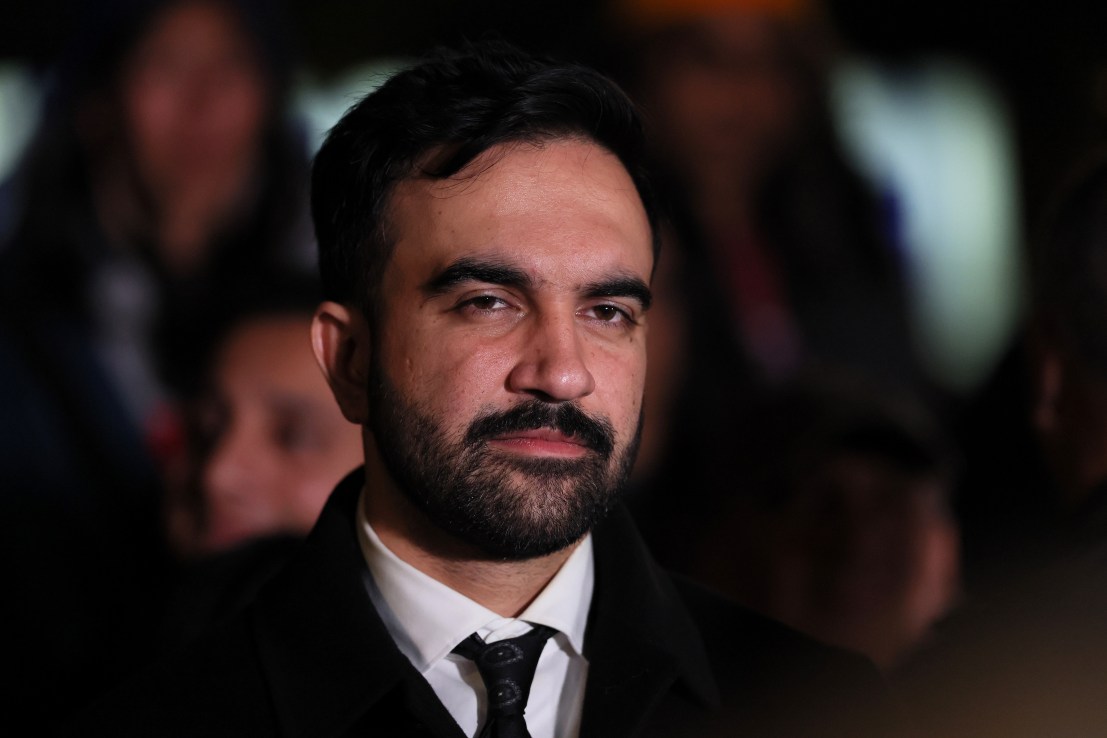
The election of Zohran Mamdani signal the start of the anti-capitalist backlash. It must not be allowed to succeed, says Rainer Zitelmann
The election of Zohran Mamdani as mayor of New York City sends a powerful message worldwide. In the very heart of global capitalism, a socialist has won.
Frank Sinatra once sang in his famous anthem New York, New York:
“If I can make it there,
I’ll make it anywhere,
It’s up to you, New York, New York.”
That line will now resonate differently for socialists everywhere. Mamdani’s victory has global significance. It’s even conceivable that next year a socialist could become mayor of Berlin – current polling suggests that possibility is real.
When I published my book The Power of Capitalism seven years ago, critics accused me of setting up a straw man. They argued that I was fighting an enemy – the anti-capitalists – whose ideology had already faded into irrelevance. I disagreed, and in that book, as well as in many articles, I predicted a coming renaissance of anti-capitalism.
No more billionaires
Mamdani’s success will embolden anti-capitalists worldwide. The socialist candidate campaigned on the slogan that there should be no more billionaires – an idea that can only exist in a socialist framework. According to Forbes, there are no billionaires only in Cuba, North Korea and a few of the world’s poorest African nations. Even Sweden, on a per-capita basis, has more billionaires than the United States.
Former world chess champion, Russian dissident, and outspoken critic of both Putin and Trump, Garry Kasparov, warned on X: “The greatest risks of a Mamdani mayoralty will be seen when things don’t work out. The nature of populism and socialism leads to doubling down, not correcting course. More control, more centralization. People who are worse off are more vulnerable to govt threats & promises.”
That is precisely the danger. Mamdani, like all socialists before him, will inevitably fail to deliver on his promises. But he and his allies will not blame themselves. Instead, they’ll point fingers at others – particularly Donald Trump, who has already stated: “If Communist Candidate Zohran Mamdani wins the Election for Mayor of New York City, it is highly unlikely that I will be contributing Federal Funds, other than the very minimum as required, to my beloved first home …”
Socialists always need scapegoats for their failures
Socialists always need scapegoats for their failures. The disaster in Venezuela, from where 30 per cent of the population has fled since the socialists took power in 1999 and 80 per cent of those who remain now live in poverty, is explained away as the fault of U.S. sanctions. The same narrative is used for Cuba and North Korea – their misery, they claim, would not exist without American sanctions. Trump’s threat, therefore, while understandable, is strategically unwise. Cutting or reducing federal funds to New York would only give the socialists a convenient excuse when things go wrong.
Mamdani’s victory was largely driven by growing anti-capitalist sentiment among young Americans. A poll conducted one week before the election found that 64 per cent of voters aged 18 to 34 intended to vote for Mamdani, compared with 50 per cent of those aged 35 to 49 and just 33 percent among voters over 65.
I commissioned a survey across 34 countries to measure the global image of capitalism. The results were striking: in only six of the 34 countries was capitalism viewed positively.
In the United States, the overall image of capitalism remains positive – but that’s changing among younger generations. An Ipsos MORI poll conducted four years ago showed that most Americans under 30 rejected capitalism. As I wrote in my book In Defense of Capitalism: “The biggest differences in the United States are between age groups. How someone feels about economic freedom in the US depends more on their age than on any other sociodemographic factor (such as income, gender, or education). The younger our American respondents are, the more likely they are to support government intervention in the economy.”
Only 21 per cent of respondents under 30 agreed that “capitalism may not be ideal, but it is still better than all other economic systems,” compared with 51 per cent of those over 60. In no other country surveyed was the generational divide on attitudes toward capitalism as stark as in the United States.
Globally, too, anti-capitalism is on the rise – particularly among young people. In the most recent German federal election, the socialist party Die Linke came out on top among younger voters.
Shortly before the collapse of the GDR, Erich Honecker said: “Neither ox nor donkey can stop socialism in its course.” Supporters of capitalism should wake up and do everything possible to make sure he doesn’t turn out to be right after all.