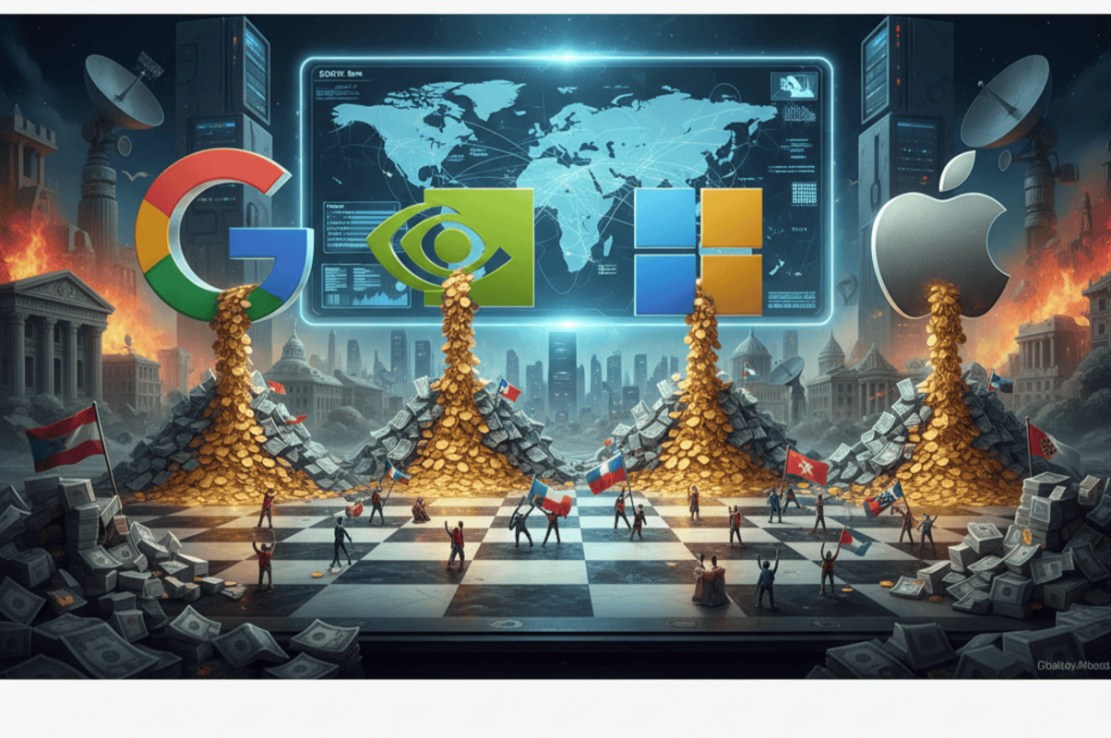
When Nvidia is bigger than the GDP of Germany, the implications for national sovereignty are deeply uncomfortable, says Steve Rigby
We like to imagine that the great contests of innovation are fought between nations: the US versus China; Europe versus Asia; governments vying for technological leadership. That framing is already outdated. The real race is increasingly between countries and mega cap corporations – and the balance of power is shifting fast.
Take Amazon, which reported third quarter results this week along with its Big Tech peers. In 2024, it invested $88.5bn in R&D and infrastructure. Compare that with the United Kingdom’s entire research ecosystem including universities, start-ups, government labs and corporate R&D combined – which in 2022 amounted to £70.7bn. Put bluntly, one company now matches the research output of a G7 nation.
This is not a quirk of accounting. It is a profound sign of where we are heading. When corporations outspend governments, they don’t just build products, they set agendas. It is clear this is happening today. A new form of control could follow where the very largest companies, 11 being worth more than $1 trillion and five more than $2 trillion, start setting the agenda for the world. Three companies eclipse the UK total GDP by market capitalisation. Microsoft and Apple have market caps of $4 trillion, placing them equivalent to the 6th largest economies. And just last week Nvidia hit $5 trillion market cap.
Can a country that spends less on R&D and infrastructure than a single tech company truly shape the trajectory of AI, cloud or robotics?
These companies now decide which fields are accelerated, which standards become global, which skills the next generation must master. Talent flows toward the deepest pockets and the gravitational pull of these companies grows stronger each year.
Elsewhere in the world, state actors are busy underpinning similar private companies to challenge the world order of the east including behemoth businesses such as Huawei. If the Americans think it will all go their way, they are mistaken.
The implications for sovereignty are uncomfortable. In the past, national governments directed the great projects of discovery including the space race, nuclear energy and the internet. Today, those levers are slipping. Can a country that spends less on R&D and infrastructure than a single tech company truly shape the trajectory of AI, cloud or robotics? Or are we ceding the future to corporate roadmaps written in boardrooms rather than parliaments?
The future is corporate
Big Tech’s massive R&D spend will create the platforms, data and capabilities on which the next half century will run. Just as with the railroads of the 19th century, governments risk becoming regulators of tracks they did not lay and of technologies they may not understand.
This is not an argument against corporate ambition. Innovation at scale is extraordinary and the breakthroughs Amazon, Google, Microsoft, OpenAI and their peers are driving will change lives. But it is a warning that public investment cannot simply shrink back and hope to ride the coattails of corporate ambition.
Britain may not have the balance sheet of the US and its Magnificent Seven stocks, but we do have the capacity to shape our own future. To do so, we simply have to be more ambitious in our vision. With a civil service now of 550,000 and a total government payroll of 6.15m workers, the best way we can drive change in our standing in AI is, to steal a line from President Trump, “consume baby, consume”. We should have bold ambitions for government change that will spearhead the UK AI industry and provide the savings so desperately needed to avoid the current growth and tax doom loop we are in.
It has become a strange world and one that we face material challenges in adapting to. If the UK is to remain a relevant force in the world, our ambition has to rise.
Steve Rigby is Co-CEO of Rigby Group