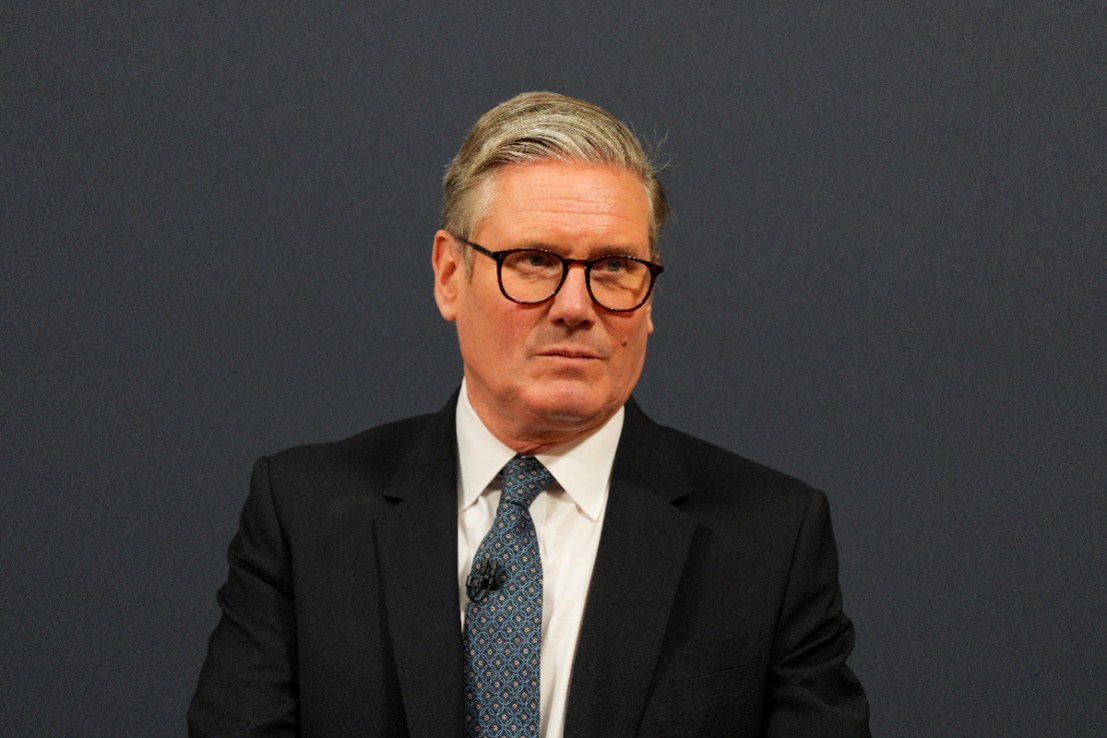
The Prime Minister cannot satisfy all three key audiences: the markets, the party, and the public, says Helen Thomas
Every Prime Minister faces a moment when economic reality collides with political promise. For Keir Starmer, Budget day could be that moment of reckoning. He promised calm after chaos: that the grown-ups were back in charge, that the markets would relax and that Labour would govern with competence and credibility. Instead, he is confronting a fiscal black hole that can’t be filled without breaking manifesto pledges or splitting his party. What was meant to be a stabilising statement of fiscal intent may instead become the detonator for a leadership crisis inside Labour.
Rachel Reeves’ fiscal rules, to put debt onto a declining path and limit borrowing for day-to-day spending, are, as we surely never tire of hearing, “non-negotiable”. This was supposed to embed stability into the heart of government. Instead, they have become a straitjacket, causing instability within the Labour Party itself. The government’s hands are tied and every policy choice now has amplified political consequences.
Labour’s internal coalition is far from settled. The party’s left flank, energised by years in opposition, now expects delivery on the rhetoric of fairness: wealth taxes, rent reform and expanded public services. The centre, meanwhile, wants fiscal prudence and a Mandelsonian relaxed approach towards wealth-creators.
The Budget negotiations have become the battleground between these factions. Every tax change or spending commitment becomes a symbolic choice: is Labour governing for the markets, or for its members? Refuse the left and risk accusations of betrayal. Embrace it, and the markets may punish the government for reckless expansion. Either way, unity frays.
Much rests on the OBR. Their final pre-measures forecast, to be delivered on Friday, sets the model output within which the Chancellor can act. After that, Reeves can do no more lobbying on how to interpret the past. She can only plan for the future, devising a mix of measures to meet the fiscal rules. Former Bank of England Governor Mervyn King has expressed disquiet about this process, noting that once the Treasury receives the magic number, they scramble for ideas “almost written on the back of a fag packet… That is not a coherent tax strategy,” he said.
The OBR is reported to have recently downgraded trend productivity forecasts by 0.3 percentage points, creating an estimated £20bn shortfall in public finances. This revision intensifies the fiscal squeeze, making it more difficult to satisfy the government’s own rules without politically risky interventions.
To bridge the gap, the government is considering freezing income tax thresholds, reforming council tax bands, introducing a gambling surcharge and aligning dividend taxes with income taxes. But the shortfall is so large that a manifesto-breaking rise in the basic rate of income tax may be unavoidable
To bridge the gap, the government is considering freezing income tax thresholds, reforming council tax bands, introducing a gambling surcharge and aligning dividend taxes with income taxes. But the shortfall is so large that a manifesto-breaking rise in the basic rate of income tax may be unavoidable.
Such a decision might not just be politically unpalatable, it could be existential. The basic rate hasn’t changed since 2007. Kwasi Kwarteng had proposed reducing it to 19 per cent from 20 per cent in his ill-fated September 2022 budget. Just three years later and it looks to be heading in the opposite direction. Higher-rate thresholds could also be raised, restoring the 45 per cent and 50 per cent levels of recent years. A “mansion” tax on homes above £2m and “partnership National Insurance contributions” on LLPs would further ram home Reeves’ mantra that “those with the broadest shoulders pay their fair share.”
Financial markets might see the numbers add up but baulk at the anti-wealth sentiment. Investors won’t wait for Westminster’s spin. If gilt yields climb or sterling slides, the judgement will be immediate and unforgiving. A government elected on competence could be undone by the very markets it sought to reassure. If investors panic, Labour MPs will follow, whispering about credibility and then about change.
Labour’s internal battles
Even a Budget that is well received by the market could fail to resolve Labour’s internal ideological battle. Budget votes are effectively confidence votes. A small rebellion signals loss of control. Labour’s leadership rules now make a challenge easier: only 20 per cent of MPs are needed to nominate an alternative, triggering a contest. The difficult passage of the welfare reforms in July, with 12 per cent of MPs voting against legislation that had already been gutted to avoid an even bigger rebellion, demonstrates the latent capacity for dissent.
The party’s newly installed Deputy Leader, Lucy Powell, has positioned herself as the voice of the membership, deliberately refusing a Cabinet role to maintain freedom to critique. If a credible challenger emerges, the dominoes could fall fast. Markets may steady but the party may not. A leader who cannot command MPs cannot claim to command the country.
Starmer faces a simple dilemma. He cannot satisfy all three key audiences: the markets, the party, and the public. Each demands a different policy mix and each will punish failure. To appease one group is to alienate another.
The Budget, intended to reinforce credibility, may instead catalyse a leadership crisis. The arithmetic of government is complex, but the arithmetic of politics is unforgiving. One misstep, and a moment meant to prove control could expose its absence, potentially ending Starmer’s premiership before the next election begins.
Helen Thomas is CEO and founder of Blonde Money