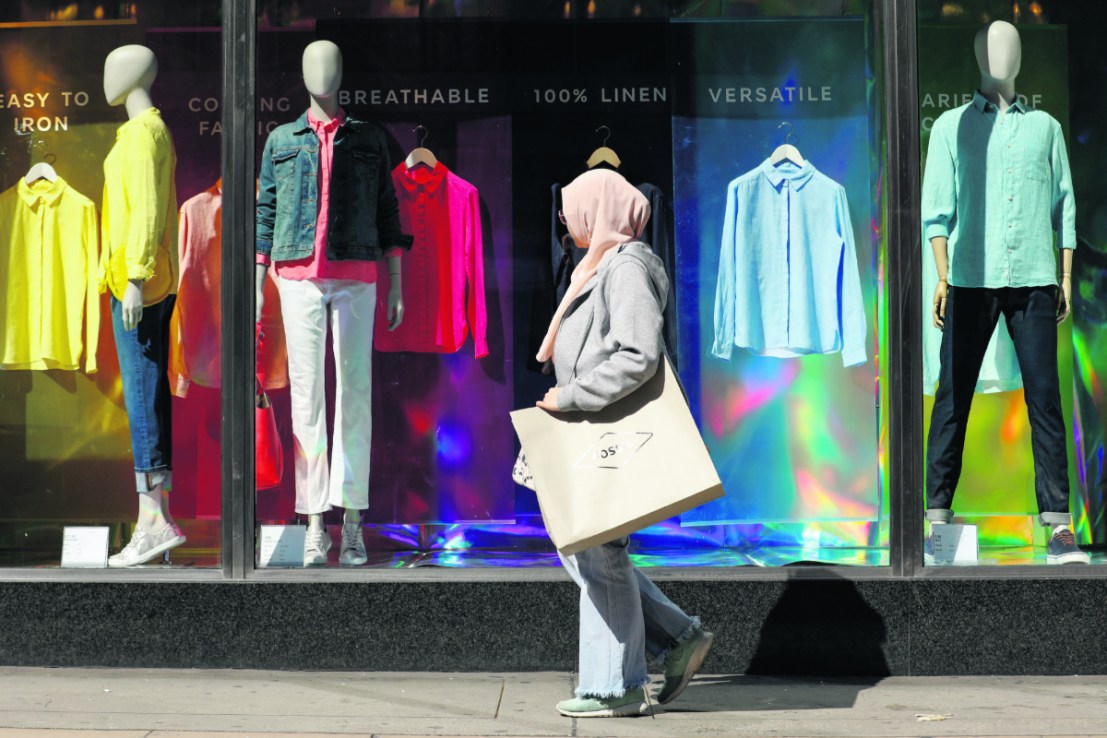
Retail sales jumped to their highest level since 2022 in September, boosted by sunny weather that drove a surge in demand for clothing.
Fresh figures from the Office for National Statistics (ONS) showed retail sales were 0.9 per cent higher than the previous three months.
Sales volumes climbed 0.5 per cent in September, a significant boost from the 0.4 per cent drop pencilled in by economists.
Non-food stores, which include clothing, household, and other non-food stores, rose by 0.9 per cent.
The rising price of gold also boosted online jewellers, which reported strong demand for the precious metal.
The price of an ounce of gold surpassed $4,000 for the first time this month, driven by geopolitical tensions and uncertainty that have driven investors into the yellow metal.
Overall, sales volumes hit their highest level since 2022 in September, though they remained 1.6 per cent below their levels in February 2020 ahead of the first Covid-19 lockdown.
ONS senior statistician Hannah Finselbach said: “Retail sales rose quite strongly in the latest quarter and were at their highest level since summer 2022.
“Although food stores saw very little growth, good weather in July and August boosted sales of clothing, while online retailing also did well.
Retail sector nervously awaits Budget
The fresh figures come as retailers across the UK look to close out the year with a boost as they enter the golden quarter, the traditionally all-important period for the sector.
But it comes as consumer confidence remains dim ahead of the Autumn Budget, with nerves continuing to heighten around changes to the tax regime.
Labour has made boosting living standards a central mission in government while Chancellor Rachel Reeves has recently talked up plans to lower the cost of living for Brits.
But a renewed focus from the government on boosting the UK economy has yet to materially raise spirits about people’s personal finances and feelings on spending powers.
GfK’s leading consumer survey showed just a two-point increase on the overall index score to -17, while the major purchase index, which tracks people’s interests in buying more expensive items, improved slightly from -16 in September to -12 in October.
The monthly survey from GfK, which is widely used in the Treasury and the Bank of England to help measure demand in the UK economy, has been in negative territory throughout Labour’s first year in government.