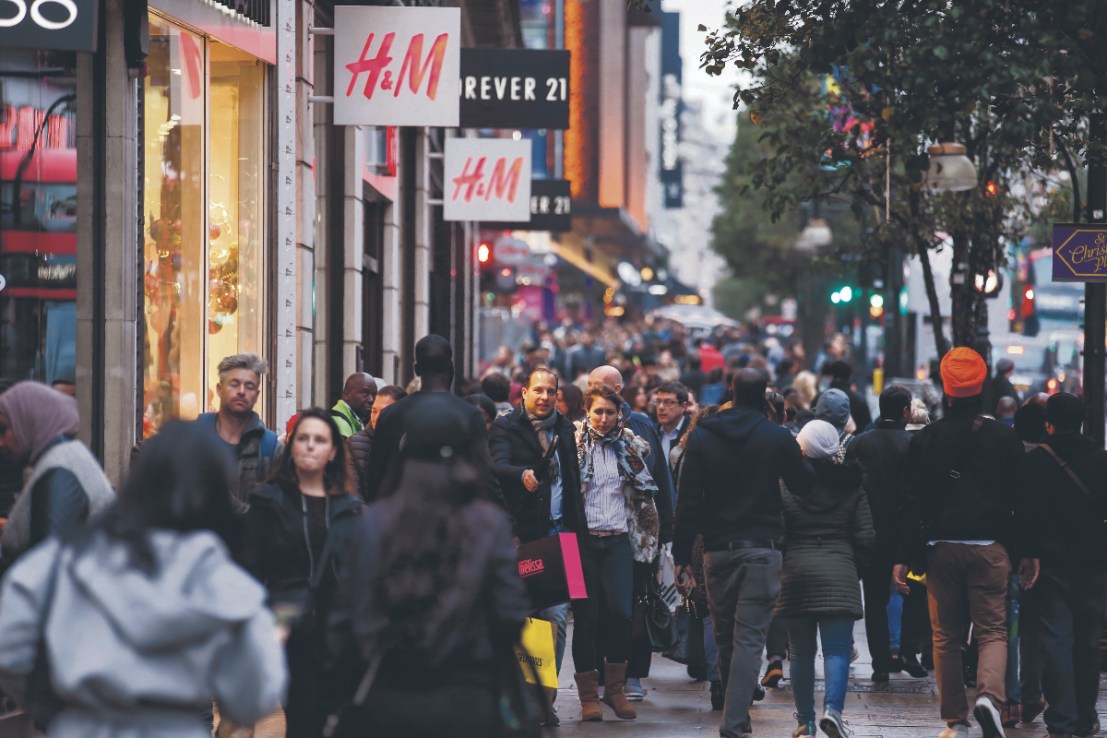
Brits are prepping for high grocery spending this Christmas as food inflation continues to dominate daily concerns, according to new data.
Consumers’ expectations over the next three months of their personal finances worsened to -11 in October, down from -7 in September, according to the British Retail Consortium.
The corresponding metric, personal spending on retail, rose nine points.
This was entirely driven by expectations of higher spending on food and drinks, with spending on all other sectors set to be negative for the twelfth consecutive month.
“While the prospect of Christmas may have boosted expectations of grocery spending, the general rise in food prices has meant many families are struggling with the rising cost of living,” BRC chief Helen Dickinson said.
“Retailers are doing what they can to limit price rises, but high costs from the last Budget… are still filtering through into inflation,” she added.
Worldpanel has estimated that Brits’ average household spend at the grocers has now reached £5,283 a year, a figure which could rise by £275 by the end of the year.
Dickinson added that expectations of a rise in grocery spending was particularly pronounced among Millennials and Gen X, the generations “most likely to have children living at home”.
“Worries about the cost of Christmas, coupled with concerns about potential tax rises in the upcoming Budget are likely to have contributed to the drop in sentiment around personal finances,” she added.
Grocery inflation rises
Figures out on Wednesday morning showed food inflation at 4.5 per cent over the course of the year, as tax rises combine with supply-chain issues.
A PwC survey found that over four fifths of Brits consider the rising cost of everyday things a concern, despite a five per cent rise in real earnings since the beginning of 2020.
The same survey found that three quarters of Brits plan to cut spending over the next three months, with an even higher percentage of younger and lower income groups planning to hold back.
Despite poor attitudes towards their own finances, Brits’ confidence in the overall state of the economy improved by one point in October, although it still remained a dismal -35 points.