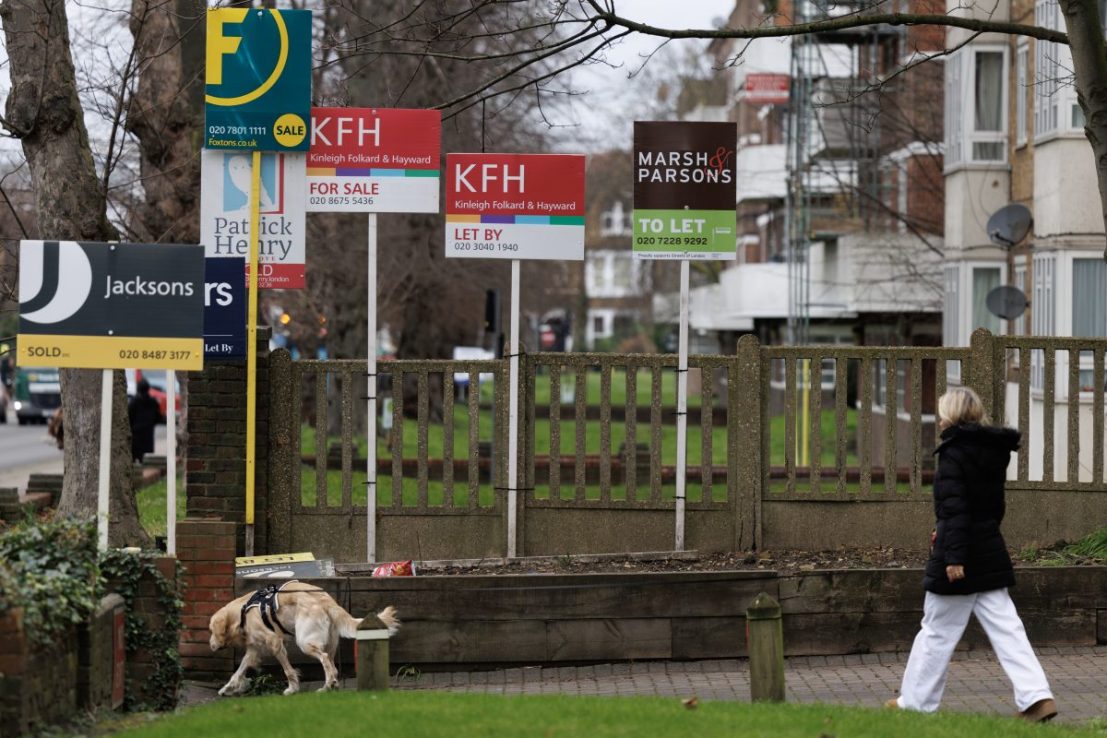
Analysts have argued the UK’s housing market needs demand-boosting policies after the housing market missed out on its usual Autumn bounce.
House prices rose 0.3 per cent month on month, to £371,422 – far below the ten-year average October bounce of 1.1 per cent, according to Rightmove.
“Buyers at the higher end in particular have been much quieter, waiting to see what the Budget brings and whether there will be another rate cut in coming months,” Tomer Aboody, director of specialist lender MT Finance, said.
Aboody said that “the market desperately needs a boost”, wether that is via an imminent stamp duty cut, which “unfortunately is unlikely”, or another rate cut in the new year.
Constrained demand due to affordability issues is a serious problem for the government’s housebuilding plans, which rely on private housebuilders.
“The government does not control housing supply. Housebuilders do. They are looking to maximise profit and therefore run a tight ship when it comes to maintaining the supply and pricing level of new homes,” Dr David Crosthwaite, chief economist at BCIS, told City AM earlier this year.
Savills have identified a “demand gap of 70,000 homes per year that needs government intervention to be filled”.
What might intervention look like?
Save an interest rate cut – which, thanks to sticky inflation, economists think is unlikely this year – the remaining options to get the housing market moving again are a stamp duty cut or a relaxation of mortgage rules.
Mortgage rules were already relaxed earlier this year after a change in Bank of England guidance meant lenders were no longer required to stress test borrowers at the Standard Variable Rate plus 1 per cent.
Chancellor Rachel Reeves has also confirmed the introduction of a permanent ‘Freedom to Buy’ mortgage guarantee, which “aims to incentivise and sustain availability of 91-95 per cent loan-to-value mortgages.”
While further relaxation of rules unlikely, stamp duty – one of the most disliked taxes in the UK – is a prime candidate for reform.
Kemi Badenoch has said that the conservatives would scrap duty, arguing that it would “help achieve the dream of home ownership for millions” and receiving a standing ovation from Tory activists in Manchester in the process.
The end of the stamp duty holiday earlier this year saw thousands added to the average house price, with upwards of £6,000 added to the average London home.
Rightmove has also called for stamp duty thresholds to be shifted to reflect higher prices, as has Foxtons chief executive Guy Gittins.
“[Stamp duty] is a barrier for anyone trying to get on, or move up, or even downsize on the property ladder,” Gittins said.
It’s possible that stamp duty will be replaced by a selling tax a new national property tax on homes, a proposal which elicited mixed reactions from the housing community,
Other possible incentives include subsidies for first-time buyers, low-interest government-back mortgages, and rent support.
Will we see a post-budget bounce, anyway?
Some have argued that the weaker-than-expected October figures are not a reason to be concerned about the state of the market, but reflective of short-term uncertainty created by the summer rumours about property taxes.
Hamza Behzad, Business Development Director at Finova, said that buyers are “waiting to see” what the Budget brings.
“Any tax rises in the Budget could dent disposable incomes and put further pressure on the housing market next year,” he said.
The aforementioned rumours of a selling tax – either on mansions or on the general market – were followed by speculation over replacing council tax with an annual property tax and a possible tax on landlords’ incomes.
Jeremy Leaf, north London estate agent and a former RICS residential chairman, agreed that buyers are “pausing” due to “worry as to what the Budget might bring in the way of higher taxes”.
“Figures are not immune to recent turbulence in the market… we don’t see much change until after the end of November but if the Budget measures are not as damaging as some expect, we could look forward to a reasonable bounce back for the market in early 2026.”