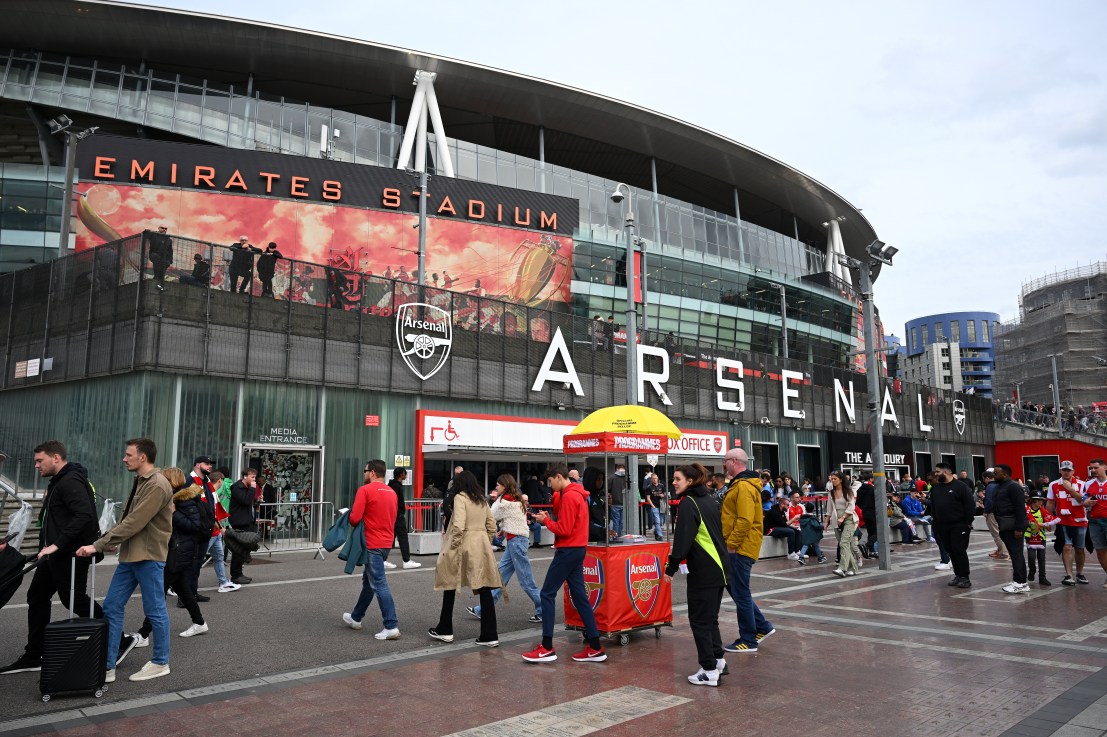
Arsenal have become the second Premier League giant this year to let it be known they are considering major moves to increase stadium capacity.
To expand, clubs must consider whether they can increase capacity on their existing stands or move location altogether. This year, Liverpool finished adding 7,000 seats to Anfield whilst neighbours Everton moved to a new dockside location – a decision which partly cost the city Unesco World Heritage status.
Manchester United have opted for the latter. With England already boasting the world’s first carbon-neutral football club – Forest Green Rovers have planning permission for an all-timber stadium – United sought to embed sustainability into the concept with an umbrella roof to harvest energy and rainwater. However, the stadium is now being re-designed to manage escalating costs.
Arsenal may therefore favour following in Liverpool’s footsteps, but expanding Emirates Stadium will be a complex logistical challenge.
The site is hemmed in on three sides by residential areas and bordered by both the Piccadilly and Northern Underground lines, which means transport, crowd management and security will be central issues for any capacity increase.
The local infrastructure is already under significant match-day pressure, so mitigating impacts on the surrounding community will be critical to securing planning consent.
Chelsea face similar difficulties due to Stamford Bridge’s residential location – with recent expansion plans curtailed by local opposition. The club have yet to confirm whether they intend to relocate, expand or even demolish and rebuild – with Twickenham purported to be a potential temporary home. Interim relocation by Arsenal to Wembley could be necessary to deliver a major upgrade safely and efficiently.
Arsenal could look to SoFi for inspiration
In December, a LaLiga match will be played abroad for the first time in Spanish football history – a sign that clubs across Europe are innovating in different ways to expand their revenues. In England, football clubs are increasingly looking to expand non-football use by hosting big-ticket events.
Since opening in 2019, the Tottenham Hotspur Stadium has been the official home of NFL in the UK, and has hosted rugby finals, world championship boxing and global artists such as Beyonce. To capitalise further on this, last year Tottenham secured an amendment to its existing planning permission, allowing it to host up to 30 money-spinning non-football events per year.
In order to host more non-football events, Arsenal would also likely need to revisit existing concert restrictions, which limit the club to three per year, plus three non-football, non-musical events.
The local planning authority may also be more reluctant to allow increased flexibility at the Emirates given its more central location, but could seek to mitigate impacts through increased noise or traffic controls.
Arsenal may seek design inspiration from the SoFi Stadium in Los Angeles, which was privately funded by their ultimate owner Stan Kroenke and has a capacity that is expandable to over 100,000.
Any raising of the roof at the Emirates to facilitate higher gradient seating for a loftier capacity, however, would likely require a revision to spatial restrictions imposed by the local authority.
It will be interesting to see how the Emirates, home to Arsenal for almost 20 years now, evolves to keep pace with a changing football world.
Sadie Pitmans is an associate in the planning team at Charles Russell Speechlys.