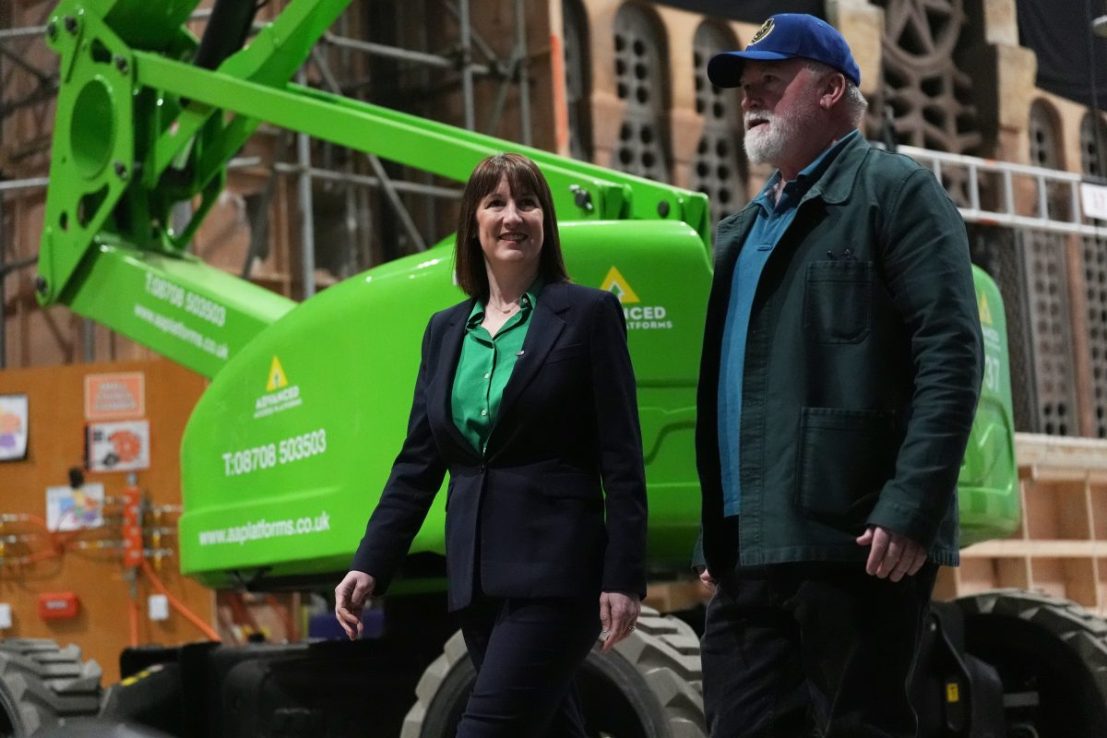
Chancellor Rachel Reeves risks having to hike taxes ever higher in forthcoming budgets if she leaves herself with £9.9bn in headroom, a joint report by Barclays and the Institute for Fiscal Studies (IFS) has warned.
The research has suggested that spending cuts would send a “crucial” signal to the bond markets that the government had the “political will” to abide by fiscal rules while tax hikes would need to be carefully designed to avoid further damaging UK growth.
In a new report, top economists warned that Reeves should build a headroom larger than £9.9bn to ease gilt traders’ nerves and give herself greater flexibility at future Budgets.
Helen Miller, director of the IFS, said the upcoming Budget will “feel like Groundhog Day” and the situation was largely “of her own making”.
Reeves told business leaders last November she was “not coming back with more borrowing or more tax hikes” but on Wednesday she conceded that further tax hikes were being considered to fill a hole in the public finances.
Miller said: “When choosing to operate her fiscal rules with such teeny tiny headroom, Reeves would have known that run-of-the-mill forecast changes could easily blow her off course,” Miller said.
“A key challenge is ensuring that fiscal Groundhog Day doesn’t become a twice-yearly ritual. There is a strong case for the Chancellor to build more headroom against her fiscal rules.
“That wouldn’t be costless – but nor is limping from one forecast to the next under constant speculation that policy will be tightened again.”
Raising income tax would ‘support fiscal stability’
In the extensive report, Barclays’ fixed income strategist Moyeen Islam said the bond market will only judge tax hikes and spending cuts positively if they are “credible and deliverable’.
He wrote that gilt traders – otherwise known as UK government bond holders – will judge spending reforms in the public sector and around welfare as key to maintaining fiscal credibility, with any refusal to make savings likely to lead to a break from Labour manifesto commitments.
“Without reductions in spending, to deliver the sums required solely via tax increases could require breaking manifesto promises – not something done lightly,” Islam wrote.
“Should the Chancellor raise the basic rate of income tax, it would be the first rise in over 50 years and would demonstrate a willingness to spend significant political capital in order to support fiscal stability.
Islam also said that, while the UK was not an outlier given its debt was smaller than the likes of Japan and the US as a share of GDP, there were constraints on gilt trading given supply had been more than double the previous average.
“The government’s focus on stabilising the bond market – sometimes at the expense of its broader policy goals – reflects the increasing constraint that market sentiment places on fiscal policy.
“That need for credibility-enhancing policy choices is the price that the government must be seen to be paying in order to provide reassurance to a wary market that has been quick to move sharply on any perception of rolling back on fiscal policy choices.”
Reeves told to focus on inflation
A rout in the bond markets after the upcoming Budget could push borrowing costs higher than expected, with debt interest payments this year already projected to reach £111.2bn.
Barclays UK economist Jack Meaning and IFS researchers have projected the fiscal hole to be worth £22bn, which is largely made up of U-turns on welfare savings earlier this summer and an expected downgrade to productivity forecasts in the Office for Budget Responsibility (OBR)’s fiscal report later this year, compounded by a lack of growth.
The report recommends Reeves should “increase headroom significantly” and reduce the risk of “poor policy decisions”.
Meaning also said Reeves should make lowering inflation at this year’s Budget a central focus. It is an objective which she has already pushed for in meetings with other Cabinet members.
Research warns that hiking VAT could spike inflation, with half of the consumer basket of goods used to calculate price growth susceptible to the main rate of the levy.
The report warns that a decision to break from a manifesto pledge not to raise VAT could keep interest rates higher for longer given Bank of England members’ concerns about inflation expectations, forcing debt interest payments to erode public finances.
“Not all tax levers are created equal and, should the Chancellor choose to meet her fiscal rules off the back of taxes that increase near-term inflation, the outlook for the economy could be worse than our central projection. As such, we believe briefings in recent weeks that this will be a Budget focused on ensuring disinflation are to be welcomed,” Meaning wrote.
Faster adoption of AI, more trade deals and boosting productivity were highlighted as possible remedies for the state of public finances and the wider UK economy.
Tweaking fiscal rules to make the OBR publish just one forecast a year, as Reeves has indicated she would do, would be the “fiscal equivalent of throwing the baby out with the bathwater”, raising the risk of speculation around taxes and making bond markets more nervous.