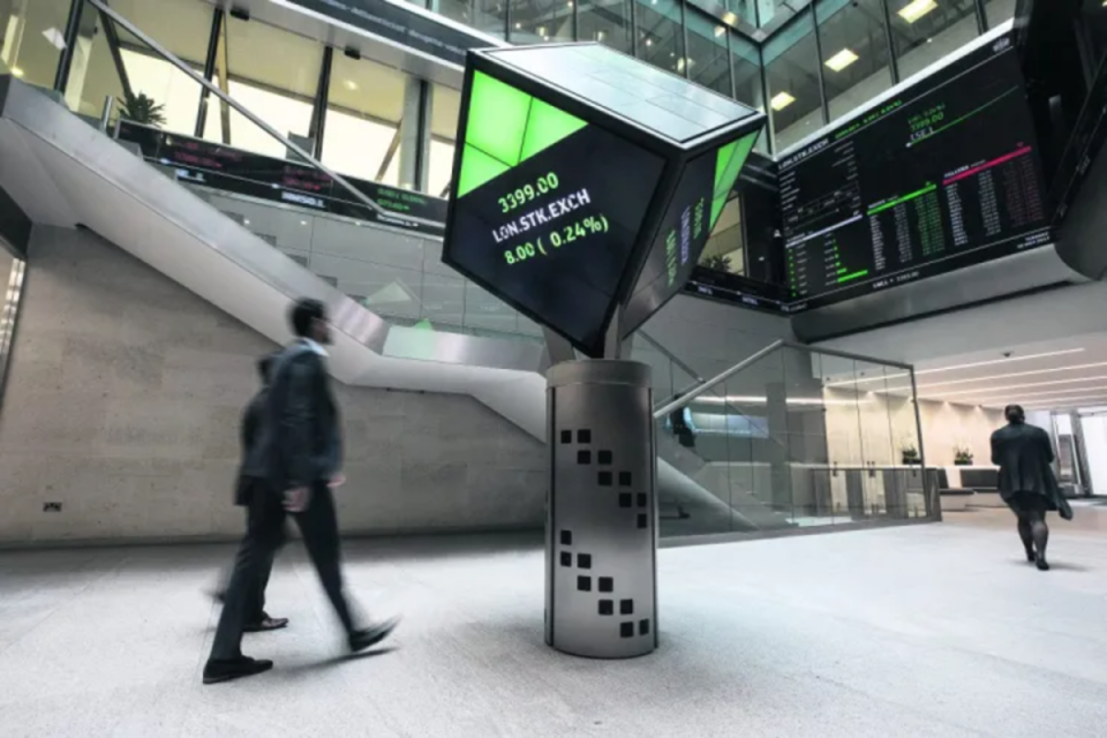
The City heaved a sigh of relief last week after tinned tuna heavyweight Princes confirmed its intention to proceed with its IPO to list on London’s main index.
The group, which has a £2bn portfolio of familiar household food brands including margarine brand Flora and Branston pickle, expects trading to begin at the end of October.
Simon Harrison, chief executive of Princes Group, called listing in the capital a “natural next step” for the company’s growth plan, which includes expanding its range of products and entering more international markets.
However, London’s flagship index has fallen out of favour in recent years, with many companies opting to list elsewhere, including fast fashion retailer Shein, while others chose to flee, such as delivery giant Just Eat, which scrapped its secondary listing earlier this year.
Meanwhile, food IPOs have also fallen, with the last traditional food listing being FTSE 250 company Bakkavor in 2017, suggesting a drop in confidence in London’s ability to serve the sector.
The London Stock Exchange has for decades been home to the firms behind familiar supermarket brands, such as Premier Foods who own popular cake brand Mr Kipling, and Associated British Foods who own bakery favourite Kingsmills.
The exchange has steadily attracted more food and beverage companies in recent years, including AIM listed premium spirits group Artisanal Drinks Company, while health nutrition company Applied Nutrition also opted for the stock exchange in 2024.
Despite London’s shortfalls and IPO exodus, Princes is confident in the index’s capabilities to grow the company and attract retail investors.
Merger and acquisition potential
Princes, noted that part of its decision to list in London was due to its ambition to further its merger and acquisitions potential.
Angelo Mastrolia, executive chair of Princes Group, noted the group was “pursuing a pipeline of tangible M&A opportunities”, while Harrison added London would provide “access to capital” needed to execute these ambitions.
London has seen an influx of M&A activity in recent years, driven by foreign institutional investors looking to take advantage of the market’s low valuations.
Chris Beauchamp, chief market analyst at investment platform IG, said: “London remains a key hub for M&A thanks to its deep capital markets, expert advisers, and global investor reach.
“For Princes, it offers access to buyers who understand consumer staples, within a trusted and transparent regulatory setting.
“With UK valuations still attractive and a broad pool of international interest, London provides the ideal environment for a competitive, credible sale process.”
Princes, which is owned by Italian company Newlat, is known for being efficient with M&A, snapping up typical targets of underperforming companies, non-core assets and companies with strong synergy potential.
The company recently snapped up the Symington’s Cross Green facility in Leeds for £23m in July, to bolster its production and manufacturing capabilities, with the group operating 23 facilities across the UK.
It also secured the purchase of the iconic Royal Liver Building in Liverpool last year, where it has been headquartered since 1982, for £60m to expand its presence in the city, with the company noting the purchase was a sign of its “long term commitment to the UK”.
Encouraging investment
Investors have become increasingly eager for new companies to list on London’s index, allowing them to tap into new opportunities and sectors beyond the capital’s well known financial and energy listings.
While some industry figures have speculated whether Prince’s will provide this appeal to investors, others have suggested that the company plans for retail investors in its IPO will pull them to purchase shares.
Dan Coatsworth, head of markets at AJ Bell, said: “Princes Group are keen to get the public involved, rather than the old model of restricting IPOs to institutional investors.
“This is significant for two reasons. First, it shows IPOs are no longer the domain of the elite; and second, history shows that some of the biggest initial gains sometimes come at the market open on the first day of dealing.
“Investors who buy at the IPO offer price stand to benefit from a potential one day ‘pop’ in the share price.”
The Beauty Tech Group, which has become a recent addition to index, allowed retail investors to buy shares, priced its IPO at 271p per share and on its early trading debut the stock climbed by more than four per cent, to roughly 285p.
Princes, which generated £2.1bn in revenue last year, is targeting retail investors in its bookbuilding process, through a network of investment platforms, retail brokers and wealth managers.
Will more companies choose London?
The move is expected to reinvigorate the capital’s IPO scene, which raised just £814m in the first nine months of the year and slipped to 23rd in global ranking for IPO destinations.
However, a string of big names are rumoured to be considering a listing in London, including high-street pharmacist Boots and online travel agency, Loveholidays.
Meanwhile, digital bank Shawbrook is targeting a November listing and expects to raise £50m in net proceeds through new shares.
Industry figures are also hoping that speculation that the Treasury will slash stamp duty to 0.5 per cent will also lure more investors to London.