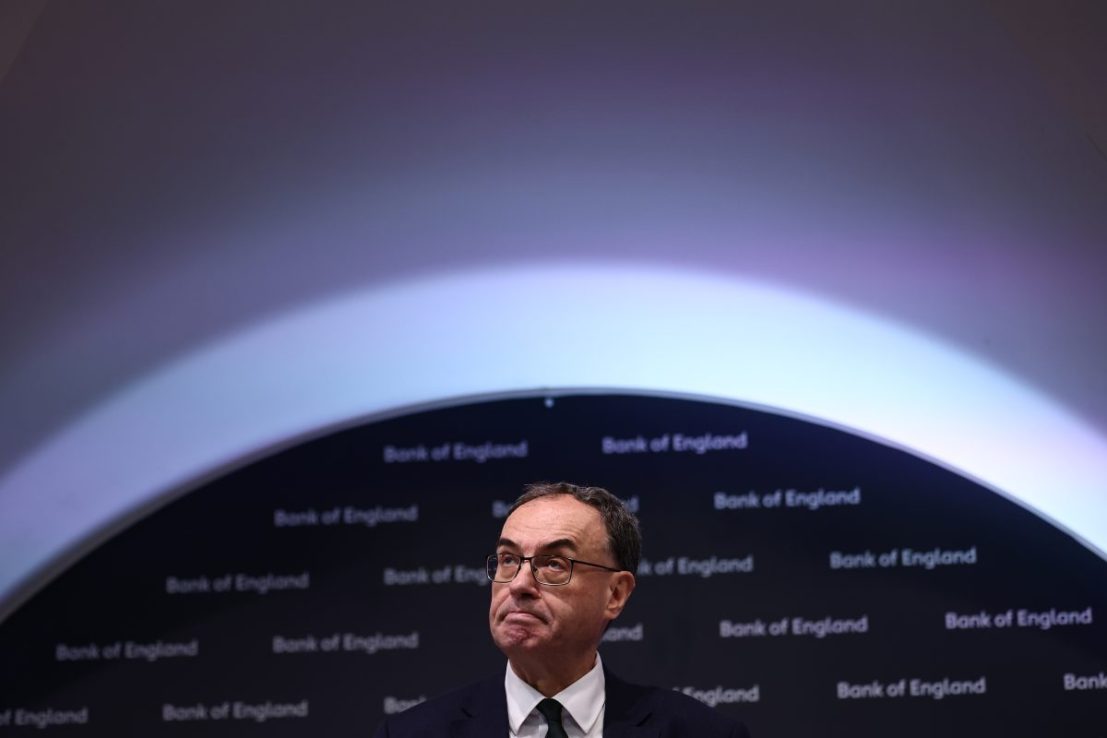
Bank of England governor Andrew Bailey has warned of the dangers associated with paring back financial regulation, in a speech in which he also denied that the abundance of red tape foisted on the financial sector after the Great Financial Crash had impeded economic activity.
Addressing the Klass Knot Farewell Symposium, Bailey, who was recently made chair of the Financial Stability Board, argued that even as the “pro-cyclical tide” turns toward more deregulation, central bankers should not be prohibited from “collecting necessary data in new areas of risk”
“There is no trade-off between financial stability and objectives like growth and competitiveness,” he said, adding: “I push back at the line of argument that post-crisis financial regulation caused the fall in productivity growth, by restricting business investment in the economy.”
Many will view the staunch defence of robust governance as a tacit rebuke to the government’s flagship deregulation push that has seen the Chancellor accuse Britain’s watchdogs of being a “boot on the neck of businesses”.
In a bid to revive the UK’s flagging economy, Prime Minister Keir Starmer and Rachel Reeves have vowed to bear down on unnecessary red tape and “regulate for growth”.
Growth drive
The drive has resulted in a flurry of pro-growth announcements from the Financial Conduct Authority – the UK’s largest financial watchdog – including loosening remortgaging rules and lifting its ban on retail investor access to cryptocurrency tracker funds.
The Bank of England’s own Prudential Regulation Authority, which polices the UK’s banking sector, has also unveiled several measures to cut down the weight it places on firms. Last month, it unveiled a suite of measures aimed at reducing its reporting burdens on lenders. Those followed a similar package of reforms aimed at reducing hurdles to mid-sized banks’ growth.
Those moves jar with the comments from Bailey, who also warned that much of the rhetoric surrounding financial regulation left us more vulnerable to another financial crisis redolent of the Great Financial Crash of 2007/8.
“As time passes memories of a financial crisis fade and this leads to a questioning of the continuing need for the responses,” he said. “This creates the risk of history showing signs of repeating itself, remembering back for instance to the strength of the deregulation argument before the financial crisis.
“Those of us… who are veterans of dealing with the financial crisis, don’t tend to forget, but I can see evidence in today’s world of the truth of [American economist] Minsky’s observation” that memories of financial crises wane over time.