The United States government shutdown has caused federal statistics agencies to stop producing economic reports, sparking fears Federal Reserve officials will be deprived of crucial data in the run-up to one of the most eagerly anticipated interest rate decisions in recent history.
Funding for America’s federal services and government departments was halted on Wednesday, causing thousands of public sector workers to be furloughed, after Democrats and Republicans failed to agree on the country’s spending plans.
The opposing parties have been locked in a bitter standoff over health spending, with Democrat lawmakers arguing the Trump administration’s plans will leave millions of Americans unable to afford healthcare.
The far-reaching consequences of the government shutdown have triggered fears among analysts that Fed officials will be flying blind at a crucial interest rate decision due later this month.
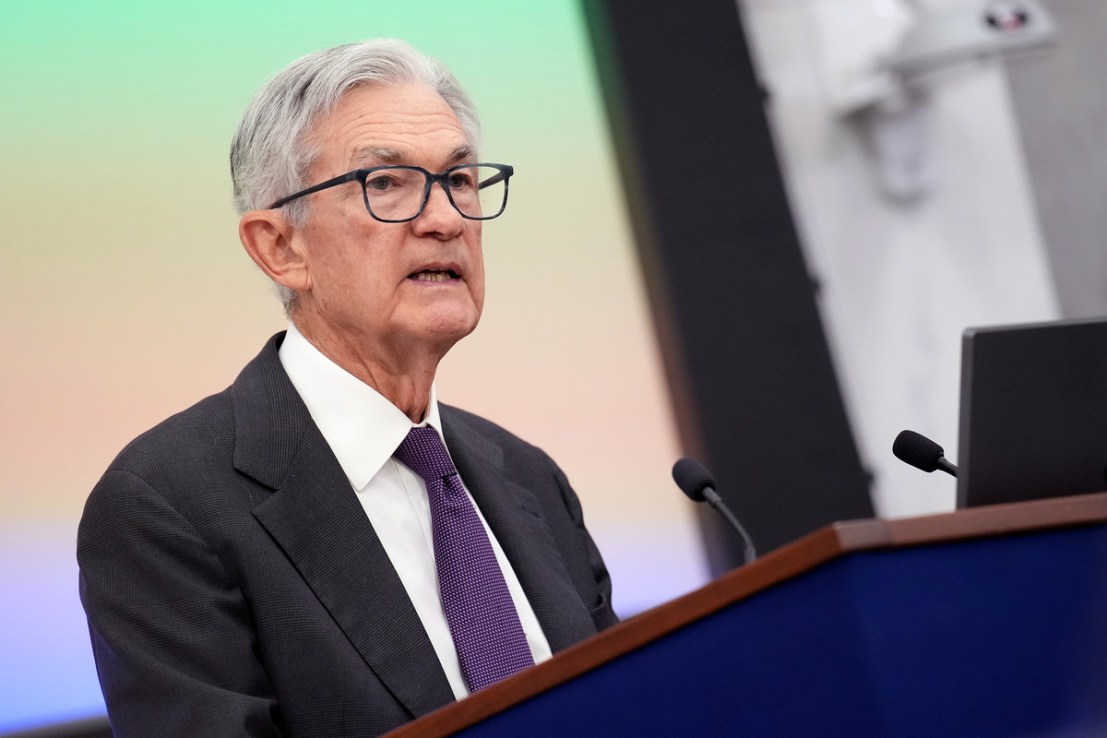
The central bank is widely expected to cut its key interest rate for the second time since Donald Trump took office in January, after a string of soft jobs readings resulted in a notable shift in tone from governor Jay Powell.
Government shutdown ‘obviously unhelpful’ for Fed
Some investors had been predicting a bumper 50 basis point (bps) cut to revive the cooling jobs market, but those predictions has been plunged into uncertainty by the fact rate-setters’ grasp on the economic picture will be clouded by a lack of data.
“The shutdown reduces the likelihood of either an acceleration or deceleration in the policy path and therefore increases the probability of just a 25bps cut,” Nuwan Goonetilleke, Phoenix Group’s head of capital markets told City AM. “Given the activity data has been solid, investors need further deterioration in the jobs market to get a 50bps cut this month. If they don’t see the labour report, the Fed will not be aware that this is the case.”
The government shutdown leaves the Bureau of Labor Statistics unable to publish its all-important September jobs report, which had been held up as a crucial bellwether for the speed at which the labour market is declining.
“Clearly the main driver of the Fed’s thinking at the moment is the risk that the recent slowdown in the labour market will turn into a much more serious downturn,” said Luke Bartholomew, deputy chief economist at Aberdeen.
“And there is pretty solid empirical evidence that the economy does sometimes exhibit those kinds of stall speed dynamics… so setting policy without a crucial labour market data point is obviously unhelpful.”
October’s decision is one of the most eagerly anticipated in recent history. The Federal Reserve has been forced to contend with both a growing clamour from Donald Trump and his supporters for a rapid loosening of policy and several assaults on its independence. Officials have so far resisted the administration’s calls for cuts, fearing the White House’s swingeing tariffs and immigration crackdown risked setting off a round of price rises.