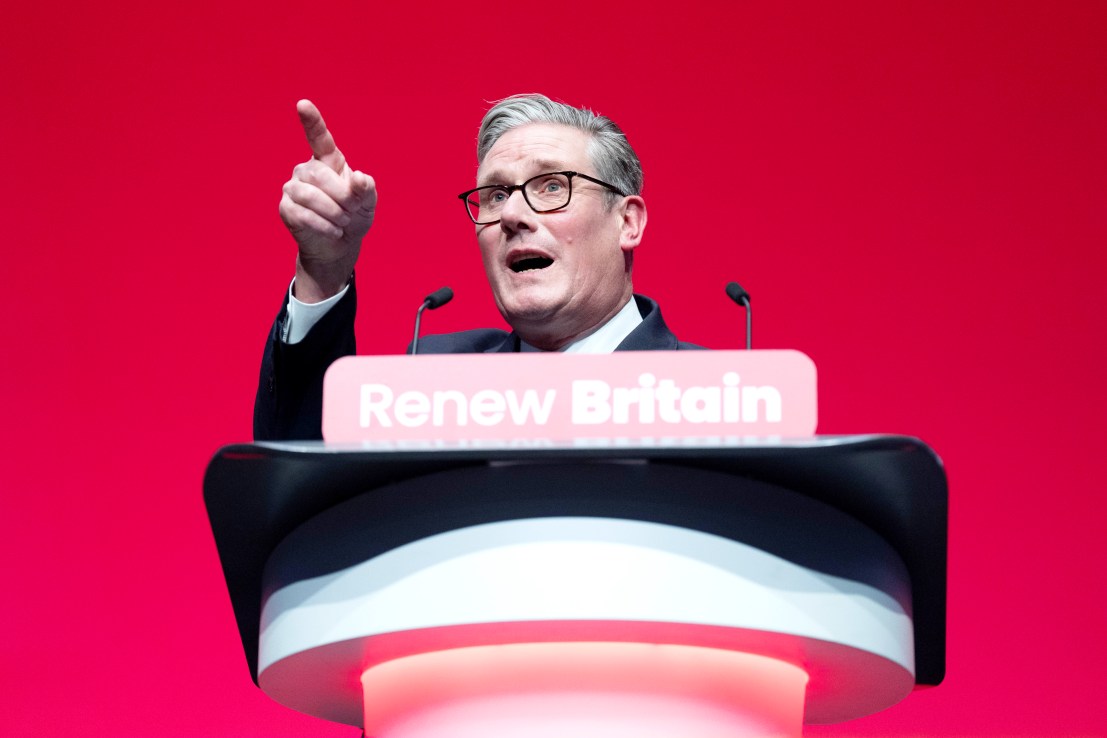
The prime minister may have insisted yesterday that wealth creation is “the defining mission of this government” but it certainly wasn’t the defining mission of his speech to the Labour party conference.
There were roughly 7,000 words in Keir Starmer’s address to party members in Liverpool, with “business” being uttered just four times – and one of those was effectively an apology for the taxes imposed at last year’s Budget.
His references to wealth creation were curious; he twice spoke of “changing the way we create wealth” though he didn’t flesh this out beyond a desire to build “an economy that grows not just from the top, but from the grassroots.” I’m all for grassroots wealth creators but they don’t just spring up in response to stirring rhetoric.
As with his Chancellor yesterday, this was a speech hamstrung by the fact that the Budget is still two months away, with expectations building every day that it will heap yet more burdens on an already burdened economy.
Tax rises are inevitable and the only way to take some of the sting out of them would be to reduce spending, particularly on welfare. Last night reports emerged that, fresh from losing the fight to trim £5bn off a £100bn welfare bill, the government is now preparing to scrap the two-child benefit cap in a move that will cost around £4bn.
Labour believes in higher taxes and spending
It is possible that the policy will be offered to Labour MPs in exchange for meaningful cuts to other parts of the welfare budget, but there is no evidence to suggest that those MPs are in the mood for rational compromise. They want more spending. They want higher taxation. Meanwhile, Starmer and Reeves say they want economic growth.
This is fantasy politics and dangerous economics. While activists and politicians in the Liverpool conference centre were whipped into ecstasy by Starmer’s attacks on Nigel Farage, the red warning lights flashing on the economic dashboard were ignored.
The Institute of Directors reveals today that its measure of business confidence has fallen to the lowest level in the history of their sentiment survey. Growth in the second quarter of this year was half what it was in the previous three months. Entrepreneurs and CEOs are speaking out with ever increasing urgency and the latest ONS data shows households are holding on to their money ahead of the painful Budget we’re now told to expect.
In this context, Starmer’s talk of optimism and renewal sounded dangerously out of touch with reality.