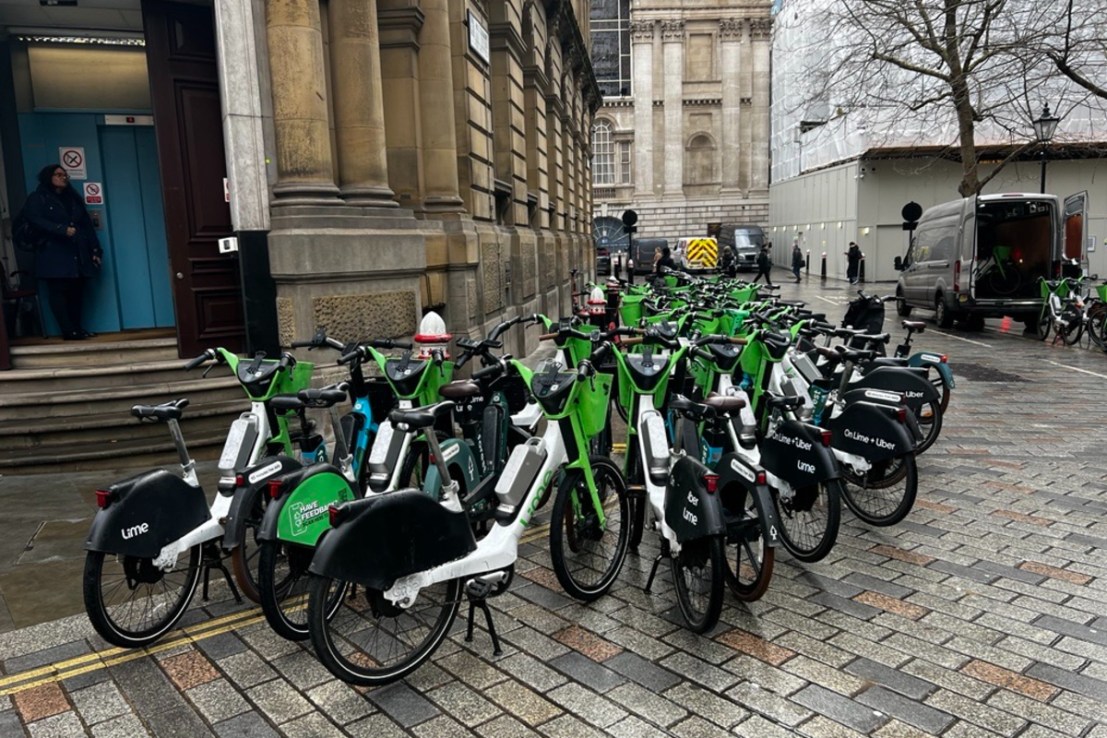
Lime has become an unavoidable presence on London’s streets.
Its distinctive green e-bikes are now the backbone of the capital’s micro-mobility network, with more than four million unique riders and tens of millions of trips recorded.
The company has added 900 new parking bays this year alone as part of a “London Action Plan” designed to expand access and tidy up kerbside clutter.
But alongside this rapid growth, the company faces growing scrutiny over its safety record.
Trauma surgeons in London hospitals have reported a spike in injuries linked to heavy rental bikes, including fractures severe enough to earn the nickname ‘lime bike leg’.
It has raised concerns about whether the boom in shared bikes has outpaced the safeguards needed to support it.
Lime’s boss Wayne Ting insists otherwise. “Safety is incredibly important to us. It guides how we design and maintain our vehicles”, he told City AM.
“We do a quality check of every bike before it goes out, and if there are complaints, those bikes are taken offline immediately”.
The company stresses that 99.99 per cent of rides are completed without incident, although many cases still require emergency room visits.
Scaling up a transport revolution
The surge in micromobility use is not unique to London.
Cities across Europe and the US are grappling with how to regulate e-bikes and e-scooters while promoting greener transport alternatives.
In the capital, Lime’s dominance has made it a critical partner for Transport for London (TfL), which is investing heavily in new cycle lanes and has pledged 40,000 new bike parking spaces by 2030.
To prove its credentials as a responsible operator, Lime has rolled out several initiatives aimed at reducing poor rider behaviour and improving road safety.
Its ‘respect the red’ campaign urges users not to run traffic lights, while new AI-powered systems prevent bikes from being left in unsafe or overcrowded locations.
The company has also emphasised its economic impact, claiming that its operations support thousands of jobs across the city and provide affordable, accessible alternatives to private cars.
“Availability, affordability, and quality are the three things we need to deliver”, the chief executive said.
Yet for London’s overstretched NHS, even marginal increases in accidents matter.
“Even a minor fall can translate into a significant break”, says orthopaedic consultant Alex Liddle of King Edward VII’s Hospital, pointing to the bikes’ 35kg weight as a risk factor.
Clinicians argue that without better data sharing between operators, hospitals, and regulators, the full scale of injuries may be underestimated.
Growth and regulation
Lime’s rise also puts pressure on policymakers.
Should London clamp down on shared bikes, or accept accidents as the price of a transport revolution?
Regulators have so far taken a relatively light-touch approach, betting that micro-mobility will help reduce congestion and emissions.
However, as more operators enter the market, questions about insurance, rider education, and long-term infrastructure are becoming increasingly difficult to ignore.