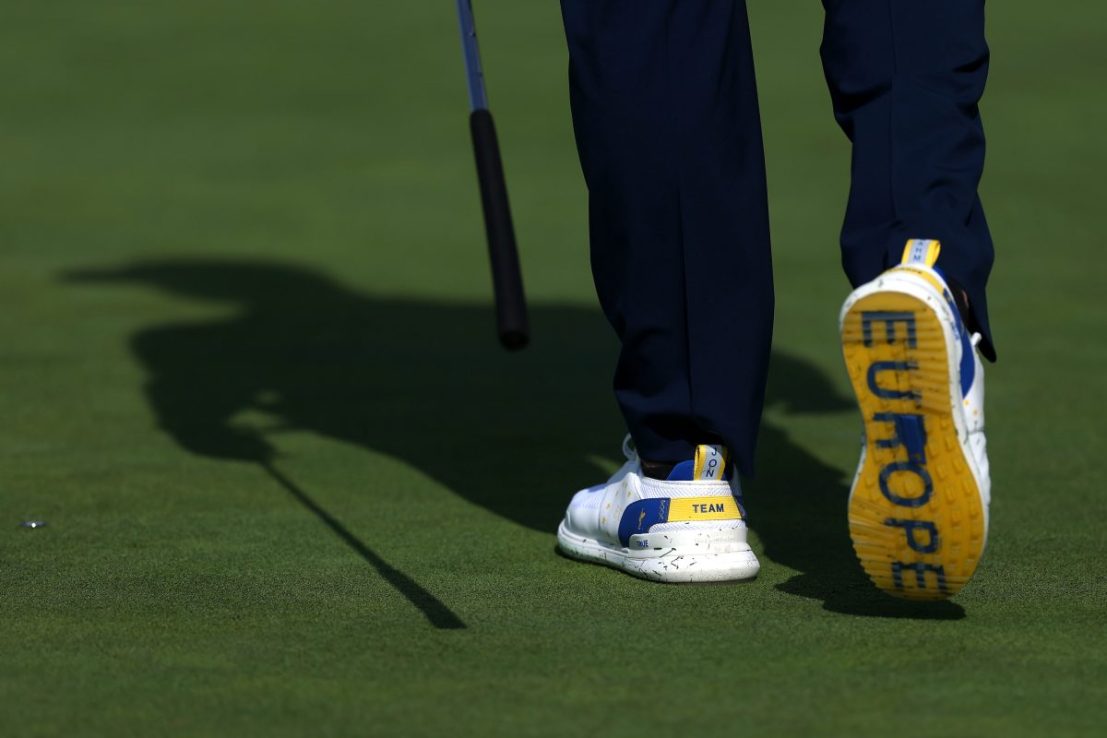
If the Ryder Cup didn’t exist, could you create it today? After all, this is an event that bends an individual sport into a collective enterprise, is rarely won by the away team, and hasn’t produced a close contest for 13 years.
It also sees a roster of golfers playing for love pitted against another that has demanded payment – or at least that’s the European rhetoric. And yet the competition is the envy of a string of sports desperate to find commercially transcendent formats.
This weekend’s contest in Bethpage marks the point at which Europe has taken on the United States more often than Great Britain did alone in golf’s pre-eminent team competition.
It was way back in 1979 that the Ryder Cup’s sporting jeopardy was rebalanced with the expansion of America’s opponents. Britain hadn’t won since 1957. Results thereafter have vindicated the decision and ensured not only the event’s relevance, but also driven its huge commercial success.
This will be the 23rd occasion on which Europe’s players have teed up against America’s finest. They will be seeking their 13th outright victory but only their third on American soil. One of those 23 contests, in 1989, was tied.
Bookies have a draw this time as an 11/1 long shot. Unsurprisingly, given a home advantage that typically weighs heavily, the US team are 8/11 favourites before the first tee shot has been struck.
Paid to play or not, the leading American and European golfers are all eager to qualify for their respective teams. Finding the key to such collegiate appetite in a quintessentially individual sport has proven beyond the wit of many other governing bodies and promoters.
Witness, for example, tennis’s regular reworking of the Davis Cup and Billie Jean King Cup, or track and field’s repeated failure to identify a successful, sustainable team format.
Both these sports have been stymied by, at times, lukewarm athlete interest in team opportunities that has bordered in some instances on indifference. Emma Raducanu’s decision to swerve the BJK Cup Finals this month is merely the latest example of a star prioritising their individual training and competition programme.
Money is something of a red herring in the case of the Ryder Cup. After all, golfers on both teams are likely to enjoy sponsor bonuses for taking part, and will reap the benefit of enhanced profiles and hence commercial value from being watched by an audience that stretches well beyond regular golf enthusiasts.
“We certainly don’t need any motivation or monetary rewards to get us up.”
Luke Donald, Europe’s Ryder Cup captain.
“We wanted to bring the Ryder Cup into today’s age, and we felt this was the best way to do it.”
US captain Keegan Bradley on the payments to his players.
If you were to start from scratch, however, it is inconceivable that any major sport could hope to engage its stars in a new enterprise without direct, material reward.
The unpaid Olympics is gradually winning over the world’s leading golfers and tennis players, but this is surely the most enormous of outliers in which the team carrot is a multi-sport one, minted stars getting to share team kit with equally gifted but financially struggling compatriots from sports with very different economics.
You can love golf, but recoil at its pecuniary extremes; find LIV Golf’s approach to the sport vulgar, but still thrill at a pitch or putt of beauty. Perhaps, though, it is the very existence of the Ryder Cup that allows golf to continue on its relentless path to financial excess.
The competition is far from a charitable enterprise but, in their eagerness to take part, there is just enough of a whiff of altruism to suggest that, at heart, golf’s superstars are in love with their sport.
This is quite the trick for the PGA and European Tour to have pulled off, even more so when you consider that there is no sense of nationalism to bind Europe’s golfers together.
Again, starting from scratch, it is hard to conceive that a confected European team would have similar cut-through in another sport – or would even do so in golf if attempted for the first time now. The late 1970s was a very different commercial era and now the Ryder Cup has abundant heritage to monetise.
This weekend’s narrative is already written, even if the final outcome is uncertain. The ritualistic media playbook will revolve around captains’ speeches, the alchemy of traditional rivals bonded into player pairings, the partisan nature of the home fans, the fairway catwalk of both the golfers and their romantic partners, friction between the two teams that will then be bottled as marketing sauce for the centenary Ryder Cup in County Limerick in 2027.
If you fancy that third away win across the Atlantic, the bookmakers have Europe at 9/5. The odds on any individual sport creating its own equivalent to the Ryder Cup juggernaut? Much, much longer.
Welcome to the House of Fun
Athletics may have failed (yet) to find its own team format, but watching last week’s World Championships you’d think there was little wrong with the sport.
A full stadium, dramatic action, the odd controversy, medals spread across 53 nations, the United States winning enough metal to create a storied platform ahead of the LA28 Olympics but far from having things all its own way. And where the sport has a team dynamic – the relays – Tokyo served up the usual quota of thrills and spills to cap off its nine days of competition.
This was far from a vintage champs for a British team which, although similar at the sharp end to those that took part in both Budapest 2023 and the Paris Olympics, won only half the medals – five – none of them gold.
There has been an immediate rush to media criticism, but for me this just goes to show the fine margins in this most competitive of global sports. After all, 10 medals in each of the past two years represented historically standout hauls. In all individual sports, especially one as global as athletics, you do well never to forget the competition.
Britain finished equal fourth alongside Germany in the placing table, which awards points across the top eight finishers in every event – worth remembering as knees jerk at the shortage of medals.
There will rightly be a GB performance review, but so there is after every championships. Both the Euros and the Commonwealth Games on home soil next year will prove a solid base on which to build for Beijing 2027 and the Olympics the year after.
I soaked up all the Tokyo drama, whether Brits were involved or not (although Jake Wightman and Amy Hunt certainly brought out the inherent bias in me).
Standout moment among many? The dip finish and three hundredths of a second separating the first two home in the men’s marathon (below), which gave the lie to the “it’s a marathon, not a sprint” cliche.
Into the red zone
I’ve my seat at Saturday’s Women’s Rugby World Cup final. Hottest sporting ticket of the year.
World Rugby and the RFU have the contest they craved – the Red Roses and a hefty dose of jeopardy in the shape of a Canadian team that comprehensively dismantled the reigning champions New Zealand last weekend.
Talk of the tournament’s social and economic impact can wait. For now, it’s all about the 80 minutes. Bring it on!
Ed Warner is chair of GB Wheelchair Rugby and writes his sport column at sportinc.substack.com