It’s a basic fact of economics that the more you increase supply – the more of a thing you make – the easier it is to bring down the price. Among the best-known examples is the Ford Model T, one of the top-selling cars in the 20th century with more than 15 million produced. The manufacturing process became so efficient, and each car’s share of the up-front design costs so low, that by the time the last vehicle rolled off the assembly line in 1924, the list price was less than half that of the first a few years earlier.
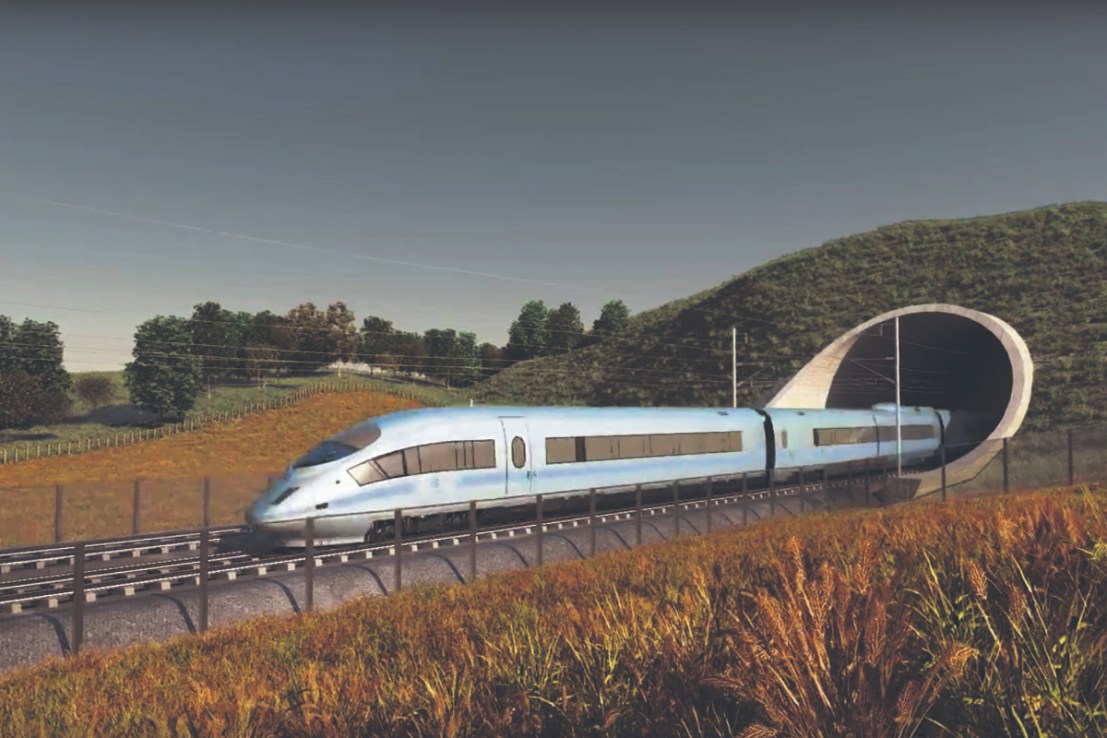
At the opposite end of the efficiency spectrum we have HS2, the UK’s biggest infrastructure project. According to the Stewart Review, an investigation into why the rail line’s costs have ballooned to over £100bn, “a railway that was originally intended to increase capacity became a vision to build the best and fastest high speed railway in the world.”
Rather than copy the template for the HS1 route to Dover (top speed: 190mph), or even that of France’s TGV (top speed: 200mph), Britain’s egoistic planners wanted a line that could go a whopping 225mph, to make our European counterparts blush.
That sounds like a jolly fun idea – if you ignore the jolly big price tag. Because building the fastest rail line in Europe (no longer the world, as China has already reached 240mph) meant starting from scratch: developing novel engineering techniques and designing new trains with very little else to go on. That accounts for quite a big share of the HS2 bill – along with needlessly complex planning regulations. Had we just recruited a few Frenchmen to faire un doublon of the TGV, or some Germans to build an ICE doppelgänger, we’d have saved billions. Was it really worth it for a bit of extra oomph?
Too late now. The biggest danger, now we’re halfway to finishing the job, is that the costs run so high, politicians vow “never again.” If we built HS3 or even HS4, all the complex design work would already be done, leaving just the construction costs – a huge saving. Instead, the most likely outcome is the tens of billions Britain spent on high speed rail design will be banished to the national archives at Kew the moment the line opens – a huge waste.
Imagine if Ford had summoned all its engineering resources to build an assembly line for a single Model T – and then immediately shut it down once they’d finished. That would be lunacy, but it’s probably what we will do with HS2.