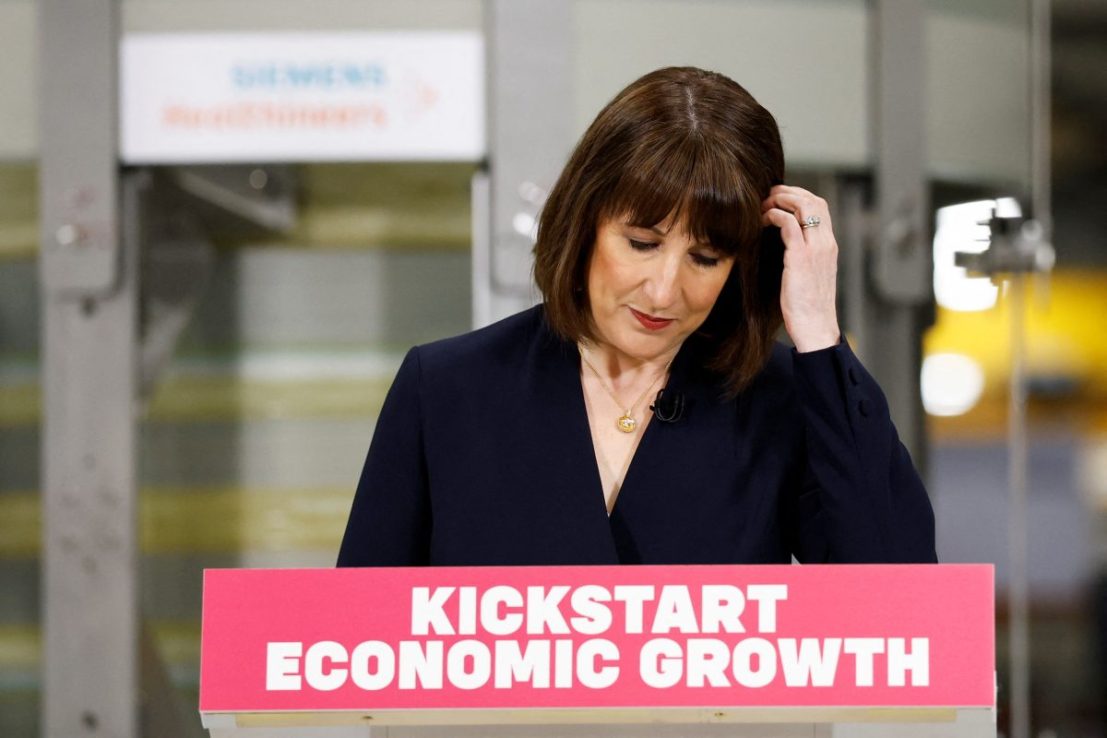
Chancellor Rachel Reeves has been warned by a leading Wall Street bank that hiking taxes later this year will not improve the state of public finances.
Reeves is widely expected to raise taxes by at least £20bn at this year’s Autumn Budget, with property owners, gambling companies and pension pots likely to be hit with higher levies.
Goldman Sachs has said the UK has had “limited historical success” in improving public finances through raising taxes, with bond traders and economists likely to fret about the state of the UK’s fiscal policies long after the Autumn Budget.
The bank’s economist Sven Jari Stehn said that further taxes would likely keep interest rates higher for longer due to stubborn inflation, which would in turn add to borrowing costs for the government.
Jari Stehn also said backlash against proposed welfare cuts earlier this year showed that spending reductions remained “politically difficult to deliver”.
“The historical record shows that growth tends to hold up better following spending cuts than revenue increases,” Jari Stehn said.
“Research suggests that spending cuts can have positive supply-side effects when focused on improving incentives to work – for example, via welfare reform. Given the large increase in the number of workers who have dropped out of the UK labour force to receive long-term sick and disability benefits, welfare reform could be expected to boost labour supply as well as lowering spending.
“As a result, the OBR would probably score such reforms highly in terms of their supply-side effects.”
Reeves should make ‘reliable’ tax changes
He also backed Reeves’ fiscal rules amid growing criticism of the Office for Budget Responsibility (OBR)’s “orthodoxy”, with Reform UK claiming they would abolish the watchdog if it were elected into government.
But changing forecasts to a once-a-year event “would be helpful”, according to Jari Stehn.
Jari Stehn said: “Research suggests that maintaining the fiscal rules would help keep policy focused on deficit reduction, thus containing gilt market pressures.
“The government would benefit from additional headroom such that small shocks do not trigger immediate fiscal action. Moreover, it would be helpful for the OBR to assess compliance with the rules only once a year to de-emphasise the headroom in the public debate.”
The Goldman Sachs economist also urged the government to avoid making big changes to taxes which generate lower amounts of revenue and rather opt to make small tweaks to larger revenue-raisers.
This would likely force Labour to ditch manifesto commitments to not raise income tax, VAT or employees’ national insurance, which make up more than two thirds of total government revenue.
“If tax rate increases are necessary to generate revenue, small increases in tax rates that affect a broad tax base – for example, on income or property – tend to deliver a more reliable increase in tax receipts than large rate increases on a small revenue base – for example, on non-doms or gambling activity.”