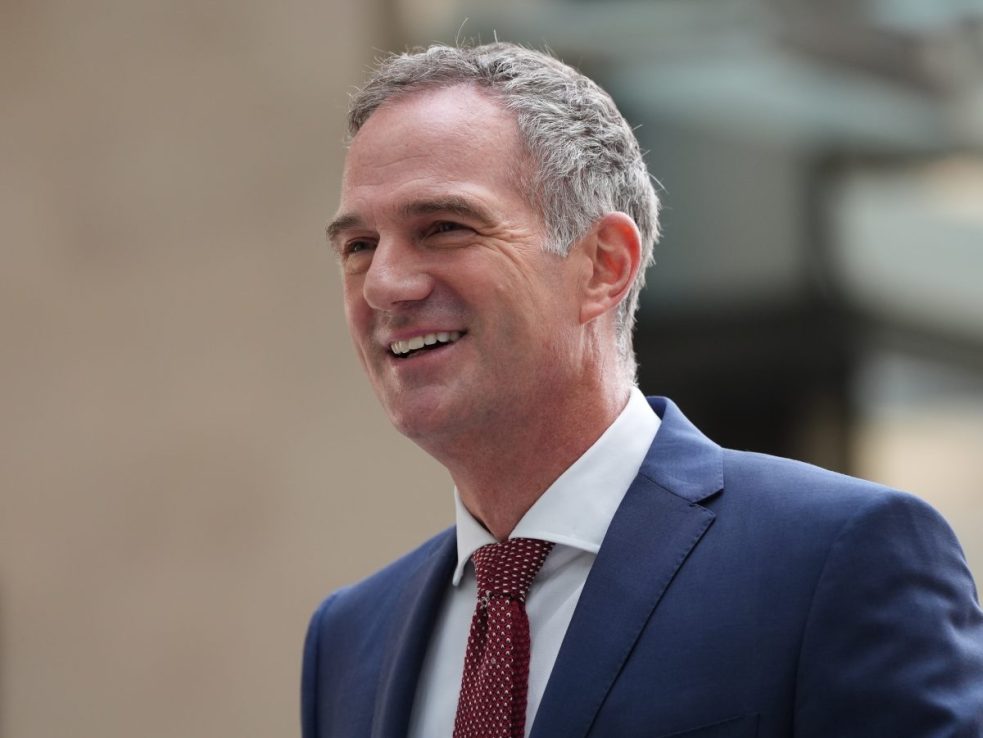
Technology secretary Peter Kyle has pitched the UK as a “global magnet” for innovation in his keynote speech at Mansion House on Wednesday evening.
This speech comes as investment in British AI companies hit record levels last year. Figures released alongside his address confirm that private investment in UK AI firms reached £2.9bn in 2024, with average deal sizes of £5.9m.
The sector is now estimated to contribute £11.8bn to the economy, double the figure recorded in 2023, and employs more than 86,000 people nationwide.
Kyle said the surge underscored the government’s “Plan for Change” but warned regulators and investors must move faster if the UK is to maintain its edge in an increasingly competitive global market.
‘Invest, build, list scale’
In his remarks at Mansion House, Kyle said: “Countries can only prosper if they get the big calls right… to innovate, not imitate.
“We want you to keep investing here, keep building here, list here, scale here. If you invest in Britain, you’ll share in that competitive edge,” he added.
The UK government is also pressing ahead with plans to create a new AI assurance industry, designed to certify the trustworthiness of AI systems and boost public confidence.
A dedicated profession is set to be launched, with independent experts tasked with overseeing systems and ensuring firms are not “marking their own homework”.
An £11m “AI assurance innovation fund” will open in spring to develop new tools for the sector, alongside a £2.7m boost for regulators to speed up approvals in industries from energy to aviation.
Pilot projects include Ofgem developing AI tools to fast-track clean energy infrastructure, and the Civil Aviation Authority exploring AI-driven safety analysis.
Growth, but hurdles remain.
Chancellor Rachel Reeves has backed Kyle’s message, insisting the government was cutting “burdensome red tape” to attract investment and deliver growth.
She said: “This country has huge potential, but our economy has been stuck on pause for too long.”
While some analysts welcomed the momentum, others have urged a degree of caution.
Helena Sans, head of tech, media and telecoms at Barclays Corporate Bank, noted in a recent sector report that “access to funding, global investor appetite and risk-taking remain the biggest hurdles”, even as confidence in Britain’s tech base grows.
Others questioned whether the government’s regulatory reforms can keep pace with the rapid deployment of AI.
The Ada Lovelace Institute has previously warned that the UK risks operating in a “legislative void” on facial recognition and AI oversight.
Still, new regional figures show the ecosystem expanding beyond London, with at least double the number of AI firms now based in the Midlands, Yorkshire, Wales and the North West compared to three years ago.
Kyle framed that spread as proof the UK can turn AI into a national growth story, not just a London-centric one.
However, as the US, European Union (EU) and China are all scaling their AI investment and regulatory frameworks, observers say Britain will need more than headline funding numbers to keep its first-mover advantage.