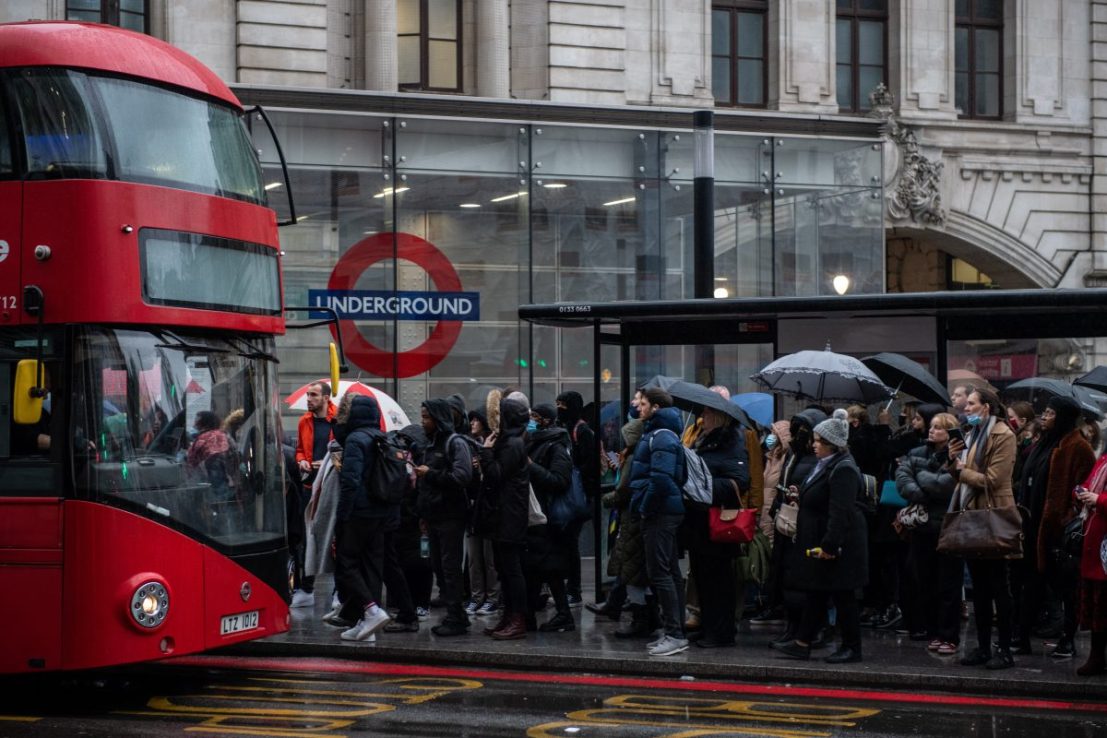
From Sunday evening tube drivers are going on strike, and while the Elizabeth Line will continue to run other London Underground lines – as well as the Docklands Light Railway (DLR) – will pack it in for five days.
Transport for London (TfL) put a 3.4 per cent pay rise on the table, which was rejected by the RMT union. Tube drivers enjoy a salary of around £65,000 with experience operators earning up to £75,000.
If the dispute was only about money, it might have already been averted. In 2024, Sadiq Khan managed to swerve a tube strike with a £30m cash injection into pay packets.
The bigger sticking point is working hours: Eddie Dempsey, the new boss of the RMT, is demanding a 32-hour week.
Dempsey says “fatigue and extreme shift rotations are serious issues impacting on our members health and wellbeing”.
For context, City AM reported in 2023 that the average length of a working day in the Square Mile is 38.7 hours, and that almost a third of City workers are doing a 49-hour week.
And for those who do need to get into the City for work, there is likely to be high demand for buses and e-bikes. In 2022, rolling Tube strikes led to massive queues for crowded buses.
Hit to hospitality
Hospitality is deeply worried about the hit to footfall from the strikes, at an already tough time for the sector.
Kate Nicholls, Chair of UKHospitality, said: “Planned tube strikes will have a major impact on London’s hospitality and tourism businesses, which we know from previous strikes can run into the millions of pounds.
“Consumers will be forced to change or cancel their plans, impacting sales, and many hospitality teams will have difficulty making it to work.”
Nicholls says that the strike comes at the worst possible time, “when businesses can least afford it, having just been hit with £3.4 billion in additional annual cost”.
Data from the British Beer & Pub Association (BBPA) in August found that a fifth of hospitality businesses in the UK have no remaining cash reserves.
“It’s crucial that all parties involved get round the table to negotiate a solution that can avoid these damaging strikes.”
The strikes are scheduled to finish on Friday next week. But research from the Centre for Cities in 2024 found that just 40 per cent of central London office workers come into work on a Friday, so this will be little relief for the hospitality sector.