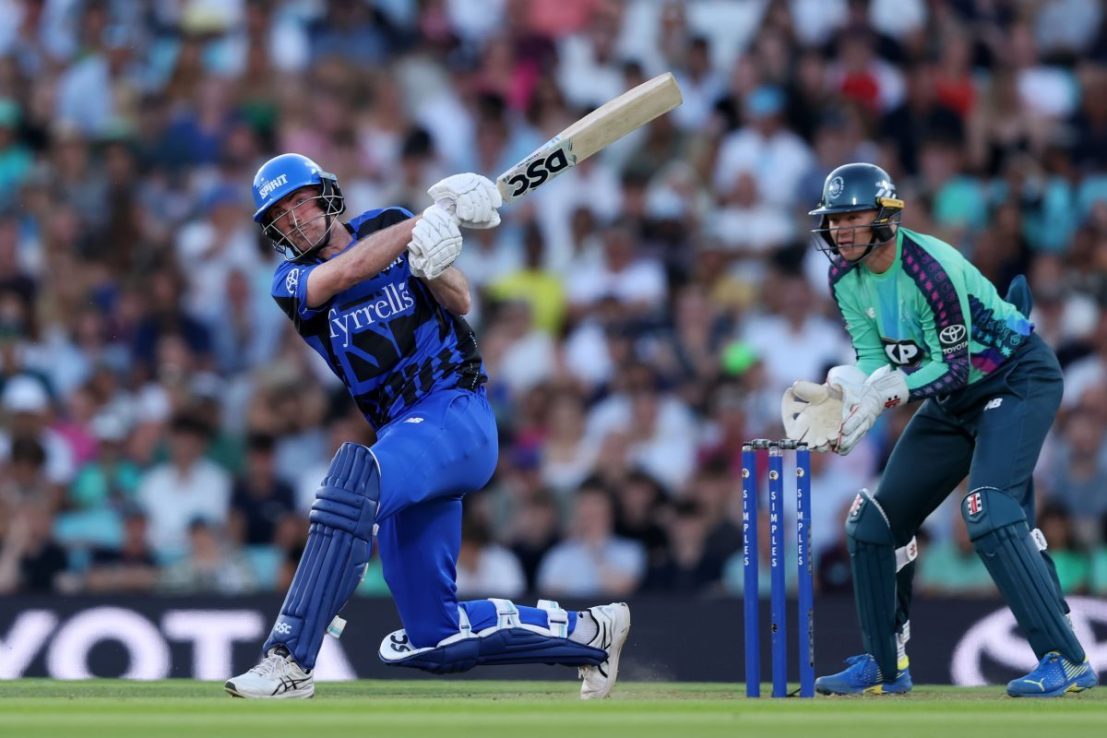
Have The Hundred’s investors figured out yet how they will make a return? Look out for minority stake sales and maybe even listings in India, says Ed Warner.
Never make an investment without having a plan on how to sell it. Illiquidity can scupper the most enticing of propositions.
The very best portfolio managers, especially those operating in private markets, know that corks should only be popped on exiting a holding, not on writing the cheque to buy it in the first place.
I was reminded of this market dictum on listening to a recent sports business podcast. Its guest cited the sums raised in this year’s auction of franchises in The Hundred as evidence that sport, and cricket in particular, is now investment grade.
A bold claim even though a collective billion pound valuation has been tagged to the franchises that have been wholly or partially sold by the England and Wales Cricket Board. Bold because, at this early stage in these eight new marriages of ambition, there are no obvious exit routes.
In a narrow definition, “investment grade” refers to bonds that credit rating agencies assess to have low risk of default, and whose returns in the form of income payments to investors are therefore highly dependable.
The agencies produce ladders of risk. The higher on the ladder a bond (and by extension its issuer) is placed, the more highly investors will price it, and the return it offers them will be commensurately lower.
It is all about certainty. Having a market listing does not in itself affect a bond’s credit rating, but is likely to improve its price. Liquidity, again, is the key.
By contrast, sporting assets are replete with uncertainty and illiquidity. Few are structured as debt instruments. The vast majority are equity plays whose cash returns to investors, if they exist at all, can fluctuate wildly from year to year.
While secure and/or predictable income flows may anchor financial models – think long-term broadcast and sponsorship deals and advance season ticket sales – many key cost items are highly elastic and subject to upward pressure as on-field competition drives boardroom decisions.
Private equity exponents tend to ascribe value to their holdings based on the last price at which any share changed hands. So, sell a small fraction of a business to an eager new investor at a high price and an entire position can be marked up to this fresh level.
There is a risk that such valuations can be illusory, as a transaction involving a small minority position is very different from the sale of an entire business. The latter may result in a higher exit price, or just as possibly a lower one.
There are signs that many sporting assets are being viewed and valued in this way, enabled in part by the eagerness of celebrities to buy slivers of clubs and franchises.
Perhaps for these wealthy, casual players an eventual exit is immaterial, but for majority owners the publicity stardust they bring is a nice addition to the valuation confirmation that their purchases generate.
Expect the next stage in the financial development of The Hundred to be the sale of minority positions in the franchises at increasing prices over the next couple of years.
Valuations will be propelled by talk of Indian cricketers’ future participation (currently blocked by the country’s board), speculation that the tournament’s format will be switched to T20, new international broadcast deals and an extended TV contract with Sky in the UK.
Whatever one thinks of The Hundred’s format or the way it has split asunder England’s cricketing summer, it is clear that the ECB’s obdurate approach to naysayers is bearing fruit.
My anecdotal straw polls over summer beers reveals sceptics grudgingly beginning to watch. Not necessarily because they love the tournament, but because they love cricket played by top class players and this is the only way they can get their fix in August.
First hammering down sceptics and then converting them is a strategy to facilitate rising franchise valuations. It is difficult to envisage this being a profitable enterprise in the conventional sense for some years yet. But rising values will keep original investors happy, even if they are not able to enjoy a flow of dividends that they can bank as a cash return on their original outlays.
As to the end game, who would rule out franchises being floated on the Bombay Stock Exchange or National Stock Exchange of India in the years ahead? Meantime, though, “investment grade” feels a citation too far.
Finals day for The Hundred is at Lord’s this Sunday.
The podcast is episode four of Hallers Playbook, with Glamorgan CCC’s chair Mark Rhydderch-Roberts as Simon Halliday’s guest. You can listen here.
Busted flush
Writing the above, I was reminded of two corporate bombs from my days as an ingenue fund manager in the late 1980s.
I should have exited shares in Frederick Cooper when I saw there was a racehorse named Coopers Racing Nail (or somesuch). As sure a sell indicator as the proverbial fountain in a corporate HQ – even if nails for horseshoes were a small part of that engineering company’s sprawling portfolio.
Similarly, I enjoyed my static line parachute jump with the Red Devils, courtesy of their sponsors Coloroll. But what was a wallpaper manufacturer doing plastering its name on the Devils’ helmets?
Not a sporting asset, but driven no doubt by the same heart-over-head boardroom decisions behind many shirt sponsorship deals across sport today. Coloroll went bust in 1990. They did produce a Red Devils wallpaper line though.
There’s no I in team
If a single member of an athletics relay team receives a drugs ban, all of his or her colleagues are stripped of the squad’s relevant results. Where should the line be drawn in sports involving bigger teams – football or rugby, say?
South African rugby prop Asenathi Ntlabakanye has just been suspended having returned an adverse finding from a random drugs test. He played in his nation’s recent defeat to Australia.
But what if the Springboks had won? Should the Aussies have had recourse to challenge the result?
Ntlabakanye is disputing the finding. Such cases can take many months to resolve. Olympic medals are sometimes redistributed many years after the event.
Team sports clearly couldn’t live with such uncertainty and can claim that one drugs ban from a squad of many could have only a marginal effect. But British Cycling trumpeted the value of marginal gains back in the day and their mantra has become embedded across sport.
Few would be so naive as to believe that leading team sports do not face a doping challenge, such is the sophistication of the science and the scale of the financial rewards on offer. Squaring up to that challenge should include greater clarity on the collective jeopardy triggered by individuals’ misdemeanours.
The full 90
Sky’s app now includes vertical format Premier League highlights. Weird! Can’t Gen Z work out how to turn its mobile phones through 90 degrees to watch the footy?
One for the Proclaimers
While the thrilling finish to this summer’s Oval Test match is still fresh in the mind, check out a recent The Rest is History podcast.
It focuses on the early years of the iconic cricket ground and an extraordinary feat of pedestrianism – 1,000 separate miles walked in 500 consecutive half hours. You can listen here.
Ed Warner is chair of GB Wheelchair Rugby and writes his sport column at sportinc.substack.com