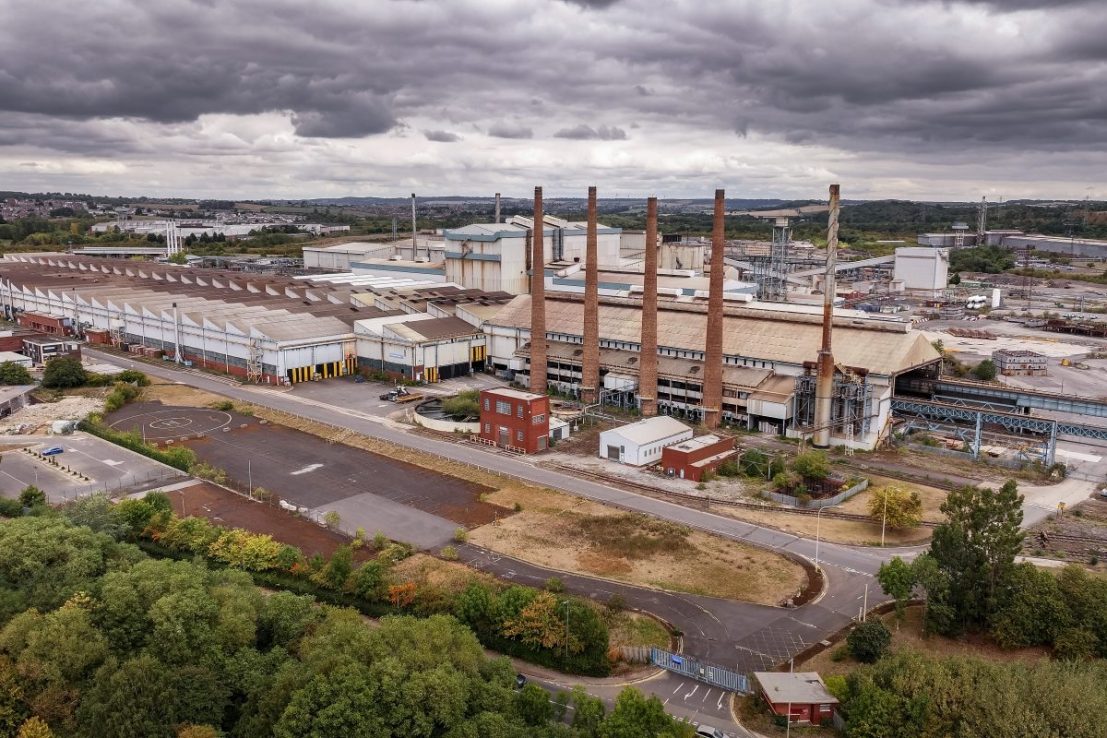
As the government takes control of another beleaguered steel works, Eliot Wilson asks what, exactly, the long-term plan is?
Speciality Steels UK (SSUK) is in trouble, to put it lightly. Last week, amid mounting piles of debt and denied requests for financial assistance, the company was pushed into compulsory liquidation, and is now under government control.
The South Yorkshire-based company, owned by Sanjeev Gupta’s Liberty Steel, is the third-biggest steel manufacturer in Britain and has the country’s largest electric arc furnace, which produces steel from scrap. Having desperately sought a pre-pack administration arrangement to refinance the business and retain ownership, representatives from Libebrrty Steel said the High Court decision to wind up the company on Thursday was “highly disappointing”, and maintained that Liberty Steel was “by far the best company to run this business”.
It comes after the government also stepped in to take control of British Steel in April after hurriedly passing the Steel Industry (Special Measures) Act 2025.
This is not wholesale nationalisation but it is very close to it, and that may prove to be the end result. It is more like a stopping-point along the way, a holding measure to stave off an emergency, but it has sufficiently serious implications that we are entitled to ask some questions.
Labour is blinded by industrial nostalgia
My contender for “most witless utterance by a government minister since July 2024”, in what is a very competitive field, goes to the business and trade secretary, Jonathan Reynolds, and is related to the same industry. Last September, when he proudly announced a deal to give Tata Steel half a billion pounds of taxpayers’ money to modernise its steelworks in South Wales, he spoke to the industrial heart and soul of the Labour movement.
“Port Talbot has always been and will always be a steelmaking town,” he proudly declared. There was hardly a dry eye in the house. But on what basis did he say this? What economic forecast or law says that Port Talbot, or anywhere else, will “always” make steel? What other industry has this eternally guaranteed future?
The government has bought heavily into a strange, otherworldly sense of industrial nostalgia by which manufacturing will and should always be with us, and has a kind of inherent virtue. Having grown up in the North East of England with parents from the fringes of Glasgow, I have some bad news for the business secretary when it comes to shipbuilding: collectively, the Clyde, the Tyne and the Wear used to produce a staggering proportion of the world’s ships, but times change and industries wax and wane.
Now that it’s taken control of SSUK, adding it to British Steel in its stable of heavy industry, what exactly is the government’s plan? How will it transform loss-making industries into profitable ones so that they can survive on their own merits? Or are they simply to be subsidised henceforth as employment creation schemes and totems of our manufacturing past?
Britain’s steel industry has been in long decline
The British steel industry has declined at a headlong pace over the past 30 or 40 years. In 2023, the UK produced 5.6m tonnes of steel, 0.3 per cent of the world’s total, while China produced 1,019m tonnes. Bluntly, we are not competitive in the sector, partly due to a worldwide glut of cheap steel and partly due to extremely high energy costs.
In addition, as in many industrial processes, the number of jobs supported by the process is declining. In 1971, the steel industry employed 320,000 people in Britain; it is now not much more than 20,000.
Reynolds has suggested that the priority is to maintain a steel industry for supply chain security and to support employment. The first argument is highly debatable: we currently import more steel than we produce, and it is very hard to imagine a strategic situation in which no other country was willing to supply us with steel. The second recalls Milton Friedman’s story of seeing Chinese workers digging a canal with shovels rather than mechanised equipment and being told that this was a job creation programme.
“Oh, I thought you were trying to build a canal. If it’s jobs you want, then you should give these workers spoons, not shovels.”
The government has given no indication of having devised a magical strategy to make the British steel industry globally competitive, insofar as that is in its hands. Simply pouring public money into an industry which is not making a profit will serve no-one in the long term. We are still awaiting its “Plan for Steel”, more than a year after the Labour Party took office, but we cannot simply wait forever.
What does the government plan to do about SSUK? What is the future for British Steel? And what will the UK’s steel industry look like in five or ten years’ time? Getting the answers wrong could leave the government, and the country, with a very heavy bill.
Eliot Wilson is a writer, commentator and contributing editor at Defence On The Brink