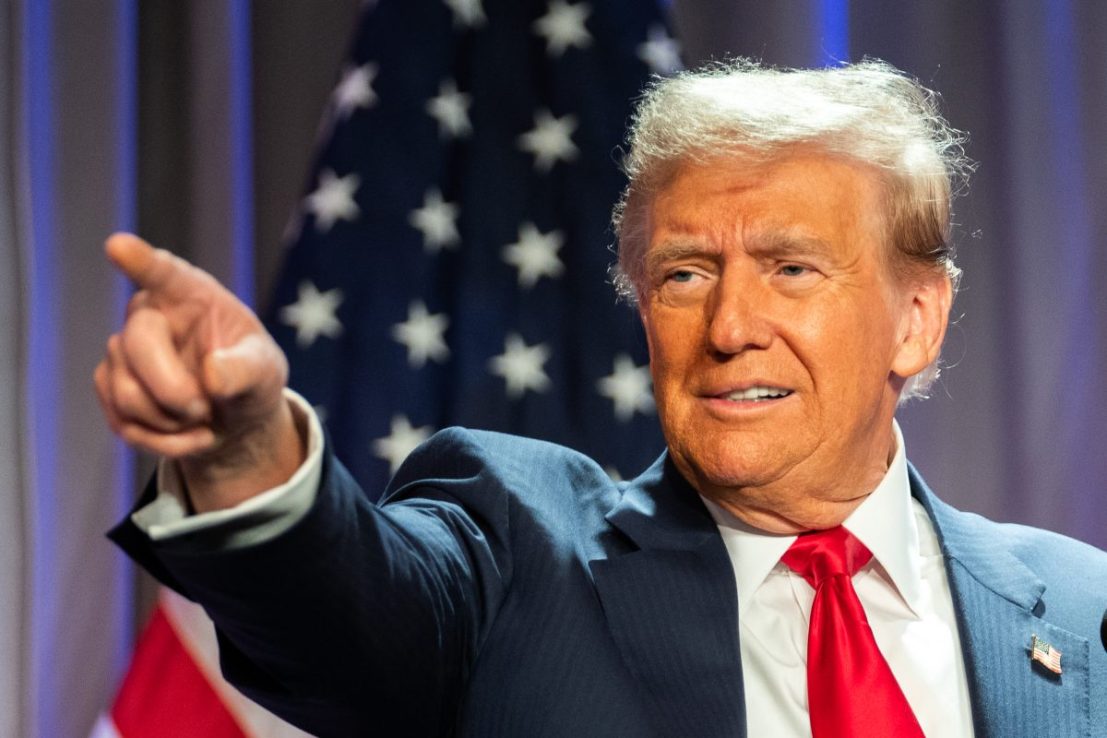
US President Donald Trump is set to meet with Russian President Vladimir Putin this evening for their first face-to-face meeting in six years.
The Ukraine war is set to top the meeting agenda, with the world watching to see if Trump can get his wish to pursue talks on a potential ceasefire and peace deal.
Retail investors, however, will be waiting with bated breath to see what the discussions will mean for the long-suffering global stock market, still in shock from the first turbulent six months of the year.
Danni Hewson, head of financial analysis at AJ Bell said: “Investors will be watching for white smoke over Alaska on Friday.”
“It’s an incredibly complicated and nuanced situation with so many possible outcomes, making it hard for markets to position themselves ahead of the press conference between the two leaders.”
But how are key sectors reacting before the anticipated meeting and what might happen after?
Defence shares
The defence industry has experienced share price jitters since the announcement of the meeting last week, which have continued in the run-up to tonight’s summit.
Many companies have experienced steep falls since trading opened this morning.
Shares in BAE Systems fell 1.41 per cent today, trading at 1,750p, while Rolls-Royce dropped sharply to 2.69 per cent, at 1,072p.
European defence stocks have also suffered, with Hewson acknowledging that “they are likely to be pushed out in the cold” following the meeting.
Leading German defence company Rheinmetall faced a 2.77 per cent drop, trading at €1,595.50 (£1,372.13), while French giant Thales fell 1.52 per cent to €233.90.
However, some stocks have rallied, as investors cling to the NATO spending commitment.
Shares in UK-listed Babcock rose 0.71 per cent to 995p, while Italian defence specialist Leonardo recorded a 2.36 per cent increase to €47.80.
Even if ceasefire terms are agreed, the majority of NATO members have pledged to increase their defence spending to five per cent of GDP by 2035, of which 3.5 per cent will be focused on core defence.
This means defence gains are a guarantee even if companies are no longer supplying to Ukraine.
Oil shares
The oil sector has garnered the most attention in the past few weeks, with analysts predicting the outcome of the summit will have an impact on prices, regardless of whether it is positive or negative.
Russia is one of the world’s largest producers and exporters of oil and natural gas, making it a significant portion of its GDP.
Since the beginning of the war, Europe has imposed sanctions on Russian oil sales. This has pushed trading towards Asia, and Russia’s overall output has declined.
Despite this, concerns around economic growth and increased output from the OPEC group of oil-producing nations have sent the price of oil down to lows not seen since the pandemic.
If things go well tonight and there are signs Russia could be let back into the global oil market, the price could fall further.
That could have a significant impact on the likes of BP and Shell.
But Hewson warned that if things go badly in the talk and Trump decides to impose secondary sanctions on other countries that import Russian oil, “the price will climb” just as it did when India was inflicted with its steep tariff.
Gold prices
Gold prices could benefit if the meeting does not go well tonight.
Gold has also not been immune to the market speculation, as investors increasingly look to the safe haven asset in the wake of a potential clash between the pair.
Sean Hoey, managing director of IBV international vaults in London said: “gold prices are climbing ahead of Friday’s Alaska meeting…as investors position for potential geopolitical or economic fallout.
“The current uncertainty is fuelling a sharp rise in physical gold purchases…we are seeing clients move quickly to secure bullion.”