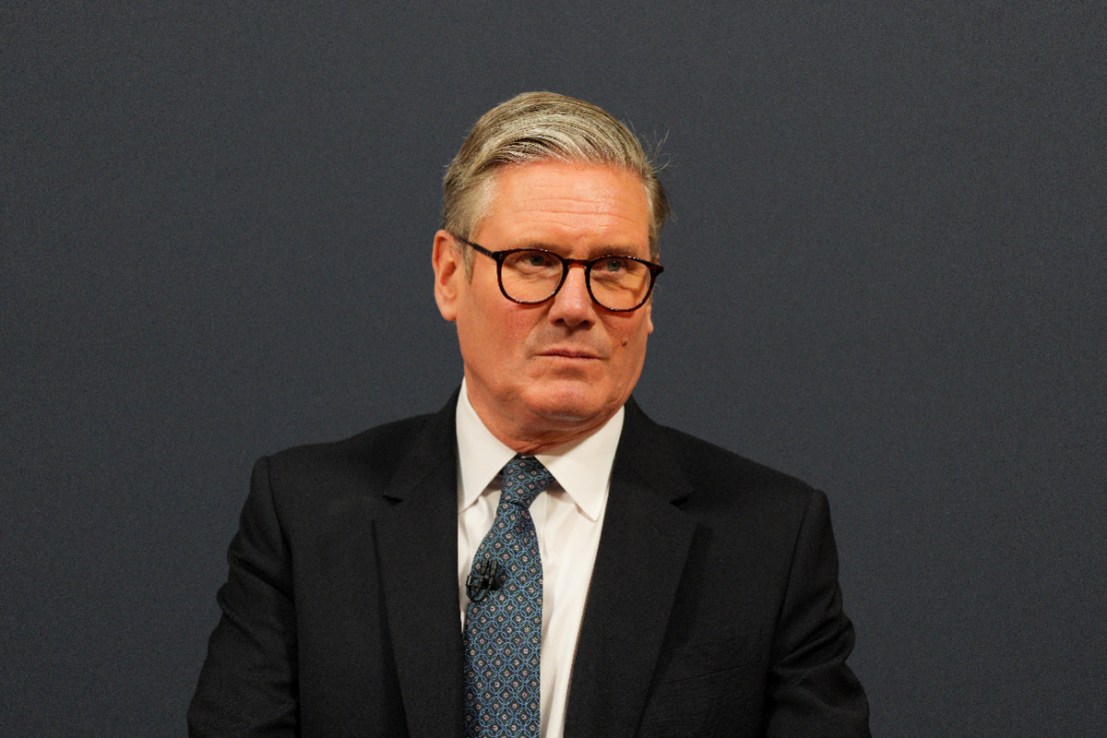
The Prime Minister has refused to comment on whether he will break Labour’s manifesto pledges on taxes at this year’s Autumn Budget as he slapped down independent forecasters’ claims the government faced a £50bn black hole.
The National Institute of Economic and Social Research (NIESR) claimed Rachel Reeves would miss her borrowing target by £41.2bn later this year.
Researchers said the Chancellor would have to U-turn on commitments not to raise income tax, VAT or employees’ national insurance in order to abide by her own fiscal rules.
But the Prime Minister appeared to dismiss forecasters’ calculations as he refused to comment on whether the government would break manifesto pledges.
Downing Street later intervened to confirm Labour remained committed to protecting “working people” and would not go against promises outlined in its manifesto.
Answering broadcasters’ questions on Labour manifesto pledges, Starmer said: “In the autumn, we’ll get the full forecast and obviously set out our budget.”
“We’ve stabilised the economy. That means interest rates have been cut four times.
“In the first year, we’ve raised wages as well, both in the private sector plus the minimum wage, which means people have got a bit more money coming into their pocket.”
Starmer takes aim at NIESR
The Prime Minister went on to suggest he disagreed with NIESR’s assessment of the state of the UK economy.
Top researchers said the government would miss its “stability rule” by as much as £41.2bn, with the Treasury having to build enough headroom on top of it to assuage bond markets’ fears that the UK government has lost control of public finances.
NIESR cut its growth forecast for 2026 down by 0.3 percentage points to 1.2 per cent and suggested that taxation options available to the government, including targeting businesses’ profits and pension pots, may not suffice if Reeves chooses to raise £40bn in extra revenue.
When asked whether he disagreed with economists’ estimates on the need for tax rises or spending cuts, Starmer said “some of the figures that are being put out are not figures that I recognise”.
Starmer’s comments add to mounting speculation over how far the Treasury believes taxes will have to rise this autumn, with NIESR’s predictions seen as the most pessimistic of major UK forecasters.
Capital Economics said Rachel Reeves may have to raise as much as £25bn in taxes while JP Morgan analysts believe the Chancellor will look to raise a little more than £10bn, which would allow her to meet her fiscal rules but without rebuilding a sizeable headroom.
But NIESR have separately suggested that Reeves will have to build a bigger fiscal buffer than the “wafer thin” £9.9bn headroom she left at March’s Spring Statement in order to “build credibility” amongst bond traders.
Wealth tax dismissed by another minister
On Wednesday morning, culture secretary Lisa Nandy ruled out the introduction of a wealth tax, claiming Reeves had “poured cold water” on the idea proposed by some Labour backbenchers given the government was elected to bring taxes down for “working people”.
Nandy is the third minister to speak out against wealth taxes, with business secretary Jonathan Reynolds the first to criticise suggestions of a wealth tax as “daft”.
Jason Hollands, managing director of the wealth manager Evelyn Partners, said the Chancellor was “heavily constrained” by manifesto pledges as he warned clients were taking “sensible steps” to protect wealth.
Hollands said that there was now a widespread belief taxes were not “coming down any time soon”.