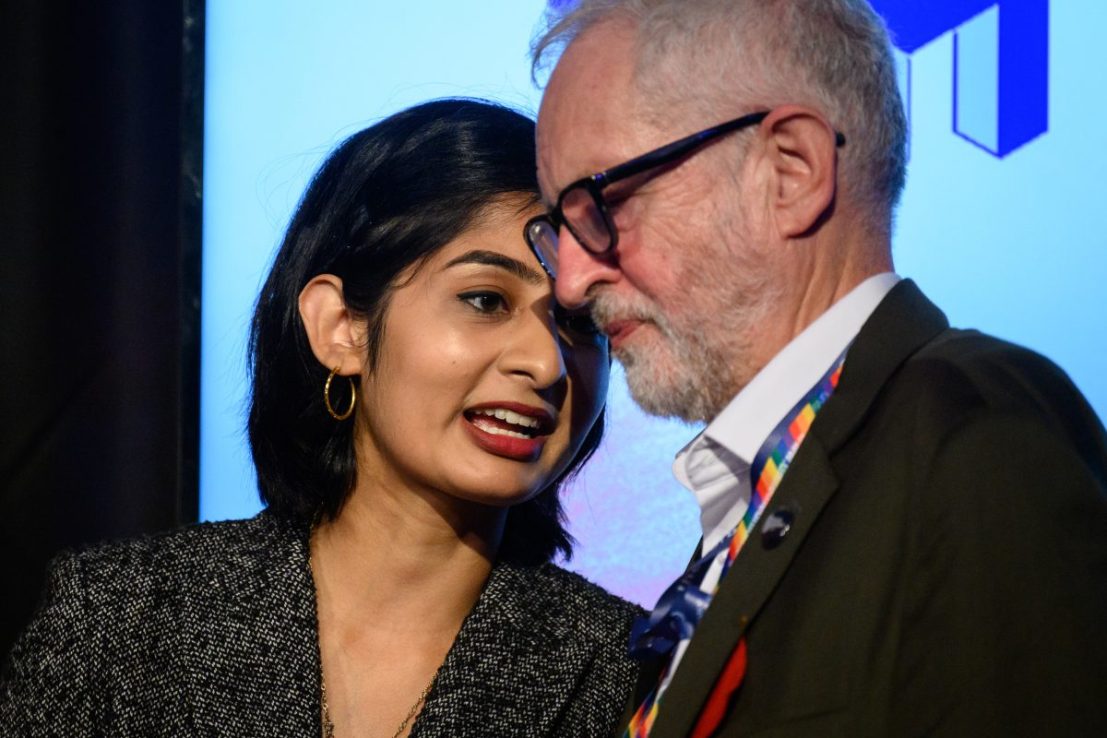
Jeremy Corbyn and Zarah Sultanah’s new party should worry Labour, especially if it gets backing from the trade unions, writes Douglas Beattie
Summers in politics should be about trying to squeeze in a holiday and planning for the conference season in autumn when leaders and governments have the chance to convey their big messages to the country.
Keir Starmer and his team will be looking carefully at how the Prime Minister positions himself with his leader’s speech, after a difficult first year in office and a crucial budget to come in October.
At the same time, those running the Labour Party should take a moment to look in their wing mirror – for it seems a significant new force in British politics may be emerging, with Jeremy Corbyn again to the fore.
Corbyn’s party should worry Starmer
Expelled from Labour under Starmer, the former leader – who came from the backbenches to win in 2015 and led the party into two general elections – is now in the process of forming a party of the left with another ex-Labour colleague, Zarah Sultana.
In our already fractured politics, this should trouble a government with a majority which is large, but thin – nearly one in every five seats are now in the marginal category across the country.
Of course it’s easy to dismiss this new Left venture; there was a chaotic start which seemed to take Corbyn himself by surprise, and confusion about what name the party will adopt – indeed that has yet to be decided.
All of this misses a much bigger point – that in just one week 600,000 people signed up online to register their interest; not paid-up members of course, but impressive nevertheless.
It’s not yet clear when this nascent party will fully be up and running but we should expect it to field candidates by the time of the numerous local and devolved elections next spring. Those polls will be crucial for the government as a measure of its progress since taking office.
Lessons from the 1980s
There are echoes here of the early 1980s when a different kind of split in Labour ranks saw the turbo charging of the SDP, which burned brightly for a time before eventually merging into what became the Liberal Democrats. In the highly fluid political landscape of today, where for now Nigel Farage and Reform seem to carry all before them in the polls, what chance does any new Leftist party really have of success?
A fair one might be the best answer. I suspect the Corbyn brand, linked with an obvious desire in the country for change, would not only win both votes and seats from Labour but also find support among some who currently indicate support for Reform.
Yet, to focus only on the next general election is to miss the point and fail to learn the lessons of the SDP experience. That party, for all they had – the big beasts of Roy Jenkins and David Owen – were hampered without trade union support and strong local structures.
Particularly it is the link to the unions which has sustained Labour through every decade and crisis in its history, providing financial backing as well as endless energy and ideas.
If Corbyn and Sultana are clever they will see that winning union backing – perhaps from the RMT, the Bakers and others – would sustain them in the long run. None of this is at all easy to pull off, but Labour would be wise to ignore the summer sunshine and focus on the emerging danger to its left, for it is real.
Douglas Beattie is a journalist and author of Victory at the Ballot Box: The History of How Labour Built Britain