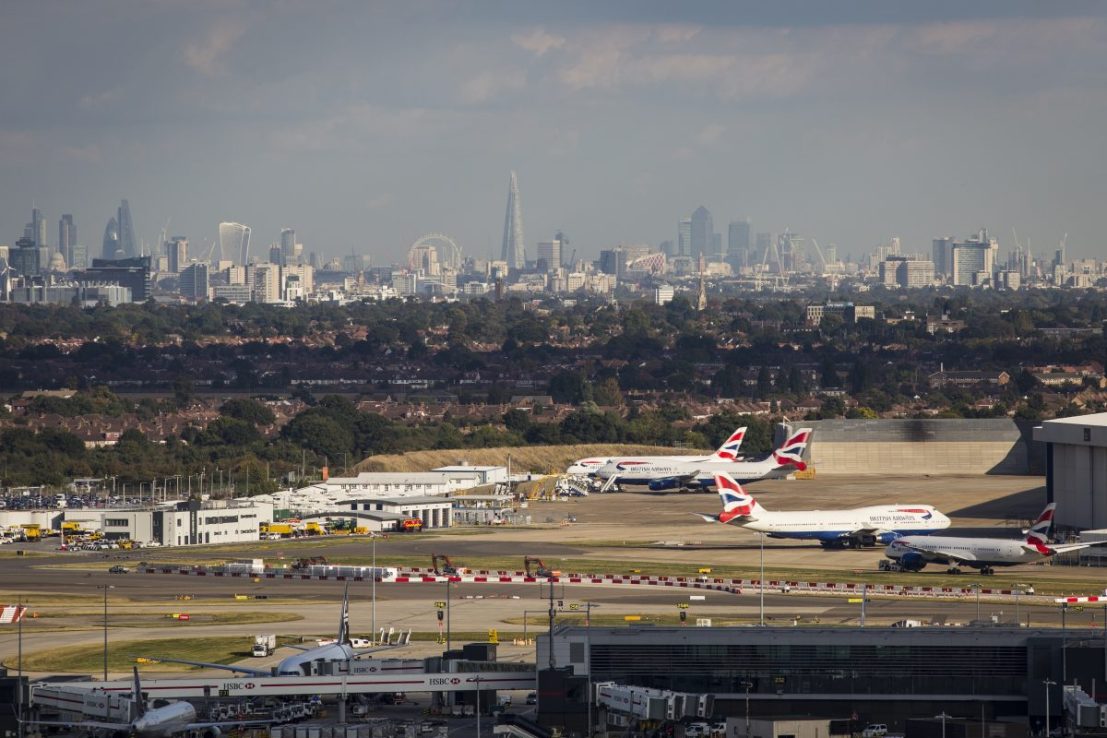
London is currently Europe’s leading business travel hub, but Heathrow is an embarrassment, writes Andrew Crawley
While collaboration and virtual meeting tools have become commonplace, organisations are still profoundly aware of the value of in-person connection. People will always want to do business with those they trust, and there’s something about meeting face-to-face that cannot be replicated from behind a screen.
Most companies zero-based travel budgets after the pandemic, placing greater scrutiny on the justification for travel. As a result, business travel has become more purposeful; companies are only putting their people on the road if they need to. Today, most travel budgets are back to pre-pandemic levels or higher, and UK passenger volumes – of which business travel makes up around 17 per cent – are forecasted to hold steady.
London sits at the centre of it all and is already business travellers’ favourite destination in Europe for meetings and events. But if the capital is to maintain and extend this lead as the world’s boardroom (and drive economic growth in turn), airport infrastructure upgrades are needed. Businesses have a part to play too and need to make the case for this investment and continue supporting the sector by bringing their people together – for their own good as well as the economy’s.
Business travel is a boon for UK economy
If London’s status slipped, there would be notable economic consequences. Travel and tourism contributed £286bn to the UK economy last year – 10 per cent of GDP – with business spend making up close to a third. The capital already benefits from its location between major markets, convenient time zone and diverse economy compared to other cities with similar infrastructure.
This economic contribution is about more than traveller spend. Our data at Amex GBT shows a strong appetite among international companies to capitalise on opportunities in the UK, with the government’s priority growth sectors mirroring the top industries travelling to London this year: finance, infotech, professional services and health sciences.
Zooming into where business travellers are coming from places greater emphasis on the government’s recent trade deals and tech plans.
While New York, Amsterdam and Madrid topped our rankings by traveller volume to London in Q1, the routes showing the fastest growth are a more telling barometer of shifting dynamics.
Trips between London and emerging tech markets in Helsinki and Bengaluru topped the list, while others in the top five like Washington and Berlin have similarly strong innovation credentials. The UK will no doubt benefit from heightened collaboration with these fellow tech leaders and it’s promising to see it already underway.
Tech conferences will be another key player. Not just because of the government’s digital ambitions, but due to business events’ significant economic impact – more than music festivals and sports combined. London hosted its first ever SXSW this summer just a week before the tentpole London Tech Week, bringing tens of thousands to the capital, with Sifted Summit still to come.
This all gives business travel more strategic weight and is even more reason to ensure London is the hub the world needs it to be.
We need to talk about Heathrow
But, in order to do this, the transformation of Heathrow – Britain’s only hub airport and the point-of-entry for 15m business travellers a year – is crucial. It should be a source of national pride and offer an exceptional passenger experience, but initiatives like Heathrow Reimagined are right to call for a review of its regulatory model and how the world’s most expensive airport continues to underdeliver. For London to achieve its potential and put its best foot forward, it needs a more inviting front door.
It’s positive to see Luton and Stanstead also looking to upgrade. Heathrow might be London’s main aviation hub, but improved infrastructure across the board will ensure as many business travellers as possible are catered for, particularly domestic travellers who rely more on smaller airports.
As for companies, continuing to embrace in-person meetings and the benefits that come with it is crucial for growth. As companies from key growth industries converge in London, firms that make the effort to meet in-person will have the edge on competitors. Similarly, regular face-to-face gatherings can ease the concerns some bosses have around a lack of engagement among distributed teams. Those touchpoints can be really rewarding for staff used to mainly seeing their colleagues on a screen.
Business travel is a win for business, a win for London and a win for the UK.
Andrew Crawley is president of American Express Global Business Travel