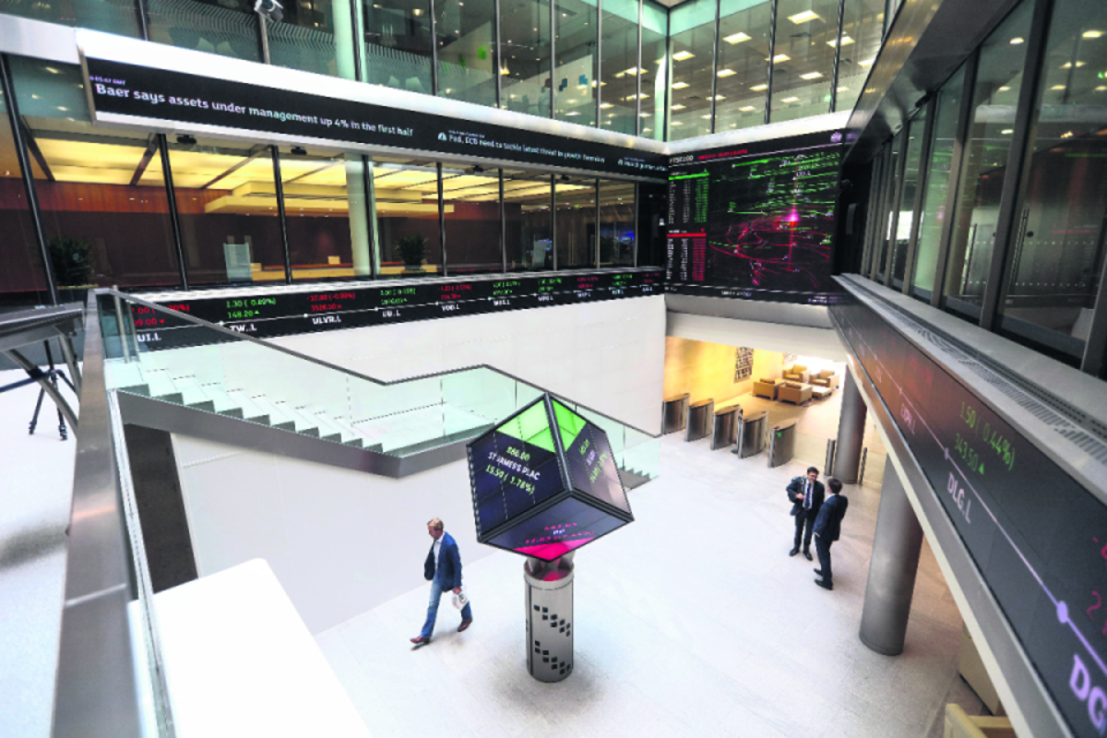
Pharmaceutical stocks across the global markets have taken a hit after Trump demanded drug companies lower prices for American consumers.
Trump’s threat against pharmaceuticals has given healthcare sector investors “a dose of the blues” after his letter to various company bosses. It outlined that they should either cut US prescription prices or face a tariff crackdown.
Russ Mould, investment director at AJ Bell, said: “Widespread share price decline among pharma stocks are the market’s way of saying it doesn’t like the prospect of Trump effectively declaring war on the sector”.
The main culprits
On the FTSE 100, Astrazeneca and GSK were the main culprits for the index’s decline.
Astrazeneca is the weakest performer on the FTSE today as its share price tumbled 3.3 per cent in early trading before rising 1.61 per cent in the early afternoon to £109 per share.
The sharp fall for the drug maker comes after Astrazeneca’s plans to inject $50bn into the US market to expand its manufacturing capabilities on US soil.
CEO Pascal Soriot is also reportedly considering a float on NASDAQ.
Rival GSK recorded a decline of 1.1 per cent to £14 per share.
Europe left in the dark
European stock markets were not immune to falling share prices with the sector being the worst performing in Europe today.
European companies are facing the threat of tariffs as the EU-US trade deal failed to include pharmaceuticals.
On Germany’s DAX index, Merck shares suffered a 1.85 per cent fall to €107.70 (£93.81). Danish listed Novo Nordisk fell 0.4 per cent, trading at €4.95.
The US stock market dropped upon opening by 2.3 per cent, as drug makers failed to swerve Trump’s demands for the sector.
Moderna’s stock slipped 8.1 per cent to $27.64 (£20.83), after the release of its second quarter results. Pfizer fell 0.2 per cent to $23.44 and Biontech fell by 1.6 per cent to $106.40.
Eli Lilly managed to avoid the drop as its share price rose by 2.2 per cent to $759.74. The rise comes amid news of potential Medicaid coverage for its weight-loss medications.
Switzerland in shock
Switzerland has been left scrambling to respond after Trump imposed 39 per cent tariff, exceeding the initial 31 per cent threatened on liberation day.
Swiss president Karin Keller-Sutter said on X she had spoken to Trump on Thursday, “The president’s priority is the trade deficit.”
“No agreement could be reached on the memorandum of understanding negotiated between Switzerland and the US.”
The outcome is expected to affect the country’s large pharmaceutical industry, which sends roughly 60 per cent of its exports to the US.
Kathleen Brooks, research director at XTB, said: “The Swiss rate was a shock, and the Swiss government has said that they plan to keep negotiating with the US to secure a lower levy.”
In April, Swiss pharmaceutical giants Novartis and Roche announced plans to invest billions of dollars into the US.