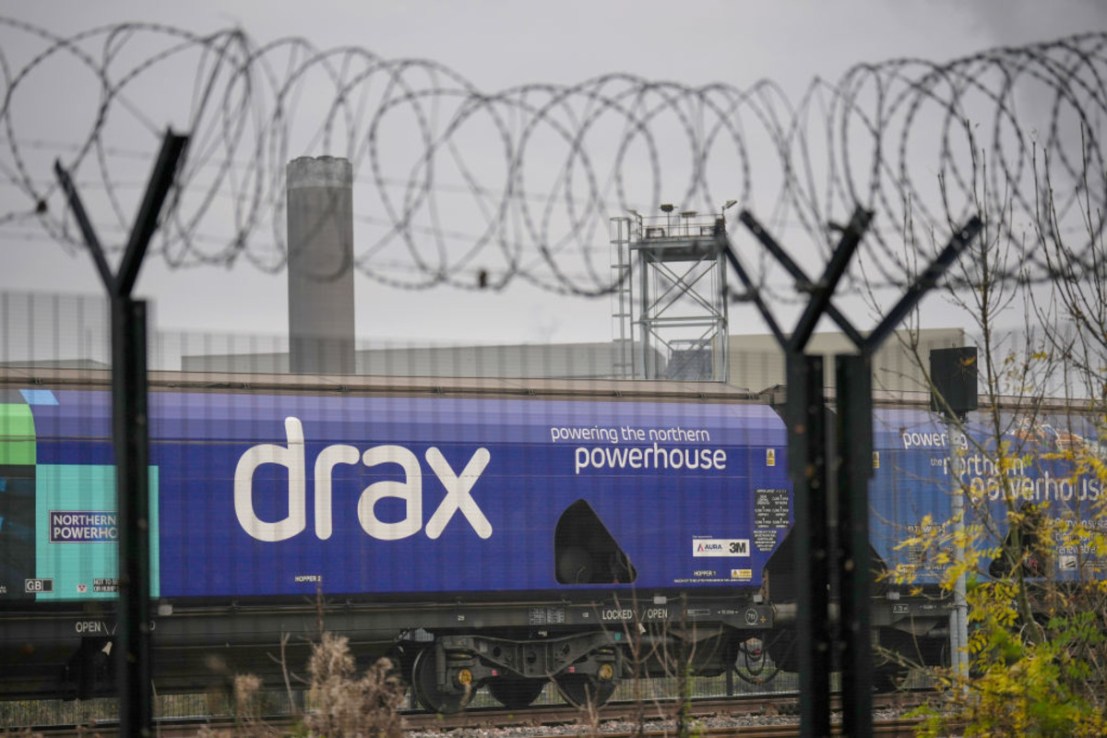
Drax has told investors it was close to agreeing a controversial contract with the government for its wood pellet power station after hiking its dividend despite revealing falling profit.
The London-listed group said the energy transition was “creating significant value opportunities aligned with the UK’s energy needs” in an interim update in which it revealed its profit and revenue fell.
In an interim update, the energy powerhouse, which earlier this year lost out on a bid for renewables firm Harmony, revealed its profit fell by over 40 per cent year on year from 517m to £301m.
Overall earnings at the firm also took a hit. Adjusted earnings before interest, tax, depreciation and amortisation (EBITDA) dropped from £515m to £460m as it focused on bearing down on its enormous debt pile, which shrank from £1.15bn to £1.06bn.
But the board still unveiled it plans raise its payout to shareholders, upping its dividend from 10.4p in the first half of 2024, to 11.6p
Earnings per share remained flat at 65.6p.
Drax ‘confident in our ability’
Drax boss Will Gardiner said the group had made “significant progress” over the first half of the year, and that Drax’s work ensured “we continue to play an important role in UK energy security through this decade and beyond”.
“Across the group we are confident in our ability generate significant free cash flow through 2031 and are focused on aligning the business to deliver.”
Gardiner also told investors the group was close to agreeing terms with the government on a “low-carbon dispatchable CfD [contract for difference]”, an agreement a renewables company goes into with ministers guaranteeing a certain price for an energy project.
Drax said a Competition and Markets Authority review of a deal for Drax’s Selby power station had finished and that negotiation of the “final contract” was in place.
Any contract with central government would raise concerns among environmental campaigners, who argue that Drax’s energy production, which burns wood pellets made from trees to generate energy, is not sustainable.