The US-EU trade deal signals a new geopolitical era where security trumps commerce, allies are rewarded for loyalty, and Trump’s strategy forces nations to pick sides – America or China? Writes Helen Thomas
The devil is usually in the detail but when it comes to the US-EU trade deal, the big picture is what counts. EU Trade Commissioner Maros Sefcovic told the world all it needed to know in his press conference: “It’s not only about the trade, it’s about security, it’s about Ukraine, it’s about current geopolitical volatility. I cannot go into all the details… I can assure you it was not all about the trade… to have a possibility that the two biggest economies and two closest allies can openly discuss all sensitive issues and as I can judge from the discussion yesterday are very much aligned on the geopolitical issues of the day… there’s additional worth in having this deal done”. The world might not (yet) be fully at war but the European Union has chosen sides. The American defence umbrella is worth almost any price.
This is exactly what Trump intended when he launched Liberation Day. The official White House Fact Sheet released on 2nd April 2025 was quite clear that reciprocal tariffs were designed to “rebuild the economy and restore national and economic security”. Specifically, “Pernicious economic policies and practices of our trading partners undermine our ability to produce essential goods for the public and the military, threatening national security”. Trump wants to bring manufacturing back home to American soil at least partly because “US stockpiles of military goods are too low to be compatible with US national defense interests”.
But he also wants to secure supply chains with allies for these essential goods. The Netherlands is home to ASML which holds a near monopoly on the lithography machines required to make microchips. The US-EU deal carves out certain products for a zero-for-zero tariff regime and semiconductor capital equipment is one of those designated sectors. The share price of ASML duly rallied after the weekend deal had been announced.
Sefcovic proudly announced that “importantly, this list remains open to further additions”. This is the other key element of life post Liberation Day. There is not just one tariff at one moment for one country and one sector. It is a dynamic multi-stage game. Play nicely with Trump and you can win extra credit, carving out goods or sectors that are as important to his policy goals as to yours. Fall foul of Trump and find tariffs slapped back on you where it hurts.
A win for Britain?
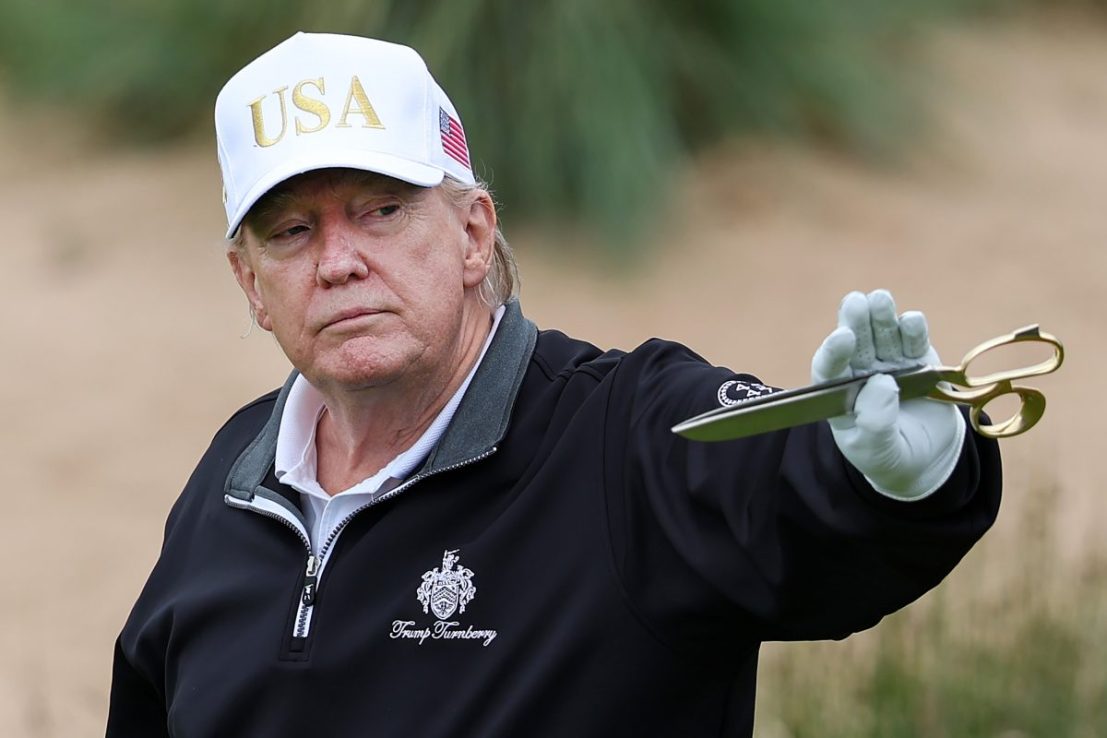
The UK has emerged as a key ally and is rewarded as such with some of the lowest tariffs. Such an ally that the US leader received the UK leader on his golf course even though it’s on UK land – and where the President went on to receive the leader of the EU. An ally is not an equal however, as Prime Minister Starmer has found when it comes to implementation of the reduced steel tariffs. The devil is in those details, with US steel imports from the UK required to have been melted and poured in the UK to meet the criteria for tariff relief.
For President Trump this is all admin. He’s the big picture guy. And the UK was the first big country to play ball. The EU, not so much, so they get a worse deal. But at least they came to the (Scottish) table, so they get a better deal than those dragging their heels. For which, you can read China. They are the real devil in the story, at least as far as Trump is concerned. He has wanted to contain the threat from China ever since his first term in office. Treasury Secretary Scott Bessent explained that for this to work in Trump’s second term, all countries must be forced to choose where their priorities lie. In an article he wrote for The Economist magazine in October, prior to taking up his role in the administration, Bessent argued “clearer segmentation of the international economy would provide more effective levers… than the currently dominant bilateral approach… The cost to remaining outside the perimeter would be high”.
The perimeter has gone up. The EU-US deal included a commitment to create what Sefcovic described as a “metals alliance” to counteract subsidised and overproduced Chinese steel, aluminium and copper, “effectively creating a joint ring-fence”. Once again the details of this deal have yet to be thrashed out but the intent is clear. The EU wants to work with the US and against China. To pursue this goal, there will be some winners and losers. Trump is pressing home his political mandate to ensure that it’s him. Whilst German carmakers are complaining that they still face a high tariff in the US due to importing car parts from Mexico and Canada, Trump wants them to pay heed to companies like Heineken, whose CEO said they were considering moving production to America to mitigate the cost.
Politicians and voters have been lining up to criticise their leaders for committing to unfair deals with the US. But global power by its nature is unbalanced. The devil always wins at cards.
Helen Thomas is CEO and founder of Blonde Money