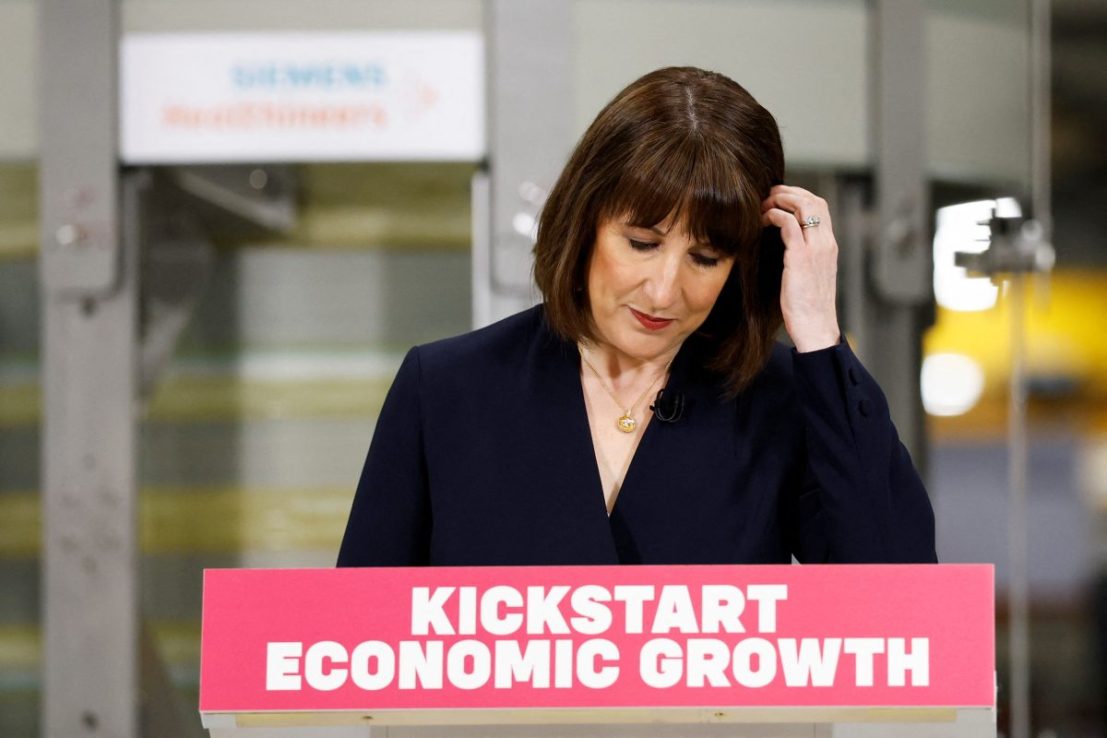
Chancellor Rachel Reeves’ shake-up of venture capital tax rules could leave UK start-ups facing a shortfall of millions in funding, a leading investment platform has warned.
According to Wealth Club, the chancellor’s changes to venture capital trust tax relief in last year’s Autumn Budget could see British start-ups and scale-ups face a funding deficit of roughly £550m in the first year of changes.
Income tax relief on VCTs will be cut from 30 per cent to 20 per cent as of April 2026, with many industry figures warning the government that the slash could turn investors away from placing capital into VCTs, despite Labour’s promise to support UK startups.
The government pledged to boost access to capital for start ups, unlock institutional investment, including through reforms to pension funds and increased venture capital, and push Britain to become a global startup hub.
But Wealth Club claims the reduction will likely cause a sharp fall in VCT investment saying the policy changes “risks achieving the opposite” of making Britain a good place to build a business.
Alex Davies, founder and chief executive of Wealth Club, said: “The government urgently needs to reconsider these changes.
“If the aim, as was claimed in the Budget, is to make Britain the best place to start and scale a business, this misguided policy risks achieving the opposite.”
Enterprise Investment Schemes failing to lure people in
Davies also claimed the money pulled out of VC trusts is unlikely to be redirected into the Enterprise Investment Scheme (EIS), a government initiative offering significant tax reliefs to individual investors who buy new shares in early stage companies.
Investors can get tax benefits including 30 per cent income tax relief in exchange for providing capital that allows businesses to grow.
According to a survey conducted by Wealth Club following the Budget, 44 per cent of investors planned to stop investing in VCTs altogether due to the change, while 44 per cent said they would invest less.
Just 13 per cent said they would divert contributions into EIS.
Davies said: “There is a clear misunderstanding at the heart of this policy. VCTs and EIS are not competing sources of capital – they are complementary. While some investors use both, the overlap is limited.”
Investors who opted not to place capital in EIS said the scheme “was too risky”, while others feared it was too illiquid and the minimum investment levels were too high.
VCT minimum investments typically range from £3,000 to £6,000, while minimum investments for EIS funds range from £10,000 to £50,000.
Urgently reconsider the changes
Wealth Club estimates the reduction in VCT investment would result in a gross funding loss of as much as £631.9m.
After accounting for an estimated £82.1m that may be directed in EIS, the new shortfall in early-stage funding would be roughly £549.8m.
Davies urged Reeves to reconsider, warning that failing to do so could damage innovation and economic growth.
He said: “This is not an abstract policy debate – it has immediate, real-world consequences for the funding available to thousands of early-stage UK businesses the government says it so wants to support.
“We are urging Rachel Reeves to urgently reconsider these changes before they come into force in April.
“Failure to act will create a significant funding gap that risks stalling early-stage business growth in the UK, with knock-on effects for jobs, innovation and economic growth.”