Over the last few months, investors and portfolio managers have taken renewed interest in Asia amid fears of an AI crash, seeking to diversify away from the highly concentrated Nasdaq, home to the Magnificent Seven stocks.
With a large number of analysts remaining bullish on AI’s prospects for the next financial year, citing the sector’s momentum and overall market dominance, concerns about valuations and overexposure have prompted investors to look beyond the US.
Asia offers investors different ways to tap in, from electronics to chipmaking, often at more attractive valuations due to being overlooked. Still, technology is not the only sector on offer in the region.
Corrine Lord, senior investment specialist at St James’ Place, said: “Asian markets offer compelling opportunities, underpinned by our positive outlook on both emerging markets and Japan.
But, it’s not only opportunities in tech that are available in the region, which accounts for roughly 80 per cent of all emerging markets, with other offerings in finance, travel and infrastructure.”
South Korea: rallying recovery
As City AM has previously reported, few markets have had a rally quite as astonishing as South Korea’s Kospi, which has gained more than 67 per cent this year, hitting a total market cap of 3,684.6 trillion KRW (£1.87 trillion).
The Kospi slid onto the global scene, recovering sharply after falling off the radar in 2022, being deemed a ‘value trap’.
But the index rebounded amid political turbulence that depressed valuations, the performance of heavyweight tech stocks, and the implementation of numerous corporate reforms, luring portfolio managers back.
Tech giant Samsung is up 100.7 per cent this year to date, trading at 1,820 KRW, while chip maker SK Hynix has increased 219.5 per cent to 547,000 KRW.
With unease surrounding AI continuing to brew on Wall Street, South Korea is prepared to capitalise.
Taiwan: AI lynchpin
On the other side of the East China Sea, another emerging market is capitalising on AI’s run, and is showing minimal signs of slowing down.
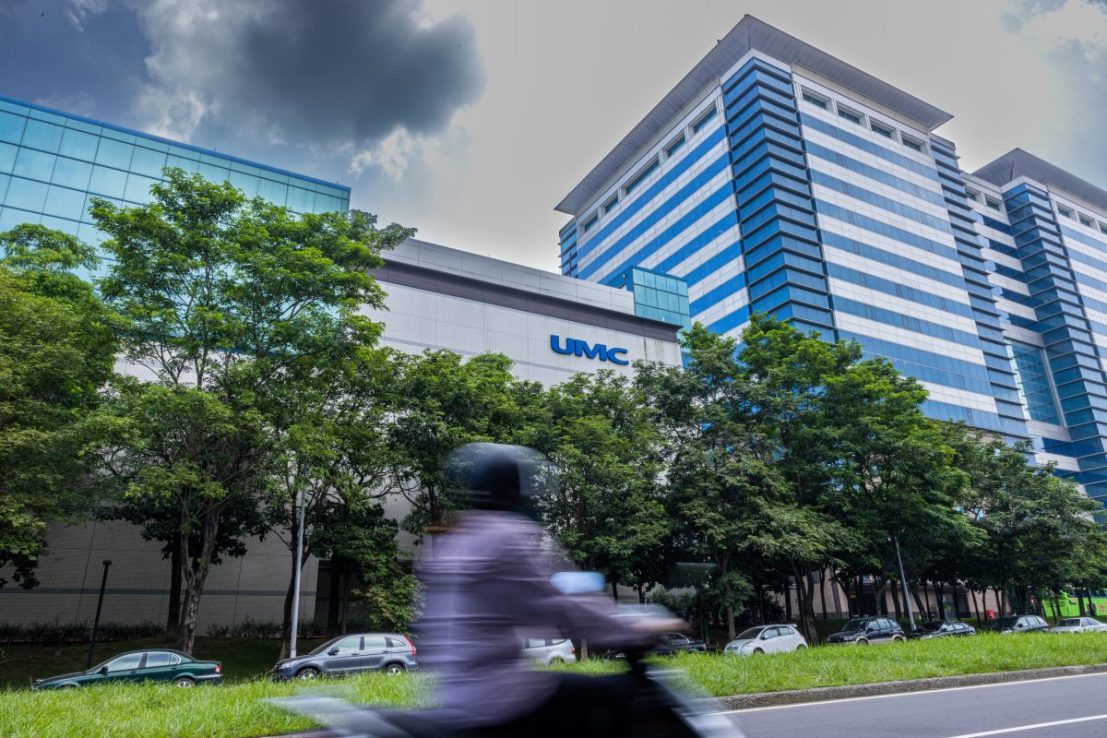
Taiwan has long been known as a major tech manufacturing powerhouse, particularly for semiconductors, with its benchmark index, the TWII, up 29.1 per cent this year to date, trading at 28,568 Taiwan new dollars (£677.44).
Similar to South Korea, overseas investors have previously overlooked the country. But domestic capital has been ploughed into the market, reflecting its standing as the epicentre of the AI chain, with intense global demand boosting exports and economic growth.
Chips made in Taiwan are used in most modern electronics, including smartphones, AI services and automotive systems, while a number of large international companies also continue to establish data centres in the country due to the proximity to the supply chain.
Google’s parent company, Alphabet, has numerous data centres in the region, while Microsoft also operates centres in the greater Taipei area.
Abbas Barkhordar, portfolio manager of Schroder’s Asia Pacific fund, said: “The outlook for Taiwan is driven by the massive spend that’s happening on AI in the West and how sustainable that is.
“The key tech companies… there’s no sign of any sort of slowdown in that spend, in that demand.”
China: The domestic challenge
China is a significant contributor to the global economy, with its share projected to reach 19.6 per cent of world GDP, according to World Economics, second only to the US.
The Shanghai Composite Index is also up 20.1 per cent to 3917.36 yuan (£413.86), however analysts have credited this primarily to domestic retail investors.
For overseas investors, the country has fallen out of view, due to a property market slump, high local government debt and slowing export demand caused by Trump’s tariffs, damaging economic growth and consumer sentiment.
Barkhordar said: “That has really been a big weight around the neck of consumer confidence and household spending…domestic growth has been pretty weak.
“Going into next year, tariffs are higher, maybe they’ll do a deal, maybe they won’t.
“So you need to see more of the growth now shifting back to being domestically driven.”
Despite the challenges, some portfolio managers have noted “the potential of Chinese AI applications and development” driven by leading firms and internet platform companies.
Barkhordar said: “You’ve got that domestic weakness, the traditional economy really suffering, and then you’ve got AI on the other side, potentially being a positive driver.”
India: Economic growth
AI may be leading the majority of conversations about investing in Asia, but India offers investment exposure to a different set of stocks.
The country, which boasts the world’s fourth-largest economy, is well known for its compelling financial investment options due to its robust economic growth, booming population, which has driven consumer spending and government support for digital infrastructure.
Indian public sector bank Bank of Baroda has seen its share price jump 21.6 per cent in 2025, trading at 293.5 rupees (£2.44), while financial services company Bajaj Finserv has risen 30.1 per cent to 2,051 rupees.
Ewan Thompson, global equities fund manager at Liontrust, said: Within emerging markets, Asia remains the structural growth engine, with India and ASEAN delivering domestic-demand-led expansion.
“We are most positive on domestic-demand recovery stories in markets such as India, where we see growth reaccelerating after a softer patch.”
Beyond financials, India offers other domestic investment options which are “immune” to global themes and concerns surrounding AI.
Barkhordar said: “Domestic travel is still very nascent in India…air transport is still very small in terms of the overall mix but something you can clearly see pick up.
“Then the formal things in the sector like hotels and airlines, that is all growing as well. So there’s a lot going on domestically.”
Not risk-free
However, the region is not risk-free, with geopolitical tensions continuing to loom, particularly around relations between Taiwan and China and between China and the US. At the same time, a slowdown in AI spending would quickly hit Asia’s tech-heavy markets.
But, analysts also noted that the soft US dollar has strengthened Asian currencies, while lower inflation has granted central banks more room to ease monetary policy, supporting investment and trade.
Lord said: “While geopolitical and commodity volatility pose headwinds, a weaker dollar and easing rate expectations act as important tailwinds across Asia.”