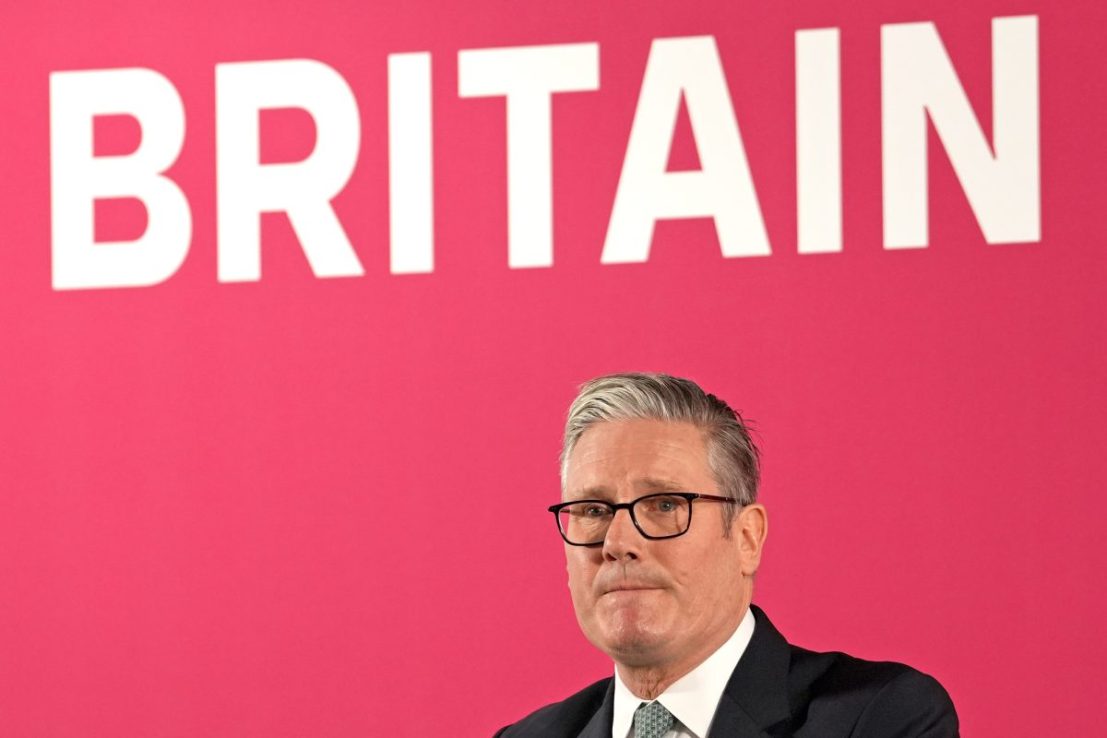
A landslide victory in a centralised government gives Labour great political power, yet Keir Starmer seems reluctant to use it, writes John McTernan
“Who are you?” – what you might call the football question – is one of the most important for any politician to answer. If you know who you are then you know who you will fight for. Conflict is central to all great storytelling and in politics, fights define your purpose.
The problem for Keir Starmer’s Labour government up until now has been who they’ve chosen to pick on. First, it was pensioners who lost their winter fuel payments shortly after the General Election. Then this summer, a million people with disabilities faced cuts of £5,000 a year in a move cruelly dubbed “welfare reform”.
Belatedly, as so often with this Labour government, it has identified the right enemy – child poverty – and has lifted the two-child cap on benefits. It has also found the right dividing line with their Tory and Reform UK opponents – spending more on public services rather than cutting them.
This was the achievement of last week’s Budget – not balancing the books, or laying the foundations for growth, but achieving political definition. It’s odd that it has taken so long for a government elected on a landslide to find its feet politically, particularly as its victory was a racing certainty for the two years previous to the general election.
But the Labour case is now unequivocal and unapologetic: taxes will rise and continue to rise for the rest of the parliament so that public spending can rise too. That’s what Chancellor Rachel Reeves meant when she told Labour MPs that her Budget had “cut the cost of living, cut NHS waiting lists, and cut the debt and the borrowing”.
Labour’s growth agenda has stalled
The difficulties for the government are two-fold. First, their growth agenda appears beached. Housing starts are at a virtual standstill because of the Building Safety Regulator – which is now adding an extra year to development approvals. Evidently the “deregulation” agenda has been deprioritised – otherwise the Budget would have included a major announcement on nuclear energy, embracing John Fingleton’s proposals.
Everywhere one turns there are delays. Just last week, government insiders told me that the problem with development corporations was that civil servants said they would take “at least two years to set up”. Speed is one of the main reasons for choosing development corporations. The Merseyside Development Corporation was up and running within months of government deciding it was needed in 1981. Perhaps Labour ministers should read Michael Heseltine’s famous minute to the PM – “It took a Riot” – to understand the potential of urgent leadership in government.
Yet, that would still probably not be enough. The hole at the heart of the Budget wasn’t “growth” it was the lack of a political economy. Growth where and for whom is the central question for progressive governments. For the places and people suffering the most unequal outcomes should be the answer. But most of all act.
Governments – even Conservative ones – showed during Covid that they could act with urgency and purpose and succeed in both supporting an economy during lockdown and finding a vaccine to return us all to normal life.
The appeal of President Trump, of Nigel Farage and of populist parties across Europe is that they believe in the power of government to make decisive changes. In contrast, Starmer’s government seems torn between threatening their backbenchers with the boogie man of the bond markets and appeasing them with welcome concessions on welfare.
The centralised nature of the British state means it is one of the most powerful, and untrammelled, in the world. That remains a huge opportunity for a government with a radical manifesto and a dominance of the House of Commons. Labour has only won landslides in 23 years of its 125-year existence. It must use power or it will surely lose it.
John McTernan is a political strategist and commentator and former adviser to Tony Blair