Mining giant BHP has been found liable for a dam disaster under both environmental law and the Brazilian civil code, in a significant ruling handed down by the High Court.
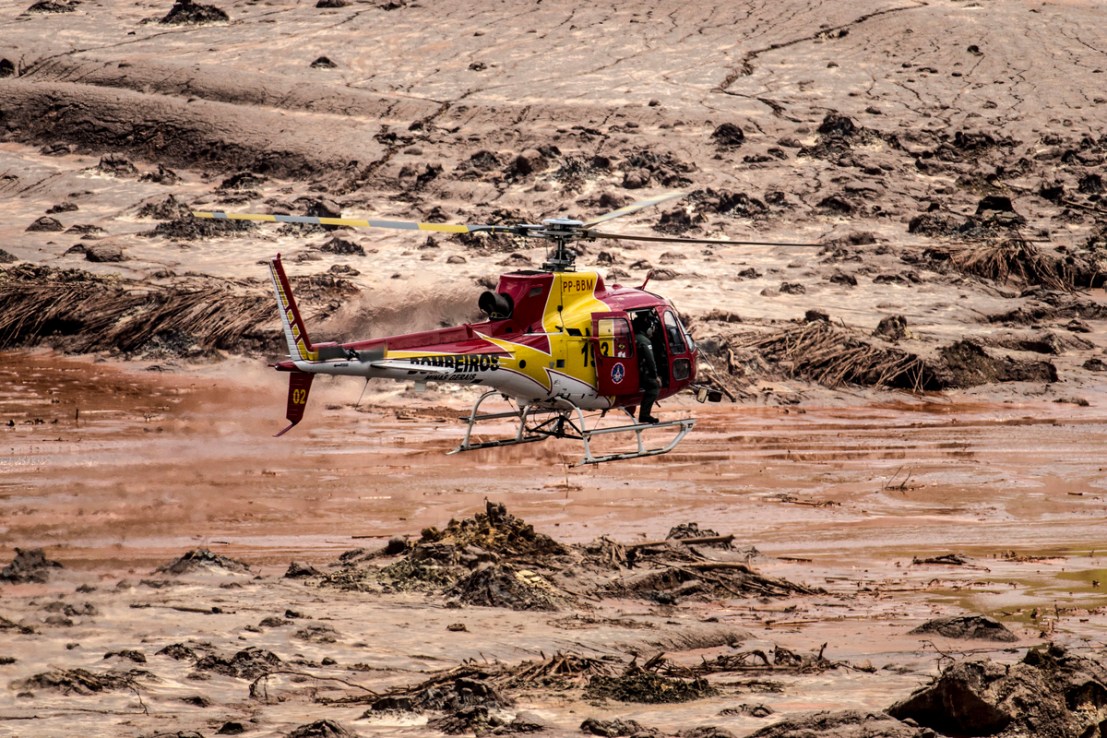
The case stems from a deadly dam disaster in Brazil. On 5 November 2015, the Fundao dam in the south-eastern part of Brazil, operated by Samarco, a 50:50 joint venture owned by BHP and its peer Vale, failed, unleashing a deluge of thick, red, toxic mud that wiped out the village of Bento Rodrigues.
The collapse of the Fundao dam killed 19 people and is the worst environmental disaster in Brazil’s history.
Law firm Pogust Goodhead launched a group lawsuit in England against the dam owners on behalf of over 700,000 people affected by the 2018 disaster.
The High Court was asked to determine a flurry of threshold issues of liability and defence in the first-stage trial, including cause of collapse and limitation.
Today, in a 222-page judgment, Mrs Justice O’Farrell concluded that BHP is liable to the claimants on two grounds under Brazilian law.
Under environmental law, she found that BHP was strictly liable as “polluters” in respect of damage caused by the collapse.
She ordered that BHP (together with Vale) was directly and/or indirectly responsible for the mining and iron ore tailings storage activity of Samarco that caused the collapse.
On her fault-based liability, which is based on the civil code, she ruled that BHP is liable based on fault (negligence, imprudence, or lack of skill) for the damage caused.
The court found that BHP’s extensive control over Samarco, assumption of responsibility for dam-related risk assessment, and active participation in the tailings dam operations gave rise to a legal duty to avoid harm.
“The risk of collapse of the dam was foreseeable,” stated Mrs Justice O’Farrell.
However, under corporate law liability, she found that BHP was not liable.
Regarding the limitation, all claims were found not to be time-barred, and the judge ruled that the claimants had the capacity and standing to bring the proceedings in England.
However, the judgment shed light on the number of claimants involved, as the case was originally brought with claims from over 700,000 people; this ruling noted that more than 200,000 claimants had already accepted compensation.
Lengthy legal history
The case has been in and out of the courts over the past four years, with jurisdiction in the spotlight.
In 2020, the High Court ruled in favour of BHP and struck out the group action as an abuse of process, citing, among other things, its sheer size.
However, in a twist, the Court of Appeal overturned this ruling in 2022, ruling that the findings of abuse were unsustainable.
Last year, BHP applied to the Supreme Court for permission to appeal the Court of Appeal’s decision but was denied the right to have its case heard.
The mammoth case went to the High Court for its trial last October.
Background noise
While Mrs Justice O’Farrell was presiding over her ruling this year, the law firm at the heart of this case was lighting up headlines.
The reported turmoil in the media stemmed from Pogurst Goodhead’s significant financial losses, leadership changes, and alleged tensions with the firm’s hedge fund backer, Gramercy.
In early August, it was reported that founder Tom Goodhead was no longer the CEO of the firm, with internal memos stating he was “on leave”.
He still appeared on the firm’s website and was listed as its CEO a month later. However, according to Companies House, Goodhead was terminated as a director on 11 September.
Around the same time, chatter was growing over reported internal concerns regarding US hedge fund, Gramercy Funds Management, its primary funder and the source of a £500m investment in 2023.
The accounts, published on Companies House, revealed the group made a loss of £91m in 2023.
The company’s net current liabilities increased significantly from over £2.5m in 2022 to over £93.1m in 2023. The amount the group owes has also increased significantly, from £11m in 2022 to over £97.5m in 2023.’
In its ‘Going Concern’ section, the business stated that it can continue operating; however, the auditors at MHA highlighted a ‘material uncertainty’ due to the unpredictable nature of its income.
A spokesperson for the business said: “The recently filed accounts for PGMBM Law Ltd cover 2023, and don’t present the full financial position of the PG UK Group; it doesn’t present the group’s financial and commercial validity.”
This is a developing story and will be updated