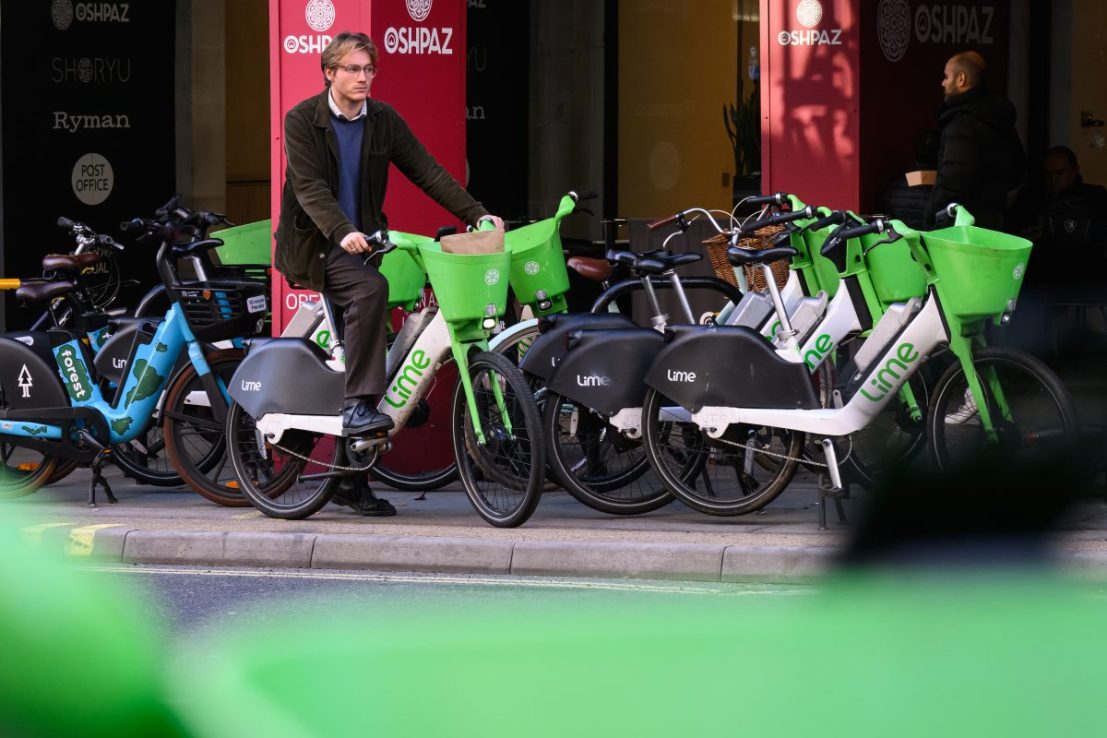
The group London Councils has called on e-bike operators to respect local contracts and act “responsibly”, as friction deepens between boroughs and rental bike companies over parking and safety standards across the capital.
The organisation, which represents London’s 32 boroughs and the City of London, warned that some firms continue to operate in areas without official agreements, leaving bikes abandoned on pavements and blocking public walkways.
Officials said the problem has become widespread, prompting enforcement action from councils including Kensington and Chelsea, which has seized around 1,000 bikes this year from major operators such as Lime, Forest, Voi and Bolt.
The Conservative-run borough has collected more than £81,000 in penalties as part of a campaign to tackle badly parked bikes.
Residents have lodged hundreds of complaints about e-bikes dumped on pavements or obstructing roads, creating hazards for wheelchair users, parents with pushchairs and visually impaired people.
Council officers now patrol key areas including Knightsbridge and around Harrods, removing bikes that block pavements or appear unstable.
Operators must pay to reclaim impounded vehicles, with proceeds reinvested into enforcement.
Councillor Johnny Thalassites said: “Residents are fed up with rental e-bikes blocking pavements and roads. We had to take firm action, and seizing 1,000 dangerously parked bikes is making a difference.”
Growing calls for consistency
London Councils said the forthcoming English devolution bill is expected to hand boroughs and TfL new powers to license operators consistently across the city.
At the moment, each borough negotiates separate procurement deals, creating a patchwork of regulations.
Mayor Brenda Dacres OBE, London Councils’ executive member for transport and environment, said operators must respect local agreements: “Londoners rightly expect e-bikes to be safe, well-managed and available on fair terms wherever they live. Boroughs are committed to supporting active travel, but must go hand in hand with accountability.”
Contracts typically require operators to ensure bikes are parked in designated bays and retrieved promptly if abandoned.
Some councils, like Hackney, have negotiated rides for as little as £1.75 – matching the cost of a TfL bus fare – to keep active travel affordable.
But with enforcement uneven across the city, boroughs complain that some lenders have been “flooding” parking bays with their own vehicles or even relocating competitors’ bikes outsides designated areas to trigger fines.
A Kensington and Chelsea transport official recently commented on a LinkedIn post that certain firms appeared to be unloading bikes “well beyond the bays’ capacity”, creating friction between rivals.
Operators defend their approach
Operators insist they are investing heavily to improve compliance. John Buckley, UK head of micromobility at Bolt, told City AM the firm “fully supports” boroughs’ efforts to enforce responsible parking.
“Riders can only end trips in designated bays with available space, and we cap the number of bikes per bay to prevent clutter,” he said, adding that Bolt shares real-time fleet data with councils.
Meanwhile, a Lime spokesperson said the company holds more operating licences than any other shared e-bike provider, now running services in more than half of London’s boroughs.
“Our recent expansion into Merton and renewal in Hackney reflect our commitment to operating responsibly and in partnership with local authorities,” the company said, adding that it has helped fund over 3,400 parking bays in London, a 47 per cent increase this year, and reduced customer complaints by nearly two-thirds.
City AM understands that Lime has acknowledged growing tensions with boroughs such as Hounslow, where the firm lost its contract earlier this year.
The company believes the council’s decision led to a 50 per cent drop in local trips and highlighted the risks of awarding tenders purely on commercial bids.
It said some replacement operators had over-promised and under-delivered, deploying only half the promised fleet and raising prices shortly after launch.
But, it says it continued to provide live data to partner boroughs and supports clearer, pass-fail tender criteria to prevent what it described as ‘land-grab’ bidding wars.
Councils say new national rules cannot come soon enough. Current legislation offers limited enforcement powers, forcing authorities to rely on the highways act to remove obstructive bikes.
A uniform licensing system under the English devolution bill would, they argue, close loopholes and ensure consistent standards for safety, parking and fleet management.
London Councils said e-bikes remain central to the city’s goal of cutting carbon emissions and easing congestion but warned that “rapid, unregulated expansion” risks undermining public confidence.