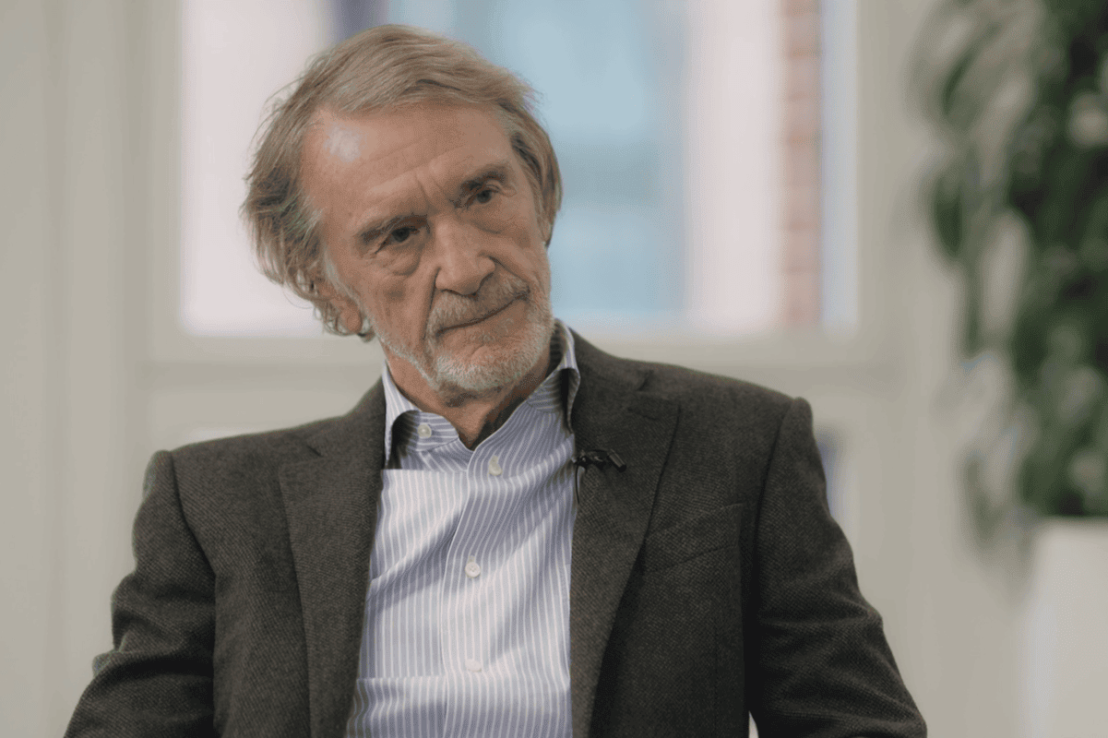
Sir Jim Ratcliffe has called on Europe’s leaders to save the continent’s chemicals industry or risk losing millions of jobs.
The founder and chairman of Ineos has urged politicians to make an “eleventh-hour intervention” at what he has described as a “moment of reckoning” for the industry.
Sir Jim, who is also known as a co-owner of Premier League club Manchester United, said the industry is at a tipping point and can now only be saved through urgent action.
The billionaire, who is the seventh richest person in the UK with a wealth of £17bn, has called for politicians to scrap the carbon tax which he said the industry “simply cannot afford”.
He has also advocated for the removal of the green tax and levies from energy costs in Europe to make the market competitive and for tariff protection.
As well as cutting taxes and levies on industrial energy, the Ineos founder wants leaders to provide targeted relief and “well-designed carbon border measures to protect Europe’s market share from competitors using subsidies or low-regulated energy”.
He also wants the restoration of free allocations and a reduction in carbon pricing, to ‘provide immediate relief and buy time for investment into decarbonisation technologies’.
Sir Jim Ratcliffe previously called for European leaders to ditch their carbon tax and increase tariffs in February.
Politicians ‘can’t prevaricate any longer’
Sir Jim said: “It’s the eleventh hour for the chemicals industry. There’s, in my view, not a great deal of time left before we see a catastrophic decline in the chemicals industry in Europe.”
He added: “The biggest problems are energy, where we are currently paying four times for gas what America are paying.
“We’re paying four times for electricity what America are paying and then laid on top of that we have this hug carbon tax which is extremely expensive and unaffordable when you layer on top of that the energy costs that we’re paying.”
Sir Jim also said: “Economically, it’s a million jobs – five million if you take the supporting industry.
“€700bn [in turnover] so it’s an enormous industry – the fourth biggest in Europe – so that has a huge economic impact if we see that decline substantially.
“The politicians have to be very clear that we are at the eleventh hour and they can’t prevaricate any longer and they really do need to make some changes.
“There are three things they need to do: firstly energy needs to be competitive in Europe.
“The very minimum they need to do is remove the green tax and levies from energy costs in Europe.
“Secondly, they need to scrap the carbon tax. We just simply cannot afford the carbon tax. It’s just shutting the industry down.
“Thirdly we need some tariff protection but we also need them to be more reactive on tariffs.
“At the moment it’s taking them years to consider tariff cases. We need action not just sympathetic words to the chemicals industry.”
In February, Sir Jim Ratcliffe warned the continent’s chemicals industry “faces extinction” and called on European Union leaders to ditch their carbon tax and increase tariffs to preserve it.
In an open letter published at the time, the billionaire said: “Chemicals in Europe is facing extinction,” the billionaire entrepreneur wrote.
“Government policies have resulted in enormously higher energy prices and crippling carbon tax bills. Government policies will shut all petrochemicals in Europe.
“All our major competitors are planning for withdrawal from Europe as government has failed to act time after time.”
Sir Jim Ratcliffe’s Ineos battles rising debt
At the end of March this year, Ineos scrapped its dividend for 2024 after its debt costs grew to more than €1bn which resulted in it making a pre-tax loss of €71.1m.
At the end of that financial year, while Ineos’ revenue and operating profit increased, its debt load stood at €10.6bn.
Earlier this week, Ineos announced plans to cut 20 per cent of the workforce at its Acetyls plant at Hull.
In total, 60 jobs are set to be lost in what the group said was a “direct result of sky-high energy costs and anti-competitive trade practices”.
Confirming the news, Ineos blamed “dirt-cheap carbon-heavy imports from China”, which it said are produced using coal and emitting up to eight times more CO₂ than its own made in the UK” are “now flooding the market”.
The group added that these Chinese products “have been blocked from entering the US by effective tariffs but face no trade barriers in the UK or Europe”.
Ineos said it is now calling on the UK government and European Commission to introduce “urgent anti-dumping tariffs” on Chinese and US importers to protect the chemicals sector.
The company has also warned that unless firm action is taken, “more sites will close and thousands more jobs will be lost, not only at Hull but across the UK and European chemical industry”.
A month earlier, Sir Jim warned British chemicals manufacturing is having the “life squeezed out of it” by the government, and is on the verge of extinction.
He slammed the de-industrialising of Britain, which started in the 1970s and 1980s, and criticised the government for a lack of energy strategy and high carbon taxation.
In the same month, Ineos announced the closure of the last remaining synthetic ethanol plant in the UK at Grangemouth due to high energy prices and carbon taxes.
Report warns of US and China impact
According to a new report by Oxford Economics, which was commissioned by Ineos, chemical production has contracted by 30 per cent in the UK, 18 per cent in Germany, 12 per cent in France, and seven per cent in Belgium since 2019.
The report also states that in 2023/24, 21 major European chemical plants were announced to be shutting, representing over 11 tonnes of capacity.
It adds that eight of the world’s ten largest chemical companies are scaling back or withdrawing from Europe.
Also according to the report, Europe’s chemicals industry employs 1.2m people directly and 5m across the supply chain
It warned that if production moved to the US of China, the purchase of €100m of imported chemicals would result in between 580 and 790 fewer jobs being supported in the EU and UK.